National Institute for Agricultural and Food Research and Technology (INIA-CSIC)
If you are the contact person for this centre and you wish to make any changes, please contact us.
Senior scientist at the CSIC at the Animal Health Research Centre (CISA), National Institute for Agricultural and Food Research and Technology (INIA)
Head of the Epidemiology and Environmental Health research group at CISA, INIA-CSIC.
Researcher in the Department of Infectious Diseases and Global Health at the Centre for Animal Health Research CISA-INIA, CSIC
Senior scientist in the Biotechnology Department at INIA-CSIC
Forestry engineer and senior scientist at the National Institute for Agricultural and Food Research and Technology (INIA-CSIC)
Scientist in the Epidemiology and Environmental Health research group at CISA, INIA-CSIC.
Researcher at the Centro de Investigación en Sanidad Animal (CISA-INIA/CSIC)
Senior Scientist at the Animal Health Research Centre (CISA) of the National Institute for Agricultural and Food Research and Technology (INIA-CSIC)
Scientific researcher at the Plant Protection Products Unit of the National Institute for Agricultural and Food Research and Technology (INIA-CSIC)

Influenza A can cause influenza in humans, birds, pigs, and other mammals. In 2009 and 2010, a pandemic caused by the pdm09 strain—popularly called 'swine flu' because it contained genetic sequences from avian, swine, and human influenza—caused thousands of human deaths worldwide. Since then, this lineage has crossed over 370 times from humans to pigs in the United States, according to a study published in PLOS Pathogens. The research also indicates that the circulation of the virus among pigs may cause further evolutionary changes in this lineage, which would increase the risk of the virus passing back to humans.

According to a statement issued Monday by the World Health Organisation (WHO), Poland has reported that "unusual" cat deaths have been found in several areas of the country. Of the 47 samples tested (46 from cats and one from a caracal, another type of feline), 29 were positive for the avian influenza A(H5N1) virus. The surveillance period for all contacts has now ended and no contacts have shown symptoms. According to WHO, "sporadic A(H5N1) infections of cats have been reported previously, but this is the first report of a large number of infected cats in a large geographical area within a country".
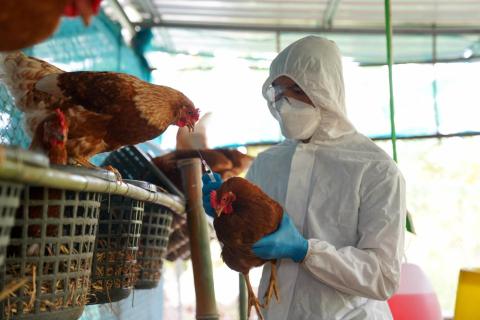
Although outbreaks of H5N1 avian influenza have reached record numbers in recent years, human infections remain anecdotal. A study published today in Nature identifies a protein responsible for inhibiting the replication of this virus in humans, while 'human' flus are able to evade it. The authors propose that this protein with antiviral activity evolved in primates and consider that resistance or sensitivity to it should be taken into account when assessing the zoonotic potential of avian influenza viruses.
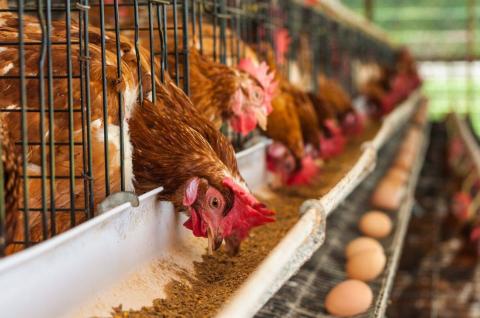
Analysis of the two asymptomatic cases of H5N1 avian influenza detected in Spain in autumn 2022 in workers at a poultry farm in Guadalajara has confirmed the theory that no actual infections occurred, but that both were in contact with genetic material of the virus found in the environment. Spain has recently modified its protocols, according to the analysis published in Eurosurveillance.
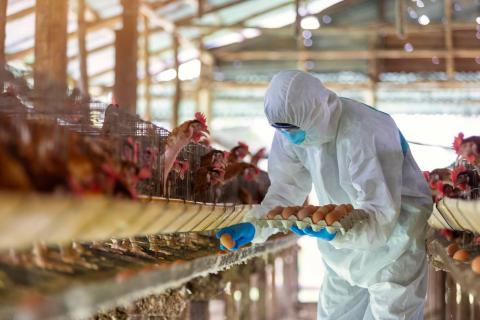
On 27 September, the National Microbiology Centre detected a positive H5N1 avian influenza in a worker at a poultry farm in Guadalajara (Castilla-La Mancha). The sample was taken on the 23rd and the affected person remained asymptomatic until he tested negative, according to Animal's Health.

In the first months of 2022, avian influenza has hit birds in Spain with unprecedented intensity. All outbreaks are now closed and the epidemiological situation is favourable, but we must not let our guard down. The risk of the virus jumping to humans is considered low.