HM CINAC Comprehensive Neurosciences Centre
If you are the contact person for this centre and you wish to make any changes, please contact us.
Principal investigator and head of Neurophysiology and Neuromodulation at the CIEN Foundation and head of the Functional Neuroscience Group at the Integral Neurosciences Centre HM CINAC.
Professor of Neurology at the Faculty of Medicine of the CEU San Pablo University, Director of the Centro Integral de Neurociencias HM CINAC and a full member of the Royal National Academy of Medicine of Spain
Neurologist specialising in Parkinson's disease at the Comprehensive Neuroscience Centre HM Cinac, editor-in-chief of MDS Podcast and coordinator of the Ad Hoc Committee on Neurotechnology, Innovation and Entrepreneurship of the Spanish Society of Neurology.
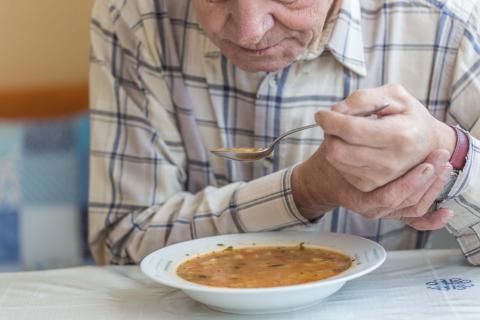
Various studies have shown that smokers have a lower risk of developing Parkinson’s disease, but the causes remain unknown. A study has analysed the role played by carbon monoxide — a toxic gas produced by the combustion of tobacco — in this association. To this end, the team conducted a twelve-year follow-up study of more than half a million adults in China. The results show that regular smoking was associated with an increased risk of lung cancer, ischaemic heart disease, stroke and all-cause mortality, but with a lower risk of Parkinson’s disease. Most strikingly, amongst people who had never smoked, higher levels of exhaled carbon monoxide—which the authors measured—were associated with a lower risk of Parkinson’s disease. According to the study, published in JAMA Neurology, these findings demonstrate a possible protective role of carbon monoxide in the disease, rather than smoking itself.

A Danish study published in JAMA Neurology found an association between long-term exposure to residential road traffic noise and an increased risk of developing Parkinson's disease. The study followed more than three million Danish adults aged 40 years and older for 18 years using data from Denmark's national administrative and health registries. The researchers assessed residential road traffic noise exposure at both the most exposed and the least exposed façades of participants' homes. The study also found that individuals with a quiet façade had a lower risk of developing Parkinson's disease than those whose homes were exposed to high levels of noise on all sides.
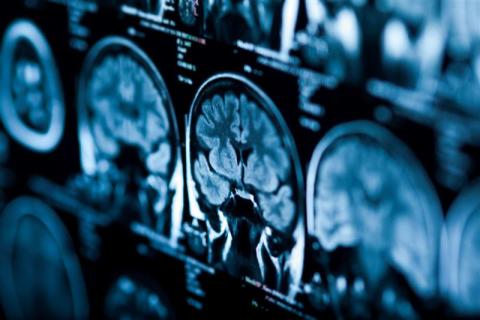
A study published in Nature suggests that a brain network that controls the execution of actions (SCAN), which was described in 2023, plays an important role in Parkinson's disease. Focusing treatments—such as transcranial stimulation—on the SCAN rather than other brain regions associated with movement could improve their effectiveness, according to the research.
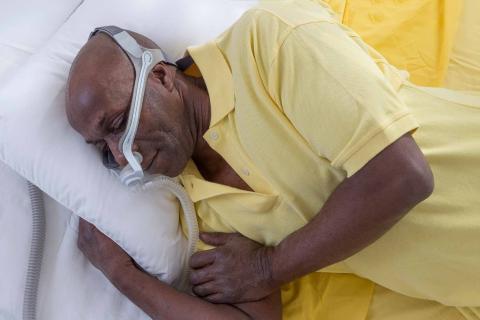
An investigation published in JAMA Neurology concludes that obstructive sleep apnoea is associated with an increased risk of Parkinson's disease, according to the medical records of more than 11 million American war veterans, mainly men. The article also indicates that this risk can be reduced by early treatment with continuous positive airway pressure, suggesting intervention in sleep-disordered breathing as a strategy for preventing neurological diseases.
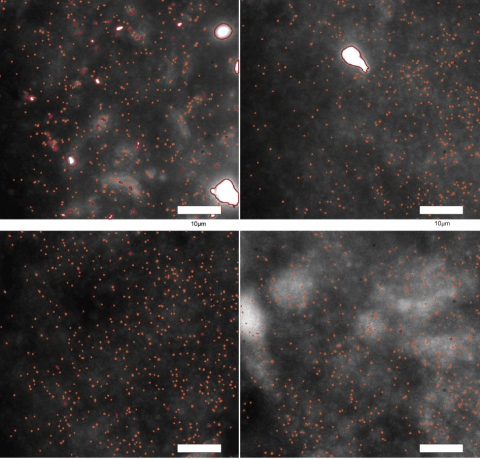
A team has managed to visualise and quantify the protein aggregates believed to trigger Parkinson's disease. This is the first time they have been directly visualised. These small aggregates – alpha-synuclein oligomers – were observed in post mortem brain tissue from people with the disease using a new microscopy technique, as explained by the authors in Nature Biomedical Engineering.

A phase 2 clinical trial in France has examined whether taking an oral anti-diabetic drug called lixisenatide - a GLP1 receptor analogue, similar to those also used for weight loss - also has an effect on the progression of Parkinson's disease. The results indicate that there is a modest but significant decrease in the progression of motor symptoms of the disease, although side effects were also observed. The results are published in the journal NEJM.

Parkinson's disease is usually diagnosed when there is already extensive neuronal damage and symptoms are evident. Now, researchers at Cardiff University in the UK have used movement and sleep quality data from wearable accelerometers and concluded that they can help identify the disease early, years before clinical diagnosis. Although there is no effective preventive treatment, the authors propose that the tool can determine people at risk of developing Parkinson's disease and identify participants for clinical trials of neuroprotective treatments. The results are published in the journal Nature Medicine.