Pau Costa Foundation
If you are the contact person for this centre and you wish to make any changes, please contact us.
Head of Training at the Pau Costa Foundation
Forestry engineer and head of the Social Base and Community department at the Pau Costa Foundation
Project technician at the Pau Costa Foundation
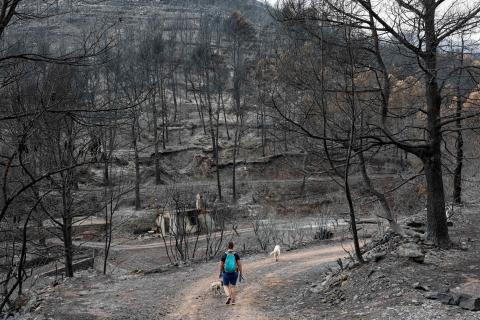
So far this year, up to 20 August, 262,000 hectares have been burnt in Spain, compared with the average of 105,600 hectares burnt between 2015 and 2024. Large-scale wildfires, exacerbated by climate change, are increasing both in frequency and in the area affected. But what happens in the forests after a fire? Can the woodland regenerate on its own? What criteria should be followed? We analyse, with the help of experts, how these ecosystems recover and what measures are taken to protect and restore them.
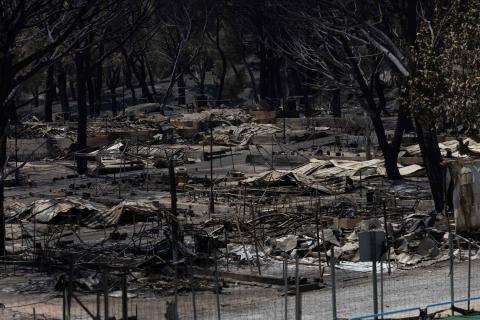
Human-induced climate change has made the ‘extreme’ weather conditions that fuelled the recent wildfires at least twice as likely in France and 20 times as likely in Spain, according to a new analysis by World Weather Attribution (WWA). The team analysed historical weather observations and used the Daily Severity Index (DSR), which incorporates heat, drought and wind conditions and reflects the difficulty of extinguishing a fire. The researchers examined the seven-day period with the highest DSR in south-western France and central Spain, where the fires occurred, and compared it with simulations of a pre-industrial climate. According to the study, under current climate conditions, events of this intensity are projected to occur once every 20 years in south-western France and once every six years in central Spain.
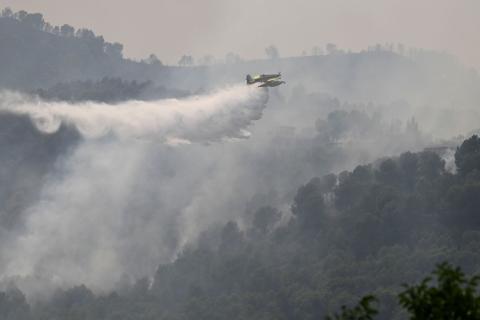
In some areas of Spain and France, the intensity of weather conditions that favour wildfires — heat, drought and wind — increased by up to 50 per cent between 2016 and 2025, compared with the period between 1981 and 2010. This is one of the conclusions of a study carried out by a team including Spanish researchers, which analysed national records of forest fires in southern Europe – Spain, Portugal, France, Italy and Greece – alongside meteorological and climatic data from 1981 to 2025. The data, published in Scientific Reports, show that the number of days with conditions conducive to fires also increased in some areas of these countries. However, the annual number of fires over the last decade was 40 per cent lower than in the 1981–2010 period in all countries – a decline which, according to the authors, is consistent with a reduction in fires caused by humans, driven by stricter regulations.
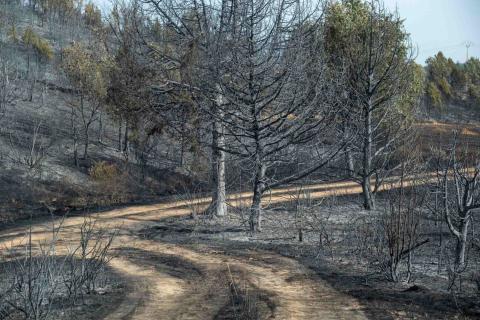
Data from the Copernicus European Forest Fire Information System (EFFIS) show that, as of 22 July, 119,458 hectares have been burnt in Spain. The average number of hectares burnt from 2006 to 2025 up to this date stands at 35,736 hectares. The fire in the Sierra Norte de Guadalajara, which has scorched more than 30,000 hectares and is still active, together with numerous fire fronts in other provinces and the fire in Los Gallardos (Almería), in which 13 people died, have caused the total area burnt to soar.
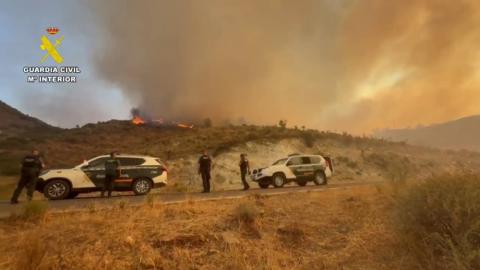
The wildfire in Los Gallardos (Almería), which broke out on Thursday evening, has so far claimed 13 lives. Initial investigations suggest that a fallen power line may have been the cause of the fire. The blaze has burnt more than 3,000 hectares and has left 1,400 people displaced.
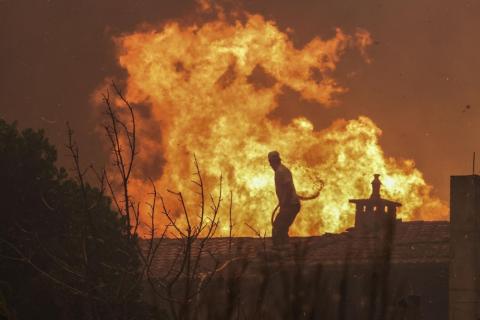
Climate change has made the hot, dry and windy weather conditions that spread fires across the Iberian Peninsula 40 times more frequent and 30% more intense than in the pre-industrial climate, according to a rapid study by World Weather Attribution. The ten-day heatwave was also 200 times more likely and 3°C hotter due to climate change. The study, which analysed weather observations rather than climate models, warns that fires in Europe are overwhelming firefighting resources and highlights the importance of controlling vegetation in affected areas.
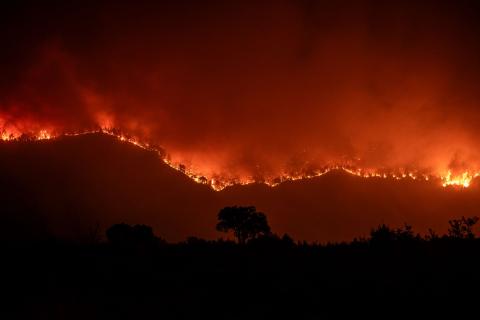
Four people have died in the fires that began last weekend on the Iberian Peninsula and have spread to different areas of Galicia, Castile and León, Andalusia, Castile-La Mancha, Extremadura and Madrid. The heatwave that continues to grip the country, strong gusts of wind and their changing direction, and the thermal drought are hampering firefighting efforts. The government declared on Tuesday a pre-emergency phase and thousands of people have had to be evacuated.
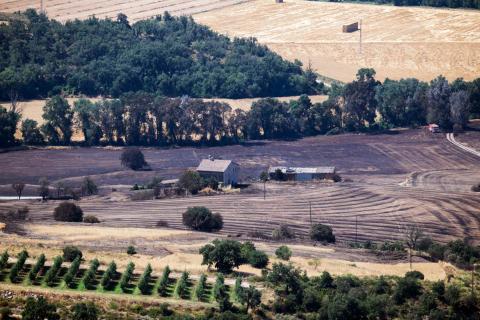
The last few weeks have been marked by devastating fires in Spain and other European countries. In Catalonia, just days after a fire killed two people and burned 5,500 hectares in the province of Lleida, another fire broke out in the province of Tarragona, affecting more than 3,200 hectares and now stabilised, which resulted in another person's death. What are the characteristics of these large fires? How can we prevent them? The Science Media Centre Spain organised an informative meeting with two experts to answer these questions and clarify key concepts.
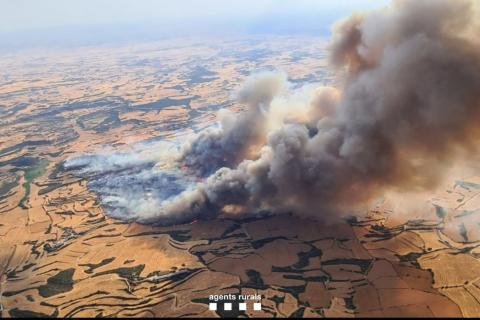
Two people have died in a fire that has burned more than 5,500 hectares in the province of Lleida. Firefighters from the Catalan government declared it under control last night, after 29 hours. Salvador Illa, president of the Catalan regional government, called for ‘maximum caution’ from the public, warning that ‘today's fires are not like those of the past, they are extremely dangerous,’ according to RTVE.es. Why is this fire considered extreme? What should you do when a fire breaks out? How can more fires be prevented? In this article, we have compiled explanations and basic recommendations with the help of expert sources.