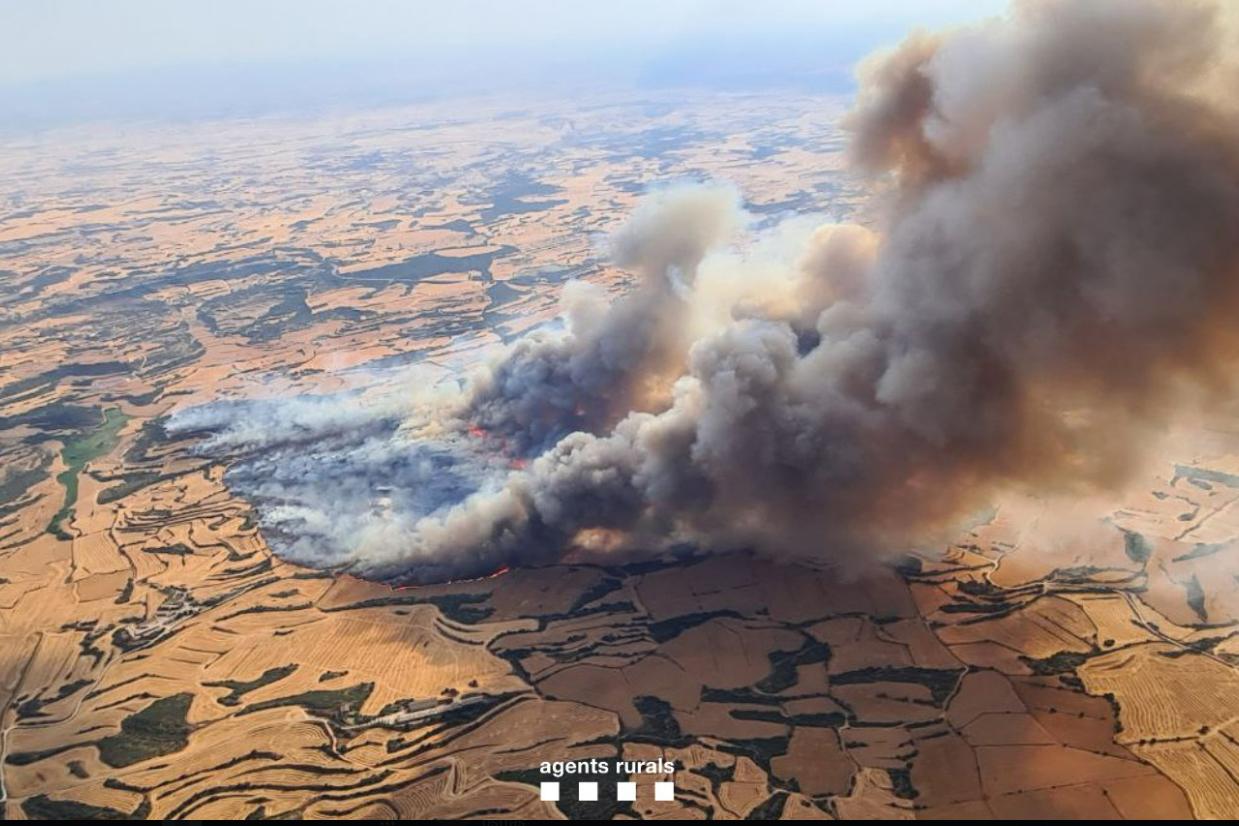
Why is the fire that occurred this week in the province of Lleida being called ‘extreme’?
This is a sixth-generation fire, characterised by highly unpredictable behaviour, according to Edgar Nebot, deputy inspector of the Catalonia Fire Brigade, speaking to Science Media Centre Spain. In this article published in 2023, we detailed the characteristics of these fires, as well as the difficulties in extinguishing and preventing them.
‘Extreme fires are caused by complex processes when fire interacts with the atmosphere, which makes them very difficult to predict because the behaviour of the fire does not depend solely on meteorological variables at the surface, but also on processes in the upper layers of the atmosphere,’ explains the Department of the Interior of the Generalitat of Catalonia.
In the case of the fire in the province of Lleida, ‘there was nothing exceptional, just a coincidence’ of favourable conditions, says Nebot, which led to the flames reaching speeds of up to 28 km/h, four times higher than usual. Two storm fronts coincided and formed a pyrocumulonimbus, a huge cloud that rose to 14 kilometres, ‘in a vulnerable landscape, because it was harvest time after two weeks with temperatures of up to 40 degrees,’ explains the firefighter, who is part of the GRAF (Grup d'Actuacions Forestals) unit. ‘The fire was able to benefit from this fine and readily available fuel, which is cereal,’ says Guillem Canaleta, resilient landscape project technician at the Pau Costa Foundation, speaking to SMC Spain.
Several studies have shown that periods of heavy rainfall – such as this spring in Catalonia – after a drought ‘can increase the risk and severity of fires by generating an excess of fine biomass (grass, young shrubs and leaf litter) that acts as fuel,’ Dominic Royé, Ramon y Cajal researcher at the Galician Biological Mission (MBG-CSIC), told SMC Spain.
Is there any applied research on extinguishing this type of fire?
These fires have been studied empirically in recent years, analysing cases of pyroconvection in other countries such as Chile and Portugal, according to Nebot. Institutions in our country are participating in European research projects such as EWED (Extreme Wildfire Events Data Hub for Improved Decision Making) and FIRE-RES to develop useful knowledge for field operations. ‘But events are moving faster than the products being developed,’ and emergency teams still do not have the tools to anticipate the behaviour of these fires, the firefighter told SMC Spain.
What should the population do in the event of a fire?
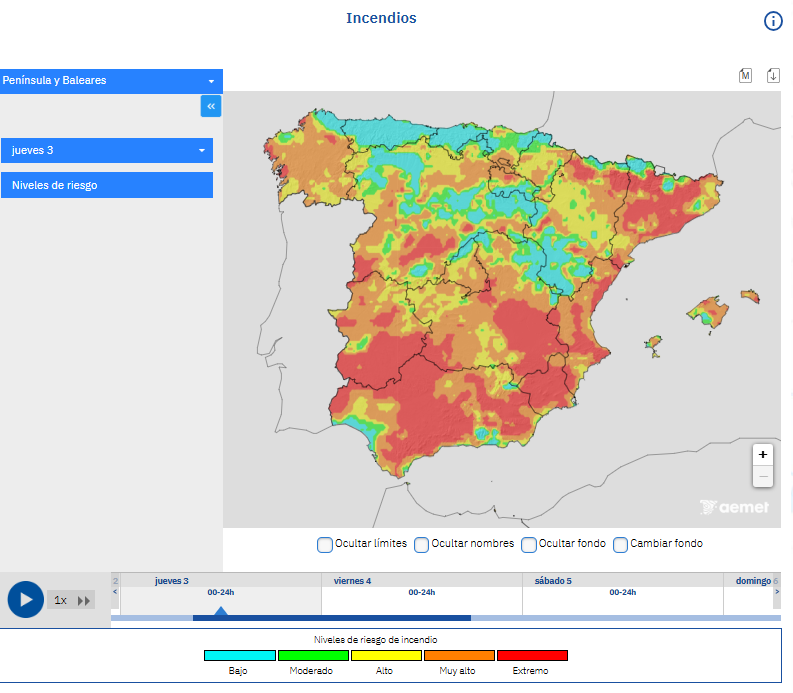
To stay informed, citizens have access to updated maps from AEMET at the national level that include fire risk levels. These are also published by autonomous communities, such as in Catalonia.
In the case of the Lleida fire, a containment zone was declared, affecting some 25,000 hectares and more than 14,000 people for several hours. The population received alerts on their mobile phones and, when the containment zone was lifted, they were asked to limit their movements to facilitate the work of the emergency teams.
In its recommendations, the Spanish government urges maximum caution and never to work alone in the event of a fire. It also reminds people that if they are asked to help extinguish a forest fire, they ‘have a legal duty to assist’.
If a fire reaches a house, call 112 and take refuge inside, closing doors and windows, recommends the Catalan Regional Government.
Other official recommendations include:
- If you are asked to evacuate, turn off the electricity and gas, take only essential items (documents, money and medication) and go where the security services tell you to go.
- Fill the bathtub and sinks with water, spray the doors and windows with water and place wet towels under the doors.
- Turn off all fuel supplies and protect yourself with cotton or wool clothing. If there is a lot of smoke, leave the lights on and breathe close to the floor.
- If you are caught in a fire in open country, move away in the opposite direction to the wind and, if possible, enter an area that has already been burned.
- Wet a handkerchief and cover your face to avoid smoke. Do not take refuge in wells or caves. Near the sea or rivers, get close to the water and, if necessary, get in.
- If you are in your car, stop in a protected place, close the doors and windows and turn off the ventilation. Turn on your headlights so that you can be found in the smoke.
At an individual level, what can citizens do to prevent fires?
The summer will be difficult, with situations that could endanger lives, warned Inspector Moisés Galán, head of intervention support for the Generalitat's fire brigade, in a press release yesterday. ‘We have to live with fires responsibly,’ he said.
Apart from the basic recommendations for those going on excursions or camping—such as not throwing cigarette butts or glass on the ground, or lighting bonfires, firecrackers or rockets—the government is asking people who live in country houses or residential developments to:
- Keep paths and roads clean.
- Avoid excessive foliage and dry vegetation in gardens.
- Avoid using chainsaws, brush cutters and other tools that could cause fires.
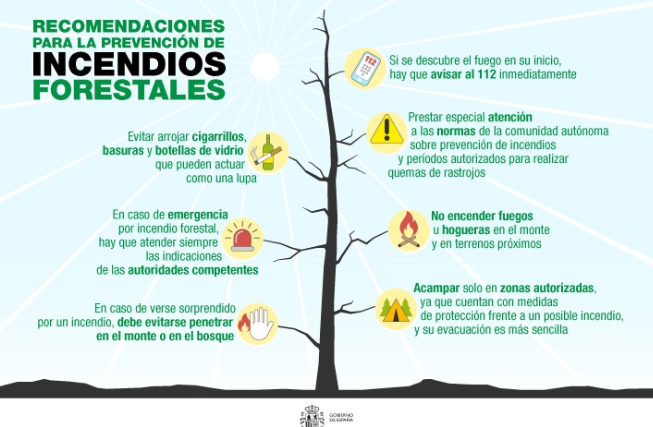
For its part, the Catalan Regional Government adds the following recommendations for prevention:
- Maintain a distance of six metres between trees and prevent their tops from touching each other or the façade.
- Keep firewood stores away from the house.
- Have basic fire-fighting equipment (hoses, axes) and a supply of water ready.
What role does agriculture play in prevention?
The primary sector is key to creating a heterogeneous landscape, with discontinuities ‘that firefighting services use as opportunities to limit the spread of fire,’ says Canaleta. ‘When you have an active rural world, including agriculture, livestock and forestry, you are managing the land, reducing the fuel that the fire itself would use,’ adds the technician.
According to Nebot, farmers are aware of the risk of fires and their practices are adapted to it. The firefighter does highlight one area for improvement in rural areas: cleaning up the surroundings of farmhouses and farms to prevent dry grass, piles of tyres or other combustible debris from accumulating near buildings.
What can be done at the public policy level to prevent fires?
In this opinion piece published in 2023, Eduardo Rojas Briales, professor at the Polytechnic University of Valencia, advocated for long-term political measures and explained why focusing solely on extinction is insufficient and exacerbates the problem.