Spanish Primatological Association (APE)
If you are the contact person for this centre and you wish to make any changes, please contact us.
President of the Spanish Primatology Association (APE), coordinator of the Primatology Research Group and co-director of the Master’s Degree in Applied Ethology and Animal-Assisted Interventions at the Autonomous University of Madrid
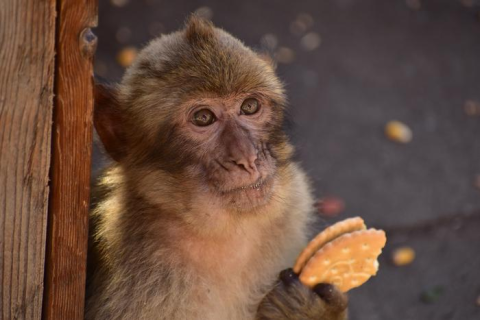
The deliberate consumption of soil—known as geophagy—is a common practice among animals, either to supplement their diet or as a protective mechanism against intoxication and other digestive issues. For the first time, a research team with Spanish participation has documented this behaviour in Barbary macaques in Gibraltar, particularly during the summer, when tourist numbers peak. This has led the authors of the study, published in the journal Scientific Reports, to hypothesise that the purpose of geophagy is to mitigate the digestive discomfort caused by food provided by visitors.
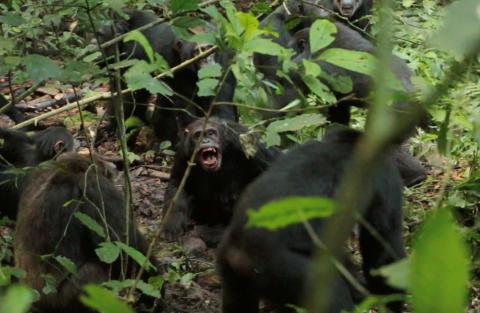
Permanent splits in chimpanzee groups are extremely rare—an event that occurs once every 500 years, according to genetic evidence. The journal Science reports on the split of the largest known group of wild chimpanzees following 30 years of observations. This involves the Ngogo chimpanzees in Kibale National Park (Uganda). The group shifted from cohesion to polarization in 2015 and eventually split into two distinct groups in 2018. From that point on, violence escalated, and members of one group killed at least seven males and 17 infants from the other. In the 1970s in Gombe (Tanzania), another case of this type was documented, but the chimpanzees had been fed by humans-