 Freepik
51.5 per cent of Spaniards feel confident in their ability to spot hoaxes, but only 18.1 per cent believe that the average person can distinguish disinformation. Conspiracy thinking, populist attitudes and passive news consumption are the factors most likely to lead to the spread of science-related hoaxes. Furthermore, although 62.4 per cent believe that AI facilitates the spread of fake news, 32.3 per cent use it to find out about science at least once a week.
These are some of the findings from the second edition of the study ‘Scientific Disinformation in Spain 2026’, carried out by the Spanish Foundation for Science and Technology (FECYT) as part of the IBERIFIER Plus project, based on a survey of 2,215 people. The report highlights that the perception of scientific disinformation has become normalised in areas of great everyday relevance such as food, the climate and health.
To explore the study in greater depth, the SMC organised a briefing for journalists with Celia Díaz, a professor of Sociology at the Complutense University of Madrid, and Pablo Cabrera, a researcher at the Institute for Social and Economic Research at the University of Essex (UK), the report’s scientific co-directors.
A new finding in this edition stems from an experiment: when people are asked to reflect on the credibility of a piece of content, the spread of falsehoods is curbed. However, when they reflect on the emotions that content evokes in them, their tendency to share it increases.
“Getting people to think about the credibility of news stories reduces the likelihood of them sharing false information,” explained Cabrera, referring to an experiment carried out as part of the study. However, this “comes at a price”, as it also results in them sharing less accurate information. “There is a cost, because in general people share less when they start to doubt whether the information presented to them is true or false.”
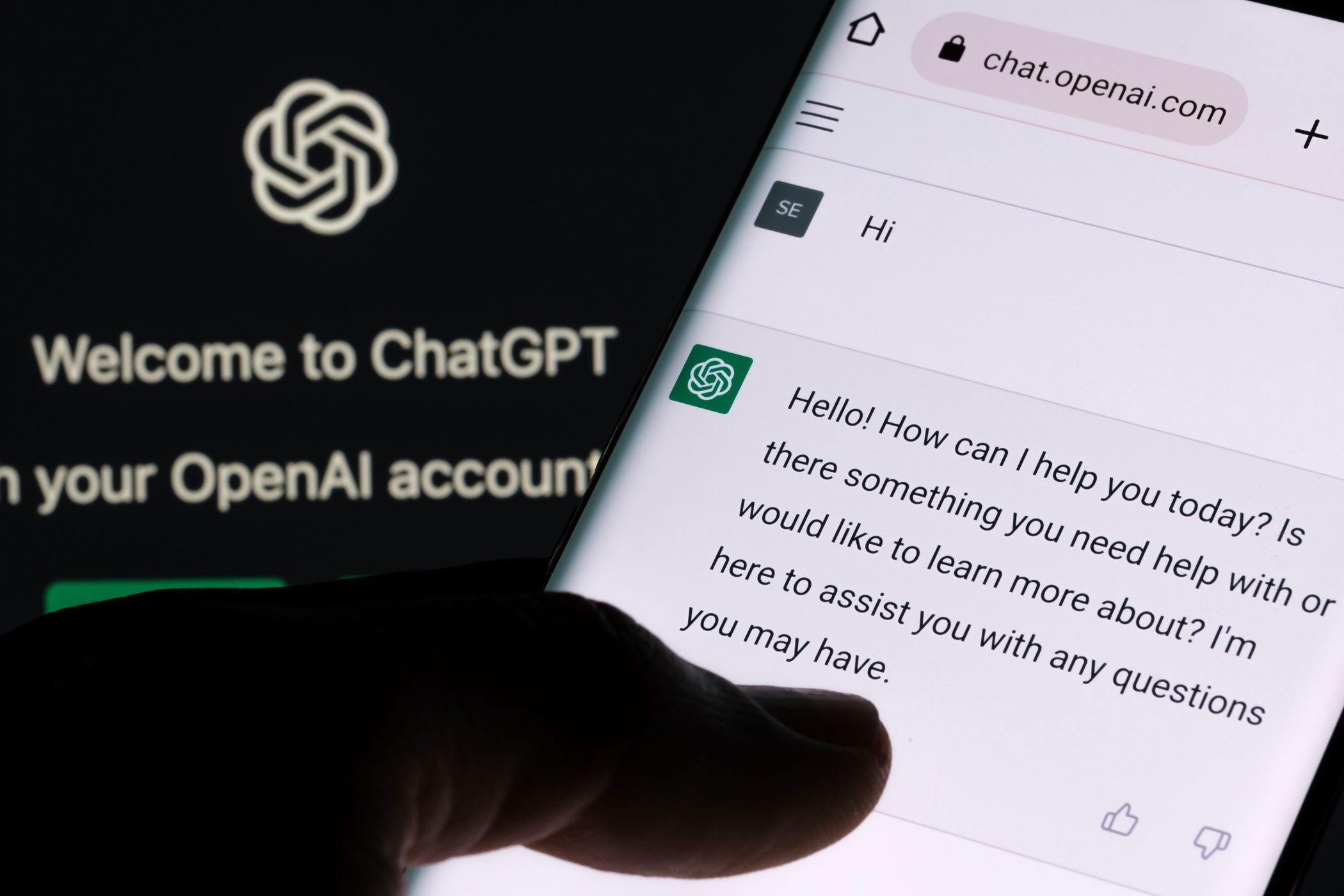
“Scientific disinformation is no longer a one-off crisis; it is here to stay and permeates every aspect of daily life,” stated Díaz. Furthermore, “AI has reshaped the information landscape faster than we have been able to keep up with.” A third of the population uses ChatGPT or Gemini weekly to find out about science, health and the environment, a proportion similar to the percentage of people who do so via radio and television.
Speaking to the SMC, Carolina Moreno, Professor of Journalism and researcher at the University of Valencia, who did not take part in the study, pointed out that “the real turning point is not just that more and more people are consulting these systems, but that they tend to perceive them as objective, neutral and autonomous technologies, when in reality they are not”.
In this regard, Laura Teruel, a lecturer in Science and Environmental Journalism at the Faculty of Communication Sciences at the University of Málaga, who also did not take part in this report, emphasised that “the audience’s shift away from consulting the media, coupled with the rise in incidental consumption — where seemingly informative messages reach us in isolation, without us seeking them out and, in many cases, without knowing their sources or origin, usually via social media—should prompt us to reflect on society’s reluctance to turn to credible and professional journalists”.
The positive aspect, according to Díaz, is that “trust in science is our most solid asset, but it is fragile and, without scientific and media literacy, it can become a gateway to content that merely imitates the form of scientific knowledge”.
The session also clarified the differences between scientific populism and a conspiracy-minded mindset, two separate yet related concepts. “Conspiracy thinking is more closely associated with a lack of control in the face of uncertainty, whilst scientific populism challenges authority,” commented Díaz.
Cabrera explained the difficulties involved in tackling this type of thinking. “It is a very complex issue, because people who exhibit a conspiracy-minded mindset generally rely on motivated reasoning when assessing the plausibility of information; as a result, they tend to accept as valid information that reaffirms their positions, which need not necessarily be true.”
As a result, “focusing on truthfulness is not the most effective way [to combat disinformation], especially when those beliefs are deeply entrenched”. Instead, “using preventive strategies works better”: for example, prioritising transparency and debunking hoaxes before they take root.