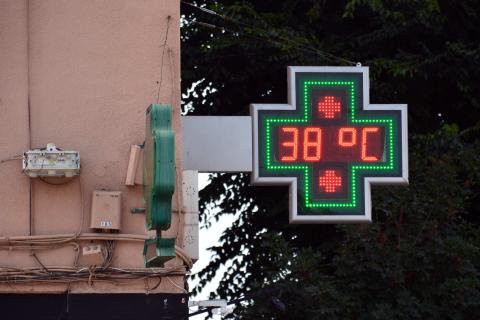
The heat in Europe caused more than 181,000 deaths in the summers of 2022, 2023 and 2024
A study has estimated that there were more than 62,700 heat-related deaths in Europe between 1 June and 30 September 2024. This figure was 24% higher than that recorded in the summer of 2023, when more than 50,700 people died from heat, although 8.1% lower than in 2022, when more than 67,800 people died from this cause. By country, Spain had the second highest estimated mortality in the summer of 2024, with more than 6,700 deaths. The study, published in Nature Medicine and led by ISGlobal, proposes a new early warning system that can predict heat-related health emergencies at least one week in advance.

Usama Bilal - muertes calor Europa
Usama Bilal
Associate professor in the Department of Epidemiology and Biostatistics and co-director of the Urban Health Collaborative and the Center for Climate Change and Urban Health Research at Drexel University's Dornsife School of Public Health
The press release accurately represents the study. It is a solid study that shows, on the one hand, the impact that the heat had on Europe during the summer of 2024, but also the use of an early warning system that allows the effects of heat to be forecast a week in advance. This makes it possible to create more accurate alerts that take into account the differences in context between areas (35 °C in Asturias is not the same as 35 °C in Seville, for many reasons including physiological, behavioural and infrastructural adaptation, etc.).
Jesús Adrián Álvarez - muertes calor Europa EN
Jesús Adrián Álvarez
Actuary and Doctor of Public Health, Actuarial Manager at Ernst & Young (EY) in Denmark
The article makes two fundamental contributions. First, it offers a broad overview of the impact of heat waves on mortality in a large number of countries. Second, it demonstrates that it is possible to predict heat-attributable deaths with remarkable statistical accuracy. To do so, the authors use models based on epidemiology.
Other studies have addressed similar issues, using high-resolution meteorological data and advanced machine learning techniques to identify links between climate and mortality. The growing capacity of artificial intelligence makes it possible to discover patterns in huge data sets (big data), something that was previously impossible and which today opens up new possibilities for research.
The urgency of these studies cannot be underestimated. Year after year, new heat records are being broken—Spain, for example, has just recorded one of the hottest years in its history—and forecasts indicate that temperatures will continue to rise. This also increases the risk of heat-related deaths, especially among the most vulnerable people, such as those with chronic diseases. Mortality is higher in regions with limited access to effective medical services, highlighting the unequal burden that heatwaves place on different populations.
On a broader scale, other research argues that global warming is inevitable and irreversible and warns that we could reach a “point of no return” within this century. These findings underscore not only the environmental consequences of climate change, but also its profound implications for public health.
This study, like others in the field, serves as a reminder of the true human cost of global warming. The crucial question is how public health systems will be able to adapt to prevent avoidable deaths attributed to heat waves. Geographic differences in mortality show that public health measures can make a tangible difference. What remains to be seen is the extent to which health services around the world will be able to rise to this challenge.
Conflict of interest: "This is a personal opinion that has nothing to do with Ernst and Young".
Janos et al.
- Research article
- Peer reviewed
- People