Researchers study wireless lie detector to diagnose sleep problems in children
A research team presents a wireless polygraph – colloquially known as a “lie detector” – that attaches to the chest to diagnose stress in adults and sleep disorders in children. According to the study, published in Science Advances, the device is able to identify episodes of waking, hypopnoea and apnoea in children.
260513 polígrafo carlos EN
Carlos Javier Egea Santaolalla
President of the Spanish Federation of Sleep Medicine Societies (FESMES), coordinator of the Alianza del Sueño Healthcare Group, and Head of the Pulmonology Department and the Sleep Unit at Osakidetza. Bioaraba Institute
The main aim of the study is to overcome the limitations of conventional psychophysiological monitoring systems—such as traditional polygraphy and polysomnography (PSG)—by developing a wireless, comfortable and highly accurate alternative.
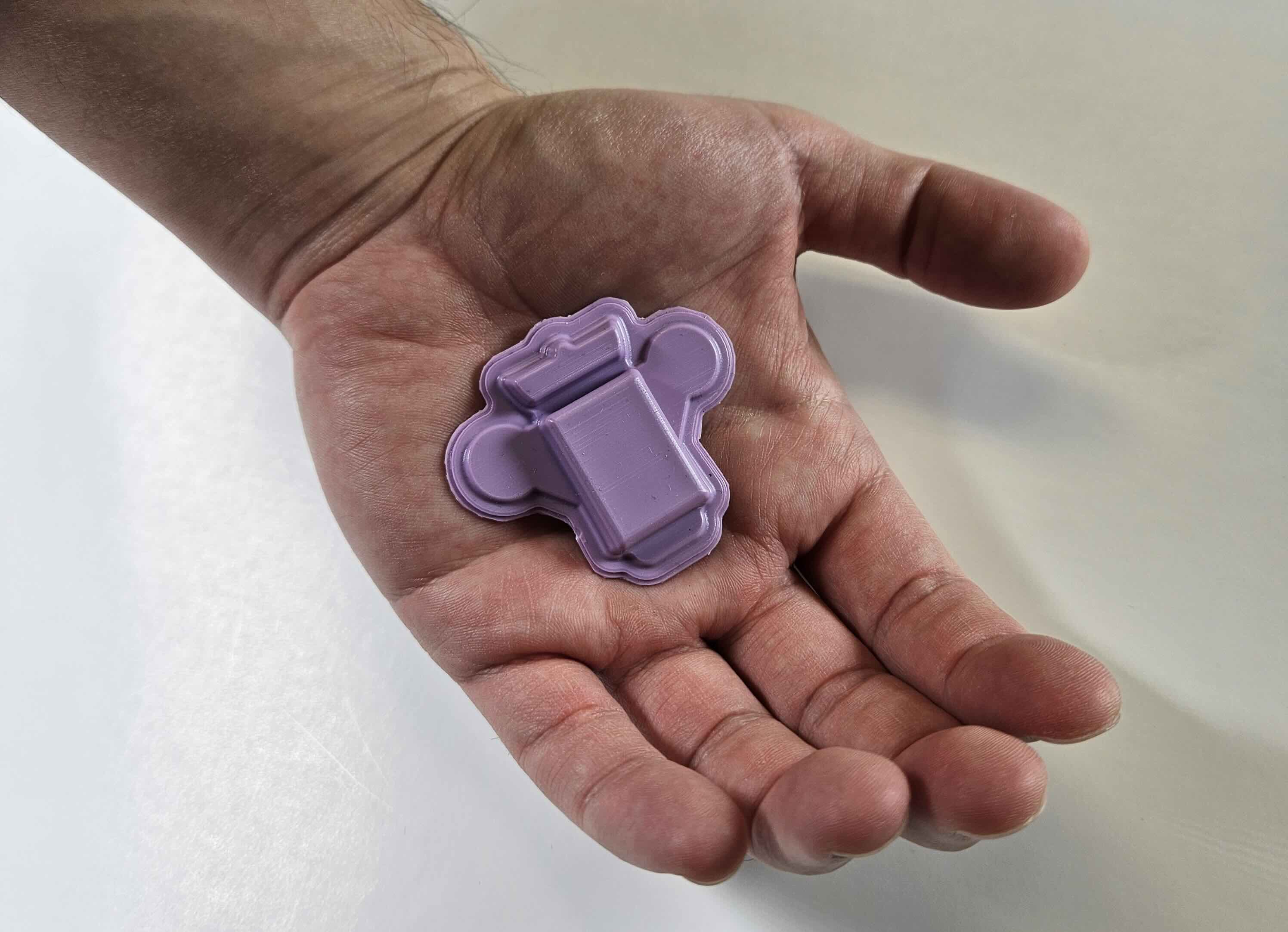
The portable medical device developed in this study is called SIMSS (an acronym for Skin-Interfaced Multimodal Sensing System). Furthermore, in the title of the scientific article, it is conceptually described as a wearable polygraph device.
The SIMSS device was validated against a conventional respiratory polygraph (the name is not specified), a pupillometry system and a clinical electrocardiogram linked to a blood pressure monitor. This device is small, measuring 52 mm x 48 mm x 8.5 mm, weighing 7.8 grams and offering a battery life of 37 hours.
The artificial intelligence algorithm is fed by a vector comprising seven key features extracted in real time by the device: heart rate (HR), heart rate variability (HRV), cardiac sound intensity (CSI), respiratory rate (RR), respiratory rate variability (RRV), electrodermal activity (EDA) and skin temperature (ST).
The Bland-Altman concordance analysis is the crucial statistical test used by the researchers to demonstrate that the SIMSS device is as accurate as expensive and complex hospital-grade medical equipment. Sleep classification by SIMSS demonstrated a high ability to specifically identify critical clinical sleep events. For arousals: 98.6% sensitivity and 98.6% specificity; hypopnoea (reduced airflow): 97.5% sensitivity and 96.6% specificity; oxygen desaturation: 98% sensitivity and 98.9% specificity.
Although the scientific study presents the results in a very positive light, from the perspective of rigorous clinical methodology, the main criticism regarding the number of subjects (13 children, 17 residents) is that the sample size is statistically small and limited, which restricts the ability to generalise the findings to the general population.
The authors’ conclusion assumes perfect performance at scale, but overlooks the fact that the base classifier (KNN) lacks sequential temporal memory and struggles with the heterogeneity of new patients outside the small original cohort.
The conclusion of the scientific study highlights the success of SIMSS as a wireless, multimodal platform capable of capturing psychophysiological stress and sleep events with high fidelity in clinical and real-world settings. Furthermore, it projects the use of this technology in emerging fields such as intensive care, mental health and neurovisceral medicine, bridging engineering with precision medicine. Further studies on a larger scale (with a greater number of subjects) are needed to generalise the conclusions.
260513 polígrafo gonzalo EN
Gonzalo Pin Arboledas
Head of the Pediatrics Unit and coordinator of the Sleep Unit of Hospital Quirónsalud Valencia. Coordinator of the Sleep and Chronobiology Group of the Spanish Association of Pediatrics (AEP).
In 21st-century medicine, non-invasive ambulatory monitoring is becoming a cornerstone of patient health management and, in particular, of the prevention and management of comorbidities.
Having access to a non-invasive ambulatory monitor that allows us to assess vital signs related to psychological stress is promising and, without doubt, of great clinical value. Current experience in sleep medicine with ambulatory circadian monitoring (developed in particular by the University of Murcia in Spain), which assesses various circadian variables – changes in body temperature, as well as exposure to different types of light – has already demonstrated its reliability and specificity in the diagnosis and monitoring of circadian and sleep disorders.
Following this approach in relation to psychological stress will undoubtedly enable the personalisation of this monitoring and improve patients’ quality of life.
Sun Hong Kim et al.
- Research article
- Peer reviewed
- People