The eclipse on 12 August will be a historic, all-ages event. However, there are certain associated risks, although they are easy to prevent.
The main priority: your eyes
Looking directly at the sun can cause damage to the retina, which is not solely dependent on the sensation of glare. Marcelino Núñez, regional delegate of the Spanish State Meteorological Agency (Aemet) in Extremadura, warns: “It is no less dangerous because the eclipse will take place at sunset.” Even if the sun is low in the sky and appears less bright, the radiation still affects the retina. He also adds that “the eclipse causes the eye to relax and the pupil to dilate, meaning you can look at the sun for longer without obvious discomfort, which actually increases the risk.”
The damage is known as solar retinopathy. “It is damage to the central part of the retina, the macula, caused by intense solar radiation,” explains Carlos Antonio de Pablo, Head of Ophthalmology at Cruz Roja San José and Santa Adela University Hospital, in Madrid. Solar retinopathy is painless, and symptoms typically appear several hours later, according to the specialist. These include blurred vision, the appearance of a dark spot in the centre of the visual field, and difficulty to focus. “In some cases, symptoms improve within weeks or months. In others, the damage may be permanent,” concludes de Pablo.
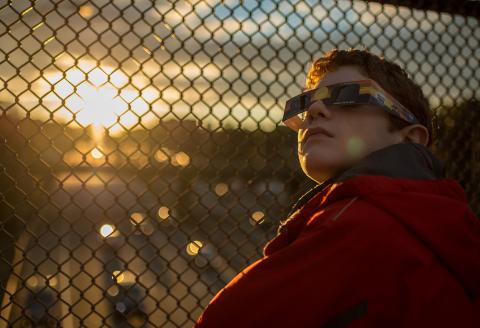
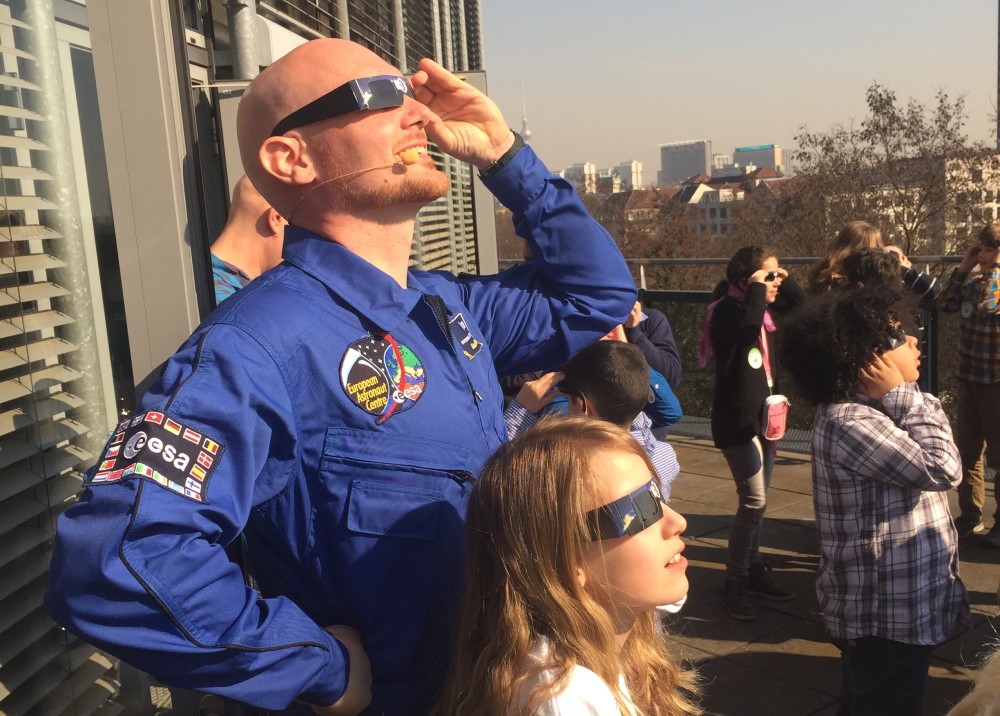
The only safe way to observe the eclipse directly is by using ISO 12312-2 certified eclipse glasses with CE marking, or approved astronomical solar filters that show no signs of damage. These can be purchased from specialist astronomy shops, and in some opticians and pharmacies, among other places. Sunglasses are not suitable, even if they are high quality. X-rays, CDs, and other homemade solutions are also unsafe.
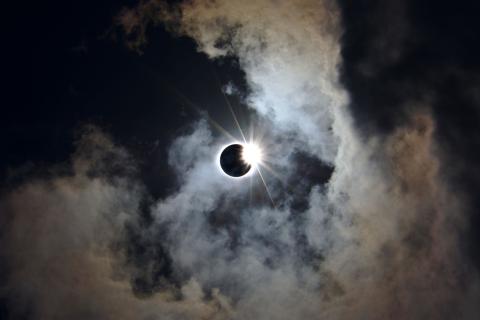
The Interministerial Commission for the Trio of Eclipses, coordinated by the Ministry of Science, Innovation and Universities, also warns against using optical devices without the proper filter, or using certified eclipse glasses as filters for telescopes. There is, however, a moment when the eclipse can be viewed directly: during totality itself. Even so, you must take care to protect your eyes as soon as the first ray of sunlight reappears.
Indirect observations
Another option is to observe the event indirectly, which is particularly advisable “in the case of children, especially if they are still young,” notes Begoña Nicolás, assistant professor in the Area of Astronomy and Astrophysics in the Department of Applied Mathematics at the University of Santiago de Compostela. Among the possible techniques for doing so, she highlights the pinhole method.
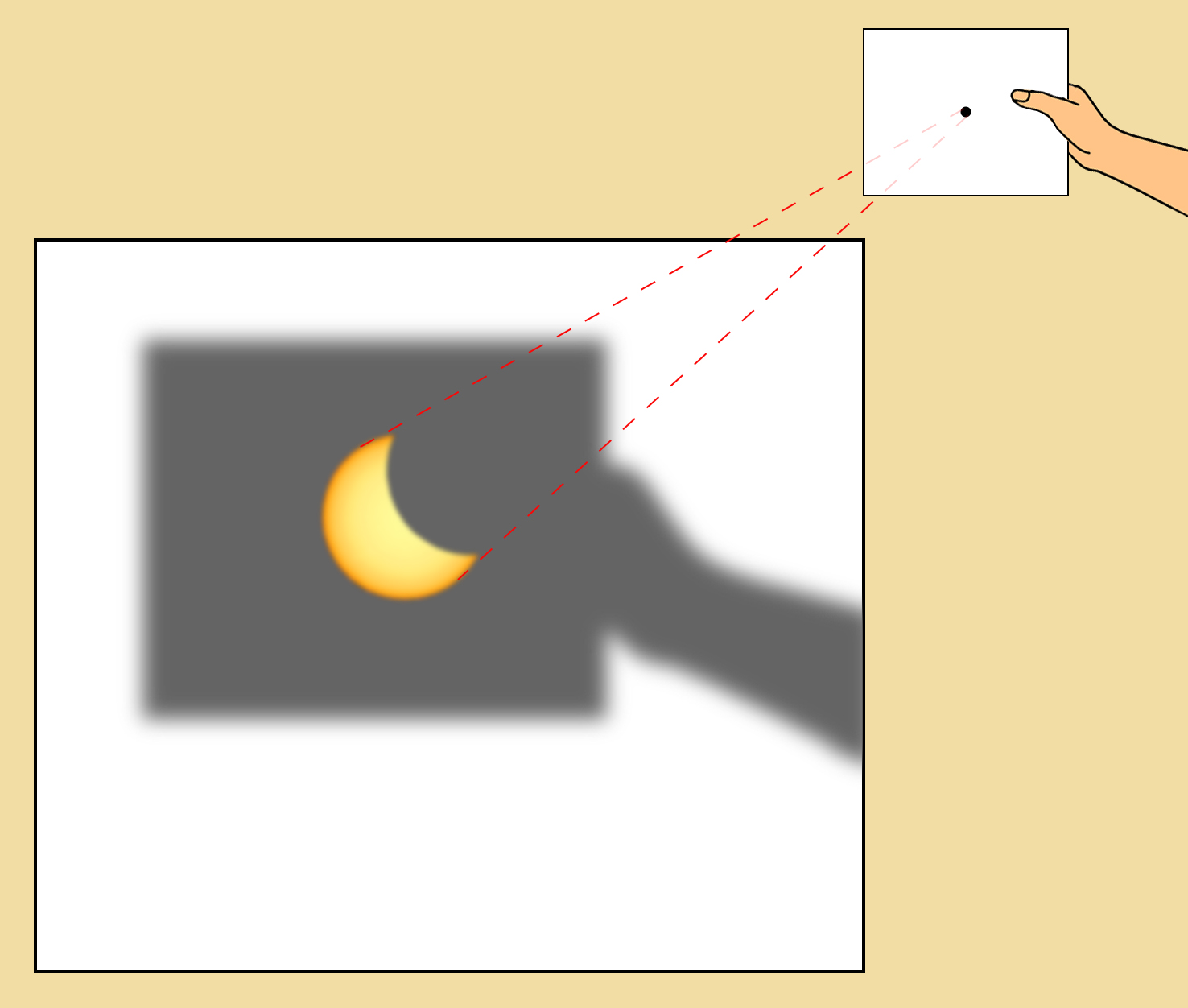
“This is one of the safest and simplest methods. Essentially, you don’t look at the sun; instead, you project its image,” says Núñez. To do this, you only need to make a small hole in a piece of card and let the sunlight pass through it and fall onto a wall, the ground, or a sheet of paper. There you will be able to see how the moon appears to ‘bite’ into the sun. In addition to its safety, it allows several people to use it at the same time, notes Nicolás, and it can also be done with other perforated objects, such as a slotted spoon, which will create multiple miniature eclipses.
Be careful with your phone
Our eyes are not the only things that can be affected. Electronic devices can be too and, while taking a quick photo with a mobile phone should not cause a problem, “if you record a long video pointing directly at the sun, the star could overheat or damage the phone’s camera sensor. In addition, mobile phones rarely capture an eclipse properly without accessories; the result is usually an overexposed white disc,” explains Núñez.
Choose an appropriate location
One drawback of this eclipse is that it will occur at sunset, with the sun very low on the horizon. “You need to find a location that offers a completely unobstructed view of the western horizon. A mountain, building, or even low-lying haze could block the totality, even if you are within the correct path. Beaches and places with no mountains to the west would be ideal locations,” says Núñez. There is therefore no need to climb to high vantage points, with the associated risks. A nearby open area can be more than perfect.
On 29 April, the “mirror day” of the eclipse took place, when the sun was in the same position at the same time as it will be on 12 August. “Those who missed the mirror day can plan using apps that include horizon topography, and of course by observing the sunset in the days beforehand. Although the sun’s altitude will not be identical to that on the day of the eclipse, it will be close enough to confirm whether the western horizon is clear from that location,” Nicolás explains.
National Centre for Geographic Information has made eclipse viewers available to the public, allowing people to find out the time each phase of the phenomenon will occur and the position of the sun from any location in Spain. It also indicates whether the eclipse will not be visible from a selected point due to being outside the visibility path or because of the presence of mountains.
Beyond achieving the best visibility, there are also concerns about incidents occurring in very remote areas. For safety reasons, it is recommended to choose locations that are easy to access and that have basic facilities such as toilets, drinking water, parking areas, and mobile coverage.
“The choice of location from which to observe the eclipse is a very serious matter, and authorities have been asked to draw up lists of recommended observation sites,” says Nicolás. The information is compiled by the regional governments on the Trio of Eclipses website.
Protection against heat
A few days before the event, the Aemet forecast for each municipality can be checked via this link, allowing people to prepare for the weather conditions on the day. Given the date, the most likely adverse condition will be heat. Although at the peak time of the eclipse, after 8:00 p.m., the sun will no longer be high in the sky shining directly overhead, temperatures may still remain high. It is also worth bearing in mind that in many cases the eclipse will be the culmination of a full day of astronomical activities.
Staying hydrated regularly — as alcohol is dehydrating —, wearing light clothing and seeking out shade or cool places is key here. Special attention should be paid to the elderly, children and people with disabilities; and it is important to remember never to leave anyone or any animal in a parked, locked vehicle.
High temperatures also cause food to spoil more quickly, which can lead to food poisoning. For this reason, it is important not to leave food exposed to the sun.
Sunscreen should be applied 30 minutes before sun exposure and reapplied every two hours. The UV radiation index for the day can be checked on the Aemet website.
People who need to carry medication should keep it in a cool place. The Ministry of the Interior’s guide to safe eclipse viewing also recommends checking that any treatment does not increase sensitivity to ultraviolet radiation.
The heat is accompanied by an increased risk of wildfires. Spanish regulations prohibit any kind of fire in forest areas during this time of year. When the risk level is “very high” or “extreme”, additional precautions must be taken with machinery and equipment that may generate sparks or similar, and barbecues and the burning of waste in open air are forbidden. In addition, throughout the year it is prohibited to set off fireworks, light fires, throw cigarette butts on the ground, or leave glass that could create a magnifying-glass effect, as well as parking vehicles in places that obstruct access for wildfire response teams. Aemet provides national maps showing wildfire risk levels.
Other meteorological events
On the other hand, a total eclipse can produce small, localised and temporary meteorological effects, especially within the path of totality, such as slight drops in temperature, changes in wind, or increased atmospheric humidity. “In addition, as it occurs close to sunset, some of these effects will overlap with the natural cooling of the late afternoon,” says Núñez. “However, it should be noted that these are local and temporary changes, meaning they do not involve dangerous or large-scale phenomena,” says Nicolás. The sudden darkness caused by the eclipse may also affect the behaviour of domestic animals. To avoid surprises, they should be kept supervised and under control.
Clouds will be decisive for observing the eclipse. As it will take place with the sun very low on the horizon, even small clouds in the western sky can spoil the view. If the cloud cover develops into a storm with heavy rain, the best option is to take shelter in higher ground. If it is accompanied by significant electrical activity, the safest place is a closed vehicle with the engine switched off. Civil Protection provides information on how to act in adverse weather conditions, as well as other risks, on its website.
Insect bites
The time of year when the eclipse will take place is favourable for insect bites from species that can transmit diseases, such as mosquitoes or ticks. The best way to avoid them is to wear long-sleeved clothing and long trousers in light colours. Repellents can also be used on the skin or, in some cases, on clothing. These can be purchased in pharmacies and para-pharmacies. After use, hands should be washed thoroughly, as ingestion can be toxic.
Specifically for mosquitoes, it is advisable to avoid proximity to stagnant water wherever possible. As for ticks, it is important to carefully check both skin and clothing, paying particular attention to the armpits, groin, hair, navel, the back of the ears, and around the waist, especially after walking through vegetation. If a tick is found, it can be removed using tweezers, placing them firmly against the skin and pulling straight upwards to ensure no parts remain embedded, although it is preferable for this to be done by healthcare professionals. In the following days, it is important to monitor for any signs of rash, redness, or fever.
Other bites and stings that may occur include those from wasps, bees, and spiders. The physiological reaction will depend on the insect and the individual, but in the case of a mild local reaction it is usually enough to wash the area with soap and water and apply ice or a cold compress to reduce swelling and pain. In the case of bee stings, the sting should also be removed. For people with allergies, it is advisable to carry antihistamine medication, and in the event of any complications, seek medical attention.
Risks due to crowds
Crowds can lead to falls, dizziness, episodes of anxiety, or difficulties accessing water and medical assistance. It is recommended to avoid overcrowded areas whenever possible and, if attending, to follow the safety instructions issued by the authorities. It is also advisable to locate emergency exits, “violet points”, shaded areas, toilets, and drinking water fountains.
At massive events, the likelihood of contracting infectious diseases also increases. It is advisable to keep vaccinations up to date, wash hands frequently, cover the mouth and nose when coughing or sneezing, and avoid attending if you have symptoms of a respiratory illness.
Finally, just in case any unforeseen situation arises, remember to carry any necessary medication and your health card, as well as those of any dependants.