Body fat reserves of Svalbard polar bears increased over last two decades, though ice levels decreased
The body composition index – used to estimate body fat reserves – of polar bears in Svalbard declined between 1995 and 2000, but then increased until 2019, despite the fact that the number of ice-free days in this Norwegian Arctic archipelago increased by about four days per year during that period. "Increases in some prey species, including harbour seals, reindeer, and walrus, may partly offset reduced access to seals," the authors write in Scientific Reports.
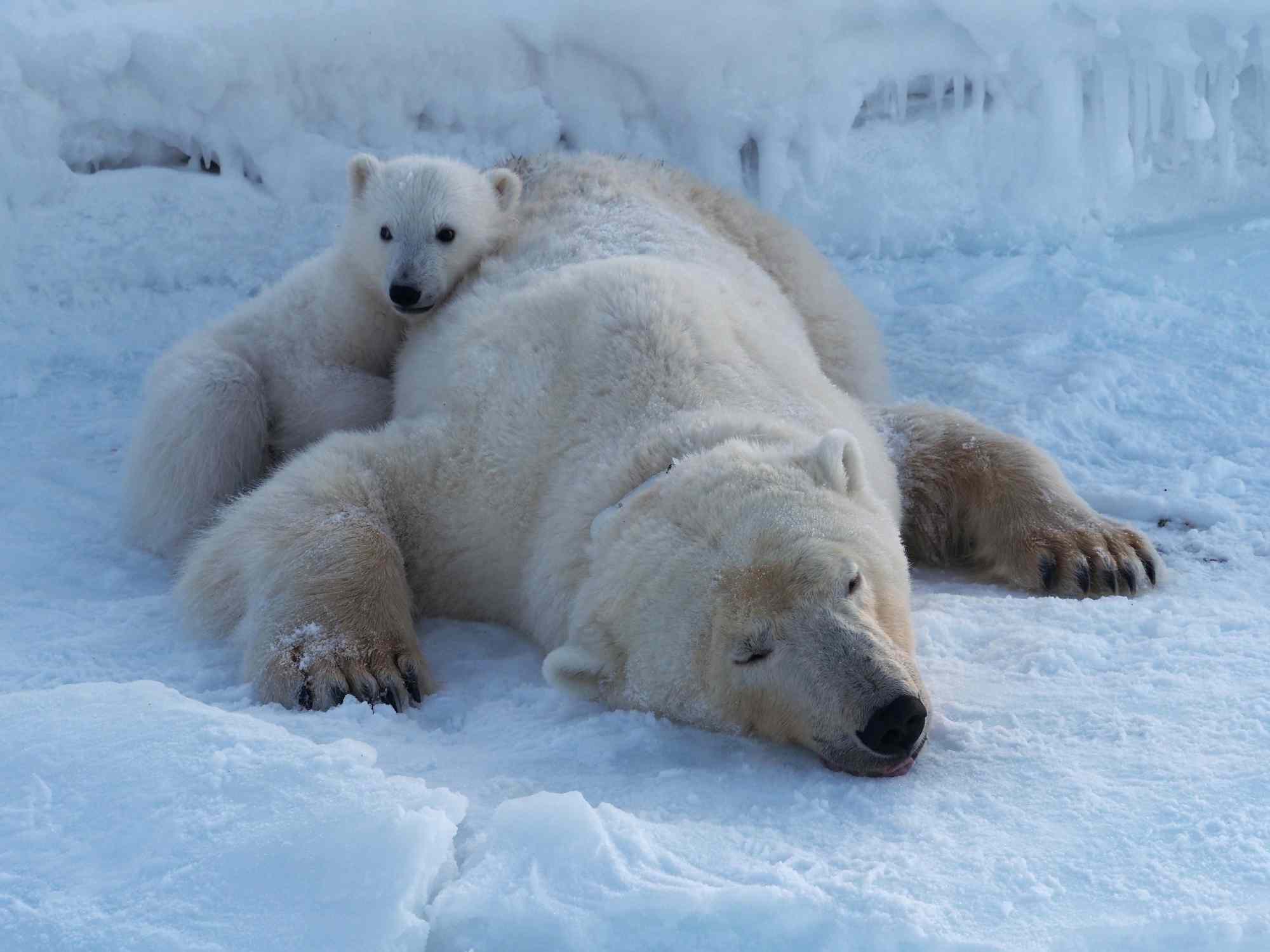
A sedated polar bear lies on the ice with its cub huddled against it. Credit: Jon Aars / Norwegian Polar Institute.
260129 osos polares andrés EN
Andrés Ordiz Fernández
Professor in the Department of Zoology, Faculty of Biological and Environmental Sciences of the University of León and member of the IUCN Bear Specialist Group
Global warming has halved the surface area of sea ice in the northern hemisphere in just a few decades, from six to three million square kilometres. If the trend continues, at least 33% of the current polar bear population (around 26,000 in total) could disappear in the next 50 years. In their new article, Aars and colleagues emphasise that ice loss has had clear negative effects on several Arctic polar bear populations. However, in this new study, they have found that in their study area (Svalbard, Norway, in the western part of the Barents Sea), the rapid ice loss in recent decades does not appear to have caused a deterioration in the body condition of polar bears. Body condition is important because it determines, for example, whether animals can reproduce. Aars and colleagues say that bears have been able to use alternative food sources (reindeer, walrus, bird eggs, etc.) to their main prey (several species of seals) and that this probably explains their results. They have a very solid database covering a long time series (1995-2019).
The article illustrates that the complex relationship between habitat characteristics, ecosystem structure and alternative food sources that bears can find in some parts of their range prevents conclusions from being extrapolated between the different polar bear populations that still exist. The authors suggest that bears are able to use these alternative prey because their density has increased, especially walruses, as they had previously been overexploited by humans. Along the same lines, they point out that there are not as many bears as there could be (“carrying capacity” is the ecological concept) in their study area because many have been hunted in previous decades.
Aars and colleagues conclude, however, that given the projections for global warming in the future and the trend of other polar bear populations in a scenario of ice loss, the bears in their study area will also suffer similar effects given the rapid loss of ice. This context makes it necessary to continue studying the trend of the bear population and that of the ecosystem in general. This conclusion is certainly valid for other populations of endangered species and the habitat on which they depend.
Jon Aars et al.
- Research article
- Peer reviewed