International Breast Cancer Center IBCC (Barcelona)
If you are the contact person for this centre and you wish to make any changes, please contact us.
Head of the Breast Imaging Unit at the International Breast Cancer Center (IBCC) and at the Teknon Medical Center in Barcelona.
Head of the International Breast Cancer Centre IBCC (Barcelona), Scientific Medical Director of the Institute of Oncology of Madrid (IOB) and co-founder of Medica Scientia Innovation Research (MedSIR)

Nature has published two independent studies demonstrating the ability of large language models based on artificial intelligence (AI) to support different stages of patient management in controlled settings. The first study analysed MIRA, an AI agent that operates within electronic health records, which achieved a diagnostic accuracy of nearly 88%, compared with 78% for a panel of physicians. The second study evaluated AMIE, a conversational clinical reasoning model, against 21 primary care physicians across 100 multi-visit scenarios. AMIE achieved performance comparable to, and in some cases better than, that of physicians in terms of treatment accuracy, test ordering, and adherence to clinical guidelines. The models are based on simulations or retrospective data, which limits the strength of the conclusions that can be drawn. The findings are consistent with another model published in Science last April.

The use of artificial intelligence (AI) in medical diagnosis centres on computing and data processing. Research published in Science assesses the diagnostic capabilities of an advanced large language model, which managed to match or outperform human professionals. The team carried out six experiments involving both standardised clinical cases and a study using real cases from emergency department records, using the performance of hundreds of doctors as a benchmark. The AI proved particularly useful in situations of uncertainty, such as the initial stages of triage in the emergency department. However, the authors highlight that the model only processed text, whereas clinical practice also relies on visual and auditory cues.
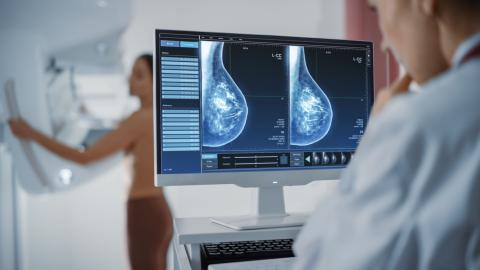
An artificial intelligence (AI) algorithm is capable of estimating a woman's risk of developing breast cancer in the next four years, according to a study published in The Lancet Digital Health. The tool identified women at high risk of developing breast cancer, and nearly one in ten of those who scored in the top 2% according to the algorithm were diagnosed within four years, despite having been discharged from hospital. The tool used mammograms from nearly 400,000 women and was then tested with data from nearly 96,000 women in Australia. The results were confirmed in a Swedish population of more than 4,500 women.
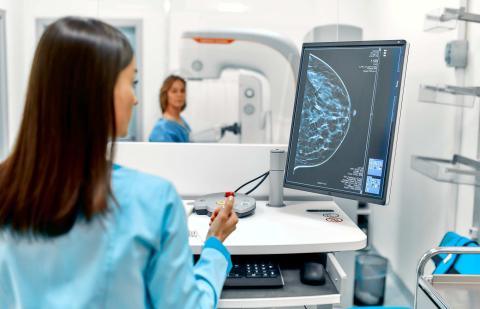
Between April 2021 and December 2022, more than 100,000 women in Sweden were randomly assigned to either AI-assisted mammography screening or double reading, where two radiologists review each mammogram without the aid of AI. AI-assisted screening identified more women with significant cancers without a higher rate of false positives and also achieved a 12% reduction in the rate of interval cancers—those that appear between mammograms because they went unnoticed or are newly developed and more aggressive—compared to the double reading procedure. This is the first clinical trial of its kind, and its results are published in The Lancet.
For women diagnosed with early-stage breast cancer, the long-term risk of developing a second primary cancer is low, around 2–3 per cent higher than that of women in the general population. This is one of the conclusions of a study published by The BMJ, which analysed data from nearly half a million women diagnosed in England between 1993 and 2016 with early-stage invasive breast cancer who underwent surgery. During a follow-up period of up to 20 years, around 65,000 women developed a second primary cancer, but the absolute excess risk compared to the risks in the general population was small.

A standard chemotherapy drug injures surrounding noncancerous cells, which can awaken dormant cancer cells and promote cancer growth, according to a study published today in the journal PLOS Biology.