Five nucleobases of DNA and RNA detected in samples from Ryugu asteroid
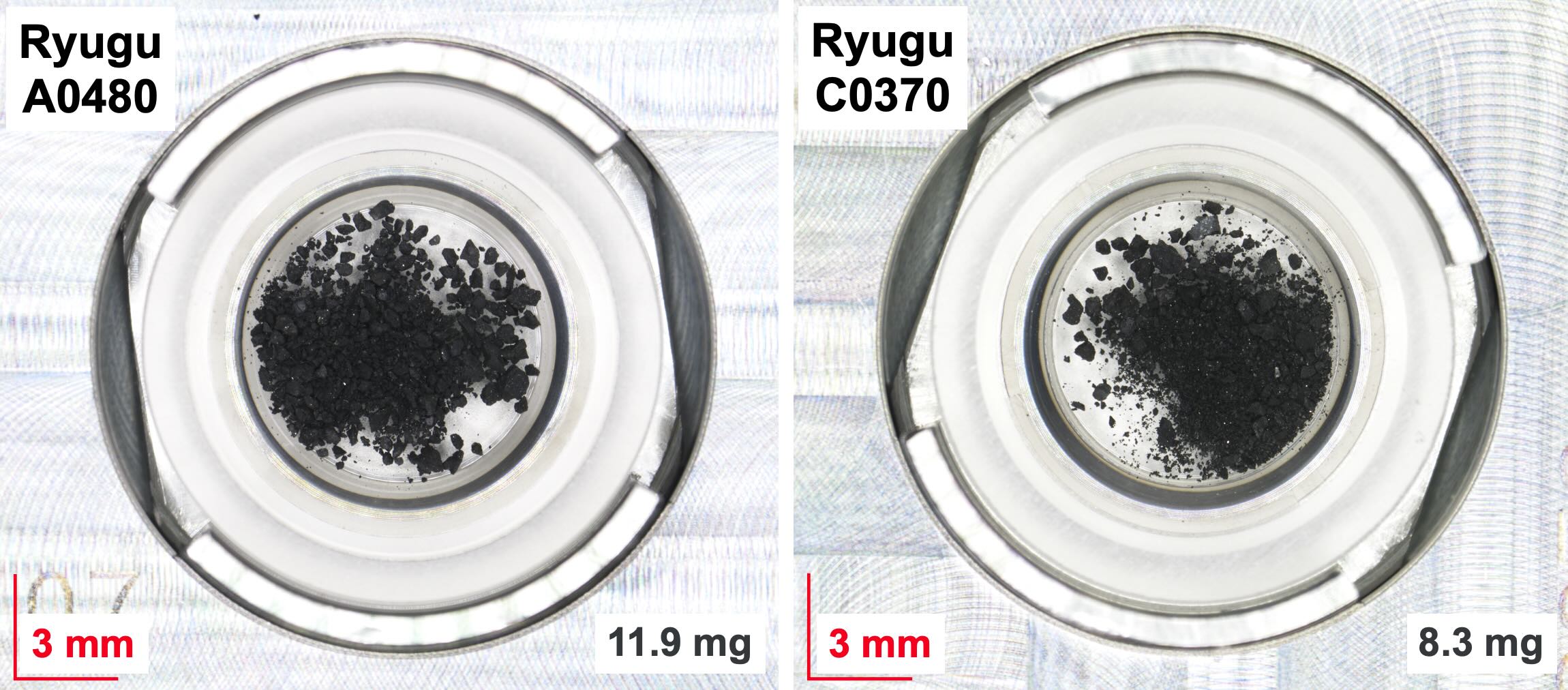
A Japanese research team has identified the five nucleic bases (adenine, guanine, cytosine, thymine, and uracil)—which form the building blocks of DNA and RNA—in samples from the asteroid Ryugu, according to a study published in Nature Astronomy, which compares the composition of these samples with those from the asteroids Bennu and Orgueil. “The detection of various nucleic bases in asteroid and meteorite materials demonstrates their widespread presence throughout the solar system and reinforces the hypothesis that carbonaceous asteroids contributed to the prebiotic chemical inventory of the early Earth,” the authors write.
260316 ryugu césar EN
César Menor Salván
Astrobiologist and lecturer of Biochemistry at the University of Alcalá
The first thing to bear in mind is that these results do not say that the origin of life took place in space, nor that it was due to panspermia, nor that the materials necessary for the origin of life to take place had to come from space.
Another point to bear in mind is that this study tells us nothing about the origin of life. It does not answer any of the outstanding questions regarding the origin of life, just as finding sand, clay and rocks in a field does not explain the origin and evolution of architecture or pottery.
The results are neither surprising nor novel, and that is precisely where their interest lies. They are consistent with everything we already knew and had observed previously. That is the good news! What this tells us is that we can predict the composition of these materials and, with this and the results from Bennu, we have a very clear idea of which organic materials can form under prebiotic conditions anywhere in the universe.
Furthermore, the results are consistent with what we ourselves have seen in Ryugu and in carbonaceous chondrite meteorites, and they are consistent with everything that has already been studied in previous work. This consistency is very important in science.
There is one aspect that seems minor and will surely go unnoticed, but for me it is the most relevant and novel: the role of urea. In this work, they observe that urea is the most abundant compound of all those they have analysed. This is extremely important! We have long proposed that urea is an essential precursor for the starting materials of RNA, and this work provides evidence based directly on samples obtained in space.
The study is very good at the analytical level, but it does not delve into possible routes and mechanisms, which is its main weakness. It is possible that many compounds are not native, i.e., that they are formed as a result of the extraction process. But, in any case, the possible role of urea as a precursor is the most relevant novelty of the study.
Above all, however, statements such as ‘Life did not originate on Earth’ or ‘panspermia is confirmed’—which reinforce the thesis that life ‘landed on Earth from outer space’ and similar claims—should be avoided, as they have no basis whatsoever.
Toshiki Koga et al.
- Research article
- Peer reviewed