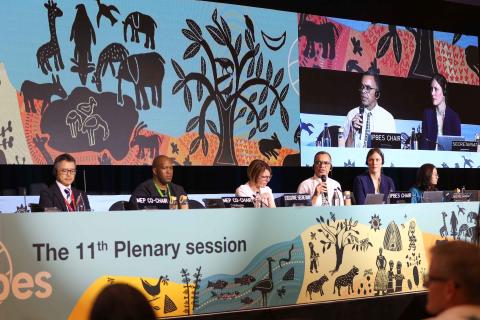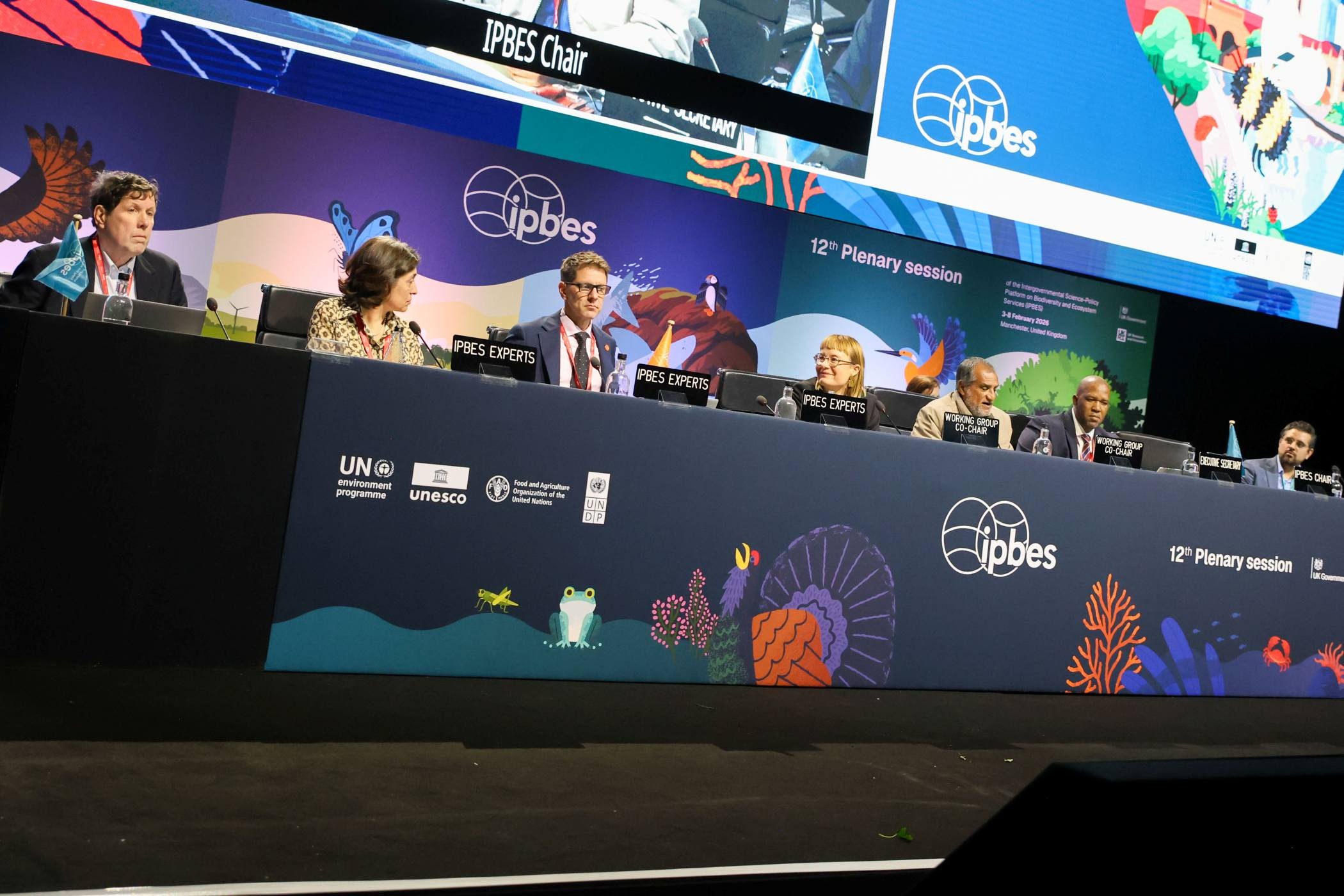
Described as “the IPCC of biodiversity,” the Intergovernmental Science-Policy Platform on Biodiversity and Ecosystem Services (IPBES) has published the Assessment on Business and Biodiversity, a work of almost three years by 79 global experts from science and the private sector, as well as indigenous peoples and local communities from 35 countries. The text, which includes more than 100 specific measures, was approved at the 12th plenary session of IPBES held from February 3 to 8 in Manchester (United Kingdom), attended by representatives of the platform's more than 150 member governments.
To present the main results of the assessment, on Monday, SMC Spain organized a briefing with Ximena Rueda Fajardo, co-chair of the Assessment on Business and Biodiversity, Sebastián Villasante, IPBES expert on several assessments, including the upcoming Global Assessment, and professor at the University of Santiago de Compostela, and Vanessa Rodríguez Osuna, expert and coordinator of Chapter 1 of the Assessment on Business and Biodiversity.
“We have reached a moment of urgency,” warned Rueda. “The first message conveyed by the report is that biodiversity loss and the deterioration of nature leave us no time to wait. We must act now, across all companies, in all sectors, in all countries,” she urged. According to the report, all companies depend on biodiversity and all influence it. The growth of the global economy has come at the cost of an immense loss of biodiversity, which now poses a widespread risk not only to the economy but also to human well-being. However, as Rodríguez explained, “one of the barriers we have identified to business action on these issues is that the scientific information available is sometimes not translated or communicated in a language that makes sense to companies.”
Although the report is global, Villasante assessed the case of Spain: “We are one of the countries in the European Union with the greatest biodiversity, which is absolutely essential for developing any economic activity at the geographical level.” However, “despite this natural wealth, we are below the European average in terms of the habitats evaluated, and we do not have an integrated system that allows us to monitor the impacts on biodiversity in the productive sectors,” he lamented.
Biodiversity does not appear in corporate reports
According to the document, since 1992 there has been an average increase per capita in human capital of 100%, while natural capital reserves have fallen by 40%. In addition, global financial flows in 2023 with negative impacts on nature amounted to $7.3 trillion, while only $220 billion contributed to biodiversity conservation and restoration. Less than 1% of publicly accountable companies mention the effects on biodiversity in their reports.
“Organizations should be accountable and communicate their impacts transparently, as well as what they are doing to improve them and how they are managing their dependencies,” said Rueda. In his opinion, “this is an action that not only depends on government regulations, but also on civil society to drive this change in the behavior of business actors.” Faced with an economic structure that often prioritizes short-term profits, “we must take into account that the planet is finite and guide and encourage companies to also think about the long term, because the consequences of not doing so can be very costly in the future,” the expert summarized.
Regarding Donald Trump's announcement of the United States' withdrawal from IPBES, as well as more than 60 other institutions, Rueda acknowledged: "It is a pity not to have such an important partner, but what we have seen this week has been truly fascinating. It is impressive to see the power of multilateralism with 150 countries united by a common goal.“ Villasante recalled that IPBES ”has not yet received formal notification of its withdrawal, although it seems likely to happen.“ And he issued a message of reassurance: ”The commitment of IPBES and the more than 100 countries that comprise it is unwavering. Its goal of objectively providing the most robust evidence on the state of biodiversity is a very powerful concept about how humanity, progress, knowledge, and cooperation are advancing. And this has never belonged and will never belong to a single country, but to a global community. Scientific cooperation continues and is stronger than ever, despite the short-term decisions of some countries."