There is no evidence that kinesio tape works, according to a meta-analysis
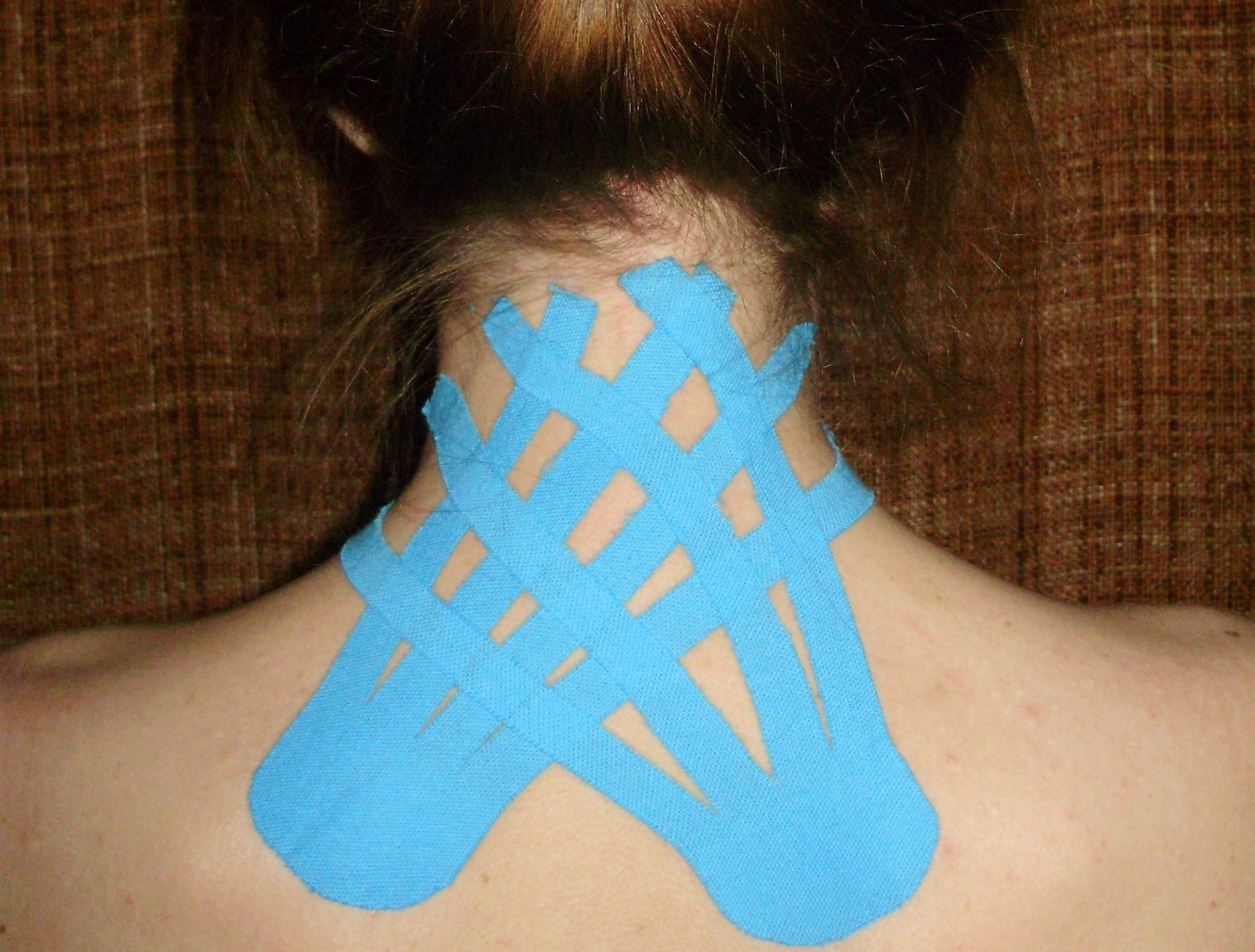
Neuromuscular taping, or Kinesio taping, is widely used to relieve joint and muscle pain and improve range of motion. However, a meta-analysis published in the journal BMJ Evidence-Based Medicine concludes that it may not be as effective as previously thought. This adhesive tape may provide immediate or short-term benefits, but the current evidence is “highly uncertain”. The authors conclude that the lack of robust evidence, coupled with the potential for associated skin irritation, could limit its use in clinical practice.
Jorge Velázquez - kinesio
Jorge Velázquez Saornil
Lecturer in Physiotherapy
This comprehensive review of 128 systematic reviews accurately reflects that the effectiveness of neuromuscular taping is uncertain, since 78% of the previously analyzed studies have critically low methodological quality. Although the study is of high quality in synthesizing data from more than 15,000 participants, its conclusions are cautious because the certainty of the evidence is very low. This means that, while taping may reduce pain immediately, these effects are small, do not last in the medium term, and their clinical relevance is questionable.
This work aligns with existing evidence by clarifying why previous studies produced contradictory results, introducing for the first time the concept of whether the change is actually perceptible to the patient. The authors point out important limitations, such as the strong placebo effect and the lack of control over confounding factors like tension or application technique, which vary greatly between practitioners. Therefore, more high-quality research on this technique is needed, especially considering that daily clinical practice indicates that patients report pain relief with these types of techniques.
Alberto Melián - kinesio
Alberto Melián Ortiz
Deputy Head of the Bachelor’s Degree in Physiotherapy and Senior Lecturer in Musculoskeletal Physiotherapy
“The press release reflects the main conclusion of the study quite well: kinesiotaping may be associated with small improvements—above all very short-lived—in pain and function, but the certainty of the evidence is very low and its real clinical relevance remains uncertain. It is important to emphasize that the study does not demonstrate a robust and sustained benefit over time, but rather a signal of a possible immediate or short-term effect that disappears at medium-term follow-up, with results highly dependent on the comparator used and the type of musculoskeletal condition.
From a methodological point of view, the article has clear strengths: it is a large overview of systematic reviews, including 128 reviews, 310 trials, and 15,812 participants, with an update through October 2025 and an assessment of methodological quality, risk of bias, and clinical relevance. However, these strengths do not fully offset the limitations of the body of evidence included: most of the reviews were of low or critically low methodological quality, there was substantial overlap between reviews, and many results are based on very uncertain evidence or on comparisons with placebo rather than with active interventions relevant to clinical practice.”
Accuracy of the press release
“The press release is reasonably faithful to the article in highlighting that the effect may be immediate or short-term, that the evidence is uncertain, and that skin irritation and itching are possible adverse effects. It is also correct in not presenting the result as conclusive proof of effectiveness, but rather as a review that ‘calls into question’ the usefulness of taping for pain and mobility outcomes. Where some nuance is needed is in the phrase ‘does not seem very effective,’ because the study does not completely rule out possible specific benefits. What it indicates is that, although some effects might reach thresholds of clinical relevance, the uncertainty, heterogeneity, and overall quality of the evidence prevent a strong recommendation.”
Study quality
“The study is of good quality and well designed to answer a broad question, as it combines an evidence map with an overview of reviews. Even so, the quality of the final conclusion is limited by the quality of the primary studies and previous reviews: the paper itself reports that 78% of published reviews were of critically low methodological quality and that the certainty of the evidence was very low in most cases. In other words, the study design is solid, but its findings are constrained by a fragile evidence base.”
Context within the evidence
“This work is consistent with the previous literature: for years, kinesiotaping has shown inconsistent results, with reviews sometimes finding modest effects and other times finding no clinically relevant benefits compared to active comparators. The new article does not radically change this picture; rather, it organizes and expands it, suggesting that any benefits, when present, are small, short-lived, and more evident compared to no treatment or placebo than to active treatments. For journalists, the key message is that this is neither a refuted technique nor one with strong and consistent support for widespread use.”
Study limitations
“Several important factors were taken into account, but relevant limitations remain: the authors analyzed the type of comparator, follow-up, methodological quality, risk of bias, GRADE certainty, overlap between reviews, and clinical relevance using MCID. However, there is still considerable heterogeneity in how kinesiotaping is applied, making it difficult to determine which version of the treatment, if any, works best. In addition, adverse events may have been underestimated because only a minority of trials reported them explicitly, so the true safety profile may not be fully represented.”
Implications for clinical practice
“In clinical practice, the study suggests caution: kinesiotaping could be considered as an adjunct in some patients, particularly if a very short-term relief is valued, but not as a primary treatment or as an intervention supported by high-quality scientific evidence. It is also important to explain that any use should involve shared decision-making, taking into account patient preferences, alternatives with stronger support, and the possibility of skin irritation or itching. In real-world terms, this means that taping may have a limited and contextual role, but it does not justify presenting it as an effective, general solution for all types of musculoskeletal pain.”
Mo et al.
- Research article
- Peer reviewed
- Systematic review
- Meta-analysis