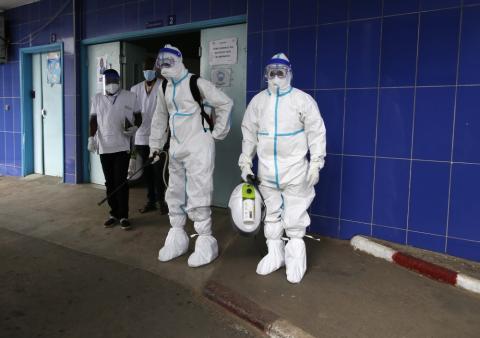
France has confirmed a case of Ebola in a doctor who worked in the Democratic Republic of the Congo
The French Ministry of Health has reported, in a statement, the first case of Ebola in the country. The patient is a doctor who has returned from a humanitarian mission in the Democratic Republic of the Congo, where the outbreak has already claimed 277 lives.
260624_Daniela Manno_ébola Francia
Daniela Manno
Clinical Assistant Professor at the London School of Hygiene & Tropical Medicine (LSHTM)
A case of Ebola disease in a doctor returning from a humanitarian mission in the Democratic Republic of the Congo has been linked to the ongoing Bundibugyo virus disease outbreak. While this is the first reported case in Europe, its detection is not entirely unexpected given that transmission continues in eastern DRC and international travel between affected areas and Europe occurs regularly.
Case identification and contact tracing remain challenging in some outbreak-affected areas, meaning that infected individuals may seek healthcare before their exposure has been recognised. Healthcare workers are particularly vulnerable because they may encounter patients in the early stages of Ebola disease, when symptoms are often non-specific and can be mistaken for other common infections, delaying recognition, diagnosis, and the implementation of appropriate infection prevention and control measures.
However, the overall risk to the general population in Europe and the UK remains low. European countries have well-established protocols for identifying and managing suspected cases of viral haemorrhagic fever. Healthcare facilities should remain vigilant, particularly when assessing travellers arriving from affected areas who present with symptoms compatible with Ebola disease. Rapid identification, isolation, diagnostic testing, contact tracing, and appropriate infection prevention and control measures remain the most effective tools for preventing onward transmission.
Conflict of interest: “I have previously worked on Ebola vaccine clinical trials and outbreak preparedness research, including studies funded by CEPI and other international research funders. I do not have any commercial interests related to Ebola vaccines or therapeutics.”
260624_Jonathan Ball_ébola Francia
Jonathan Ball
Deputy Vice-Chancellor, Liverpool School of Tropical Medicine; and Professor of Molecular Virology, Liverpool School of Tropical Medicine
Healthcare workers are on the frontline in the fight against any outbreak, and in the absence of specific vaccines they have to rely entirely on personal protective equipment and good clinical practice to prevent them from being exposed, and unfortunately sometimes this can be breached.
The risk to the wider community in France is low – we know that isolation of the patient and tracing and monitoring of their contacts is a proven and effective way of minimising onward spread.
260624_Alain Kohl_ébola Francia
Alain Kohl
Professor of Virology and Emerging Infectious Diseases, Liverpool School of Tropical Medicine
Sadly, there is a risk to frontline staff in affected areas, especially those directly working with patients. But monitoring, rapid identification of contacts and tracing are key to prevent further infections. The risk to the general public is very low.