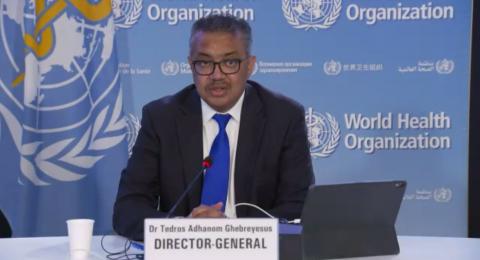
The WHO has declared the Ebola outbreak in the Democratic Republic of the Congo and Uganda a public health emergency of international concern
Last Saturday, the Director-General of the World Health Organisation (WHO), Tedros Adhanom Ghebreyesus, declared that the Ebola outbreak caused by the Bundibugyo virus in the Democratic Republic of the Congo and Uganda constitutes a public health emergency of international concern (PHEIC), following consultation with the organisation’s member states. By 15 May, 246 suspected cases and 80 deaths had been reported in three health zones: Rwampara, Mongbwalu and Bunia.
Daniela Manno - ébola PHEIC
Daniela Manno
Clinical Assistant Professor at the London School of Hygiene & Tropical Medicine (LSHTM)
How concerning is this development?
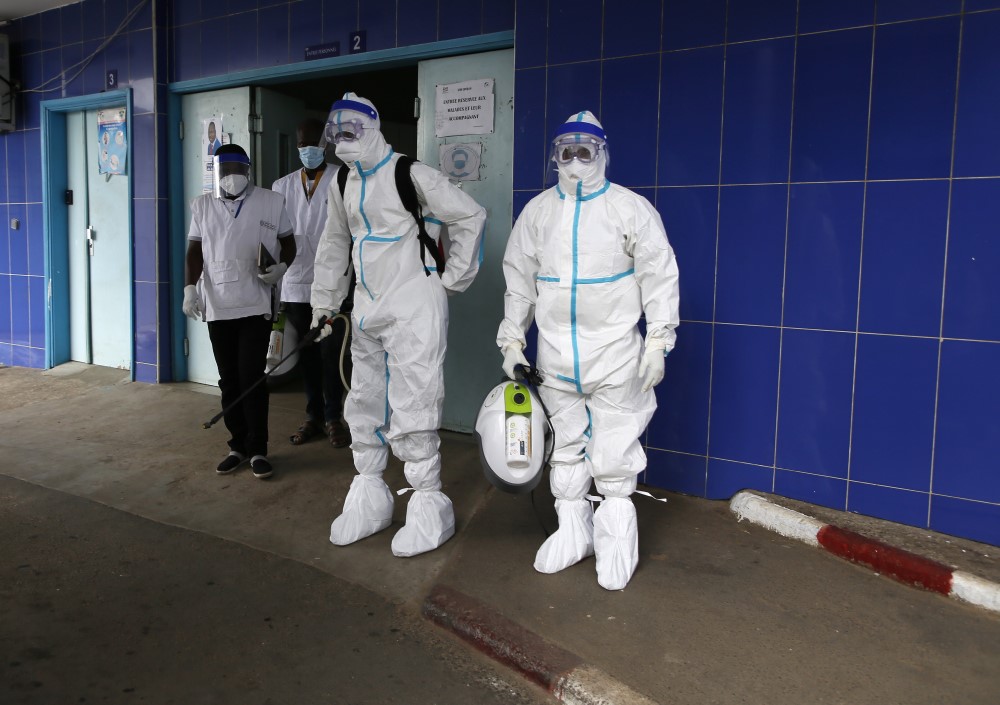
“This is a concerning outbreak for several reasons. First, the number of suspected cases reported before confirmation suggests transmission may have been ongoing for several weeks before the outbreak was formally recognised. Second, the outbreak is occurring in a region affected by insecurity, population displacement, and high population mobility, all of which can complicate surveillance, contact tracing, and delivery of healthcare.
“A previous Ebola outbreak affecting North Kivu and Ituri provinces between 2018 and 2020 lasted for nearly two years, with insecurity and community mistrust repeatedly disrupting contact tracing, vaccination, and response activities.
“In addition, the outbreak is now thought to becaused by Bundibugyo virus, a rare Ebola-causing virus for which there are currently no licensed vaccines or therapeutics specifically approved. There are also no vaccines in late-stage clinical development that could be readily deployed during the outbreak.
“However, it is important to emphasise that DRC has extensive experience responding to Ebola outbreaks, and outbreak response capacity is significantly stronger today than it was a decade ago.
What is a Public Health Emergency of International Concern (PHEIC)? How does this change our understanding of the situation or the public health response?
“A Public Health Emergency of International Concern, or PHEIC, is the highest level of international public health alert that WHO can declare under the International Health Regulations.
“A PHEIC does not mean the outbreak has become a global pandemic. Rather, it reflects that the event is considered serious enough to require coordinated international action, enhanced surveillance, resource mobilisation, and cross-border collaboration.
“In practical terms, the declaration helps mobilise international attention, funding, technical support, and coordination between countries and public health agencies.
How concerning is this? When was the last time a PHEIC was declared for Ebola?
“WHO previously declared a PHEIC during the large Ebola outbreak in North Kivu and Ituri provinces in DRC between 2018 and 2020, and before that during the 2014–2016 West Africa Ebola epidemic.
“The current declaration reflects concern about the operational complexity of the outbreak, including insecurity, population movement, delayed detection, and the involvement of Bundibugyo virus disease, for which there are currently no licensed vaccines or therapeutics and no vaccines in advanced clinical development that could be readily deployed during the outbreak.
The WHO say it does not meet the criteria of a pandemic emergency. What is the difference between a PHEIC and a pandemic emergency?
“A PHEIC is a formal legal mechanism under the International Health Regulations designed to trigger international coordination and support for serious public health events.
“A pandemic refers to sustained global spread of a disease across multiple countries or continents.
“Ebola outbreaks can be extremely serious and devastating locally and regionally, but Ebola does not spread in the same way as respiratory viruses such as influenza or COVID-19 and is generally much less transmissible. Transmission usually requires direct contact with bodily fluids or contaminated materials from an infected person, which makes sustained global spread much less likely.
Do we know any more about the strain causing this outbreak and does that affect the response?
“Current evidence suggests the outbreak is caused by Bundibugyo ebolavirus (BDBV), a rare Ebola-causing virus previously identified in only two documented outbreaks, in Uganda in 2007 and DRC in 2012.
“This is important because currently licensed vaccines and therapeutics developed for Ebola virus (formerly Zaire ebolavirus) are not expected to provide protection against Bundibugyo virus disease.
“As a result, response efforts rely heavily on classical public health measures such as rapid case detection, isolation, contact tracing, infection prevention and control, safe burials, and community engagement. These measures were critical in eventually controlling the 2014–2016 West Africa Ebola epidemic, the largest Ebola outbreak ever recorded, and if implemented rapidly and effectively they can also help control this outbreak.
Any other comments?
“This outbreak highlights both the progress and the remaining gaps in global epidemic preparedness. Considerable advances have been made in Ebola surveillance, diagnostics, outbreak response systems, vaccines, and therapeutics over the past decade. However, preparedness remains uneven across different filoviruses, particularly for rarer Ebola-causing viruses such as Bundibugyo ebolavirus.
“It also highlights how insecurity, displacement, and fragile health systems can continue to complicate outbreak response efforts, even when scientific tools and public health expertise are available.
Conflicts of interest: Dr Daniela Manno has previously worked on Ebola vaccine clinical trials and outbreak preparedness research in Sierra Leone, Tanzania, and the Democratic Republic of Congo.
Emma Thompson - ébola PHEIC EN
Emma Thompson
Profesora clínica de Enfermedades Infecciosas y directora del MRC–University of Glasgow Centre for Virus Research, Universidad de Glasgow (Reino Unido)
The current outbreak in DRC and Uganda is caused by the Bundibugyo virus, a member of the species Orthoebolavirus bundibugyoense, closely related to Ebola virus (species Orthoebolavirus zairense).
There are several reasons for concern.
First, reports that initial GeneXpert Ebola testing was negative suggest that the outbreak may have gone undetected for some time, with early diagnostic blind spots delaying recognition.
Second, infections in healthcare workers are a serious warning sign in any filovirus outbreak, because they indicate unrecognised transmission in healthcare settings and gaps in infection prevention and control.
Third, the identification of cases in Kinshasa and Kampala, hundreds of kilometres from Ituri province, shows that the virus has already moved through human mobility networks before full containment was in place.
Bundibugyo virus has caused two previously recognised outbreaks. The first was in Bundibugyo District, Uganda, in 2007–2008, with 131 reported cases and 42 deaths, and a case fatality proportion of 34–40%. The second was in Isiro, Democratic Republic of the Congo, in 2012, with 38 laboratory-confirmed cases and 13 deaths, although wider outbreak reports including probable and suspected cases gave higher totals. These figures are lower than the case fatality rates seen in many outbreaks caused by Ebola virus, but they are still extremely serious. Bundibugyo virus disease is not a mild infection.
There is a licensed vaccine that targets Ebola virus from the species Orthoebolavirus zairense (rVSV-ZEBOV). Experimental non-human primate work suggests that rVSV-ZEBOV may provide partial heterologous protection against Bundibugyo virus, but this cannot be assumed to translate into reliable protection in people during an outbreak. Adenovirus- and MVA-vectored vaccine platforms may offer broader possibilities, particularly where multivalent constructs are used, but recent immunological data suggest that some licensed or advanced platforms still induce responses that are predominantly directed against Ebola virus rather than broadly cross-reactive across all ebolaviruses. In plain terms, we do not currently have a proven, licensed, Bundibugyo-virus-specific vaccine available for outbreak control and further urgent research is required.
The same applies to therapeutics. Approved monoclonal antibody treatments such as Inmazeb and Ebanga were developed for disease caused by Ebola virus, not Bundibugyo virus, and their efficacy against other ebolaviruses has not been established. There are promising experimental broad-spectrum antibodies, but these are not yet a substitute for rapid detection, high-quality supportive care, infection prevention and control, and contact tracing.
The immediate priorities are therefore practical and scientific: Bundibugyo-virus-capable diagnostics, rapid genomic sequencing, strong infection prevention in healthcare settings, safe clinical pathways, contact tracing, community engagement, and treatment centres able to deliver high-quality supportive care. Genomic sequencing is particularly important because it can confirm the virus species, identify whether cases are linked, reconstruct transmission chains, and detect whether the outbreak reflects sustained human-to-human transmission or multiple introductions.
This outbreak also highlights a persistent weakness in epidemic preparedness. We tend to build tools around the best-known outbreak pathogens, but rarer viruses such as Bundibugyo virus can still cause severe disease and international spread. Sustained investment in high-containment laboratories, diagnostic development, genomic surveillance, vaccine platforms, therapeutics and international research partnerships is essential. These capacities cannot be assembled at speed once an outbreak is already moving.
Conflicts of interest: Professor Thomson is Director of the MRC–University of Glasgow Centre for Virus Research and is involved in research collaborations in Uganda relating to viral surveillance, genomics and emerging infectious diseases. She has received research funding from UKRI, MRC, NIHR and other public and charitable funders. She has no relevant personal financial interests relating to Ebola vaccines or therapeutics.
Vinod Balasubramaniam - ébola PHEIC EN
Vinod Balasubramaniam
Molecular Virologist and the Leader of the Infection and Immunity Research Strength from the Jeffrey Cheah School of Medicine & Health Sciences at Monash University in Malaysia
The WHO declaration is scientifically justified, but it should not be read as a reason for public panic. Ebola does not spread like COVID-19 or influenza. It usually requires direct contact with blood, body fluids, contaminated materials, or unsafe healthcare and burial practices. This means Ebola outbreaks can be controlled, but only if the response is early, coordinated and trusted by communities.
What makes this outbreak important is that it involves Bundibugyo virus, a rarer member of the ebolavirus family. Most of the vaccines and antibody treatments we commonly associate with Ebola were developed for Zaire ebolavirus, not Bundibugyo virus. At best, a Zaire-based vaccine may provide limited or partial cross-reactive immunity, but in practical outbreak control, we should not assume reliable protection unless this is proven. This is why a Bundibugyo-specific vaccine, or ideally a broader pan-ebolavirus vaccine, is likely needed.
The warning signs are clear. Suspected undetected transmission, spread across borders, and infections or deaths among healthcare workers. When healthcare workers are affected, the health system itself becomes vulnerable, and that can accelerate an outbreak.
The priorities now are straightforward. This includes rapid diagnosis, safe isolation, contact tracing, strong infection prevention in hospitals, safe and dignified burials, and honest communication with communities. For countries outside the affected region, including Australia and Southeast Asia, the immediate risk remains low, but preparedness still matters. This is not about border closures or fear. It is about supporting affected countries quickly and using evidence-based public health before the outbreak becomes harder to contain.