What is melanoma?
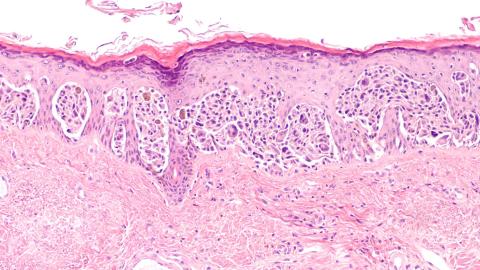
Melanoma is a type of skin cancer that originates in cells called melanocytes. Melanocytes produce melanin, the pigment that gives the skin its colour. There are four stages of the disease:
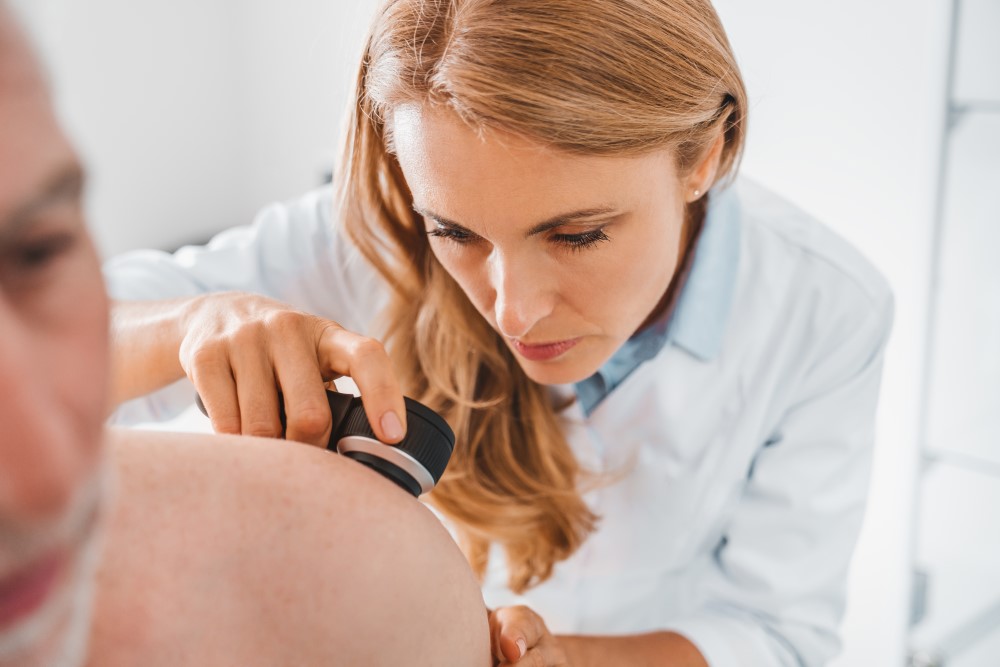
- Stage 1: superficial melanoma. “Early detection saves lives,” says Eva Muñoz Couselo, head of the Research Group on Melanoma and other skin tumours at the Vall d’Hebron Institute of Oncology in Barcelona, tells the SMC Spain. When melanoma is diagnosed at these early stages, surgery is usually curative in the vast majority of patients, explains Muñoz, who is also the clinical care coordinator in the Department of Medical Oncology at Vall d’Hebron University Hospital.
- Stage 2: deeper melanoma. Around 40 per cent of patients seek oncological care with thicker melanomas, according to Alfonso Berrocal, head of the Oncology Department at the General University Hospital of Valencia. “It is not a completely superficial tumour, but it is still a curable tumour”; furthermore, drug treatments can be administered to reduce the risk of relapse, which stands at 40 per cent, says Berrocal, who is also president of the Spanish Multidisciplinary Melanoma Group.
- Stage 3: melanoma affecting the lymph nodes. It can still be treated with surgery, but the risk of relapse at stage 3 is already close to 70 per cent”, warns Berrocal, adding that melanomas at this stage are relatively rare in clinical practice: 10 per cent of cases.
- Stage 4: metastatic melanoma. These are tumours that have spread to more distant parts of the body. According to Berrocal, this stage accounts for 15 % of cases seen in his practice.
How common is melanoma?
According to the data from the Spanish Network of Cancer Registries (REDECAN), there will be more than 8,000 new cases of melanoma in this country in 2026, which corresponds to around 16 new cases per 100,000 inhabitants. In Spain, it is the twelfth most common type of cancer in men (with an incidence comparable to that of leukaemia), and the tenth most common in women (with an incidence comparable to that of ovarian cancer).
“Beyond the absolute number of cases, the key message is that the incidence of melanoma continues to rise and is likely to continue doing so over the coming decades,” says Muñoz. According to data from GLOBOCAN, a World Health Organisation project, by 2045 in Spain there will be 21 % more new annual cases of melanoma compared with 2022.
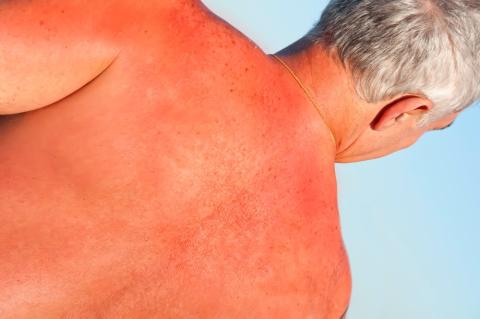
Many people who develop melanoma today are suffering the consequences of sun exposure habits formed years ago. Consequently, although younger generations have better sun protection habits than previous ones, an overall increase in incidence is being observed. “The damage caused by the sun is cumulative. We accumulate mutations over time until a tumour develops,” Berrocal tells the SMC Spain.
What differences are observed between women and men?
According to data from REDECAN, over the last decade the estimated rates of melanoma have risen slightly more among men than among women. The figure rose from 13.8 to 15.9 cases per 100,000 men between 2016 and 2026, whilst remaining stable among women (14.2 per 100,000).
“Women tend to have slightly higher rates in early and middle adulthood, whilst men have higher rates from the age of 60–65 onwards,” according to Muñoz. Therefore, considering overall incidence data in an ageing population, the burden of disease ends up being greater in men.
Men, unfortunately, tend to ignore suspicious pigmented lesions and seek medical advice later, observes Berrocal. “This means that tumours are diagnosed at more advanced stages and helps to explain why they also have poorer survival outcomes,” agrees Muñoz.
The location of tumours also varies by gender. “In women, melanomas are more common on the legs — because they wear skirts and are exposed to the sun —, whilst in men, melanomas are more common on the torso because they often work in the fields or on building sites” without adequate clothing, summarises Berrocal.
How dangerous is this cancer? How can it be treated?
“In patients with metastatic melanoma treated with combinations of immunotherapy, approximately half are still alive after 10 years, something that was unthinkable just a decade ago,” Muñoz sums up. These therapies also help to reduce the risk of relapse in patients who have undergone surgery. However, “there are still many people who die,” points out Berrocal. “It remains an aggressive disease, requiring complex treatments, yet one that is relatively simple to prevent.”
Before 2010, the mortality rate for melanoma once it had become metastatic was practically 100 %, recalls Berrocal. From 2011 onwards, new treatments emerged.
- Immunotherapy, which stimulates the body’s own immune system to recognise and destroy tumour cells. “In fact, melanoma was the gateway to immunotherapy in cancer treatment,” says Berrocal. The first treatment of this kind, called ipilimumab (a human monoclonal antibody produced using recombinant DNA technology), “enabled us to cure up to 20–25 per cent of patients and was a hugely significant breakthrough”, recalls the oncologist.& nbsp;Two years later, a new generation of immunotherapy arrived: anti-PD1 drugs (nivolumab and pembrolizumab), which are administered intravenousWith a minimum follow-up of 10 years, median overall survival was 71.9 months with nivolumab plus ipilimumab, 36.9 months with nivolumab, and 19.9 months with ipilimumab," according to results from the Phase 3 CheckMate 067 trial published in 2024.
- Targeted therapies for patients whose tumours harbour specific mutations. “The identification of recurrent mutations in the BRAF gene (specifically the V600E mutation), present in more than 50 per cent of cutaneous melanomas, has revolutionised the field, as it has served as the basis for the development of genetically targeted therapies,” said Marisol Soengas, head of the CNIO’s melanoma research group, in a speech in 2022. Specifically, two drugs (dabrafenib and trametinib) are administered orally. In a clinical trial published in 2024 involving 870 patients with this mutation, the risk of death was 25 per cent lower with this combination therapy than with a placebo.
How promising are therapeutic vaccines against melanoma?
Merck and Moderna have developed a personalised mRNA vaccine, called intismeran, to treat melanoma. “It is important to clarify that these are not preventive vaccines like measles or HPV vaccines, but treatments designed to train the immune system to recognise specific characteristics of each patient’s tumour,” explains Muñoz.
The results of a phase 2b trial of this product were presented at the American Society of Clinical Oncology (ASCO) conference. This trial compared a group of patients who received Intismeran alongside the existing immunotherapy treatment (pembrolizumab) with another group who received only pembrolizumab. “After 5 years’ follow-up, intismeran plus pembrolizumab demonstrated sustained, durable treatment benefits versus pembrolizumab alone in resected high-risk melanoma," the authors write. If the phase 3 clinical trial – which is already underway – confirms the results, “it could establish the first true standard for personalised RNA vaccines in oncology," Luis Álvarez-Vallina, head of the CNIO-HMarBCN Clinical Research Unit in Cancer Immunotherapy, told SMC Spain at the time.
However, specialists are urging caution. “We have seen many promising phase 2 studies in oncology which, when they reached phase 3 [with a larger population], proved ineffective,” says Berrocal. Furthermore, these treatments are “extraordinarily” complex, the oncologist insists: they require obtaining a tumour, sequencing its DNA, identifying the set of proteins that will generate the strongest immune response, and preparing a personalised mRNA to vaccinate each person against their own tumour.
How can melanoma be prevented?
The good news is that “melanoma is one of the most preventable cancers”, as Muñoz puts it: excessive exposure to ultraviolet radiation, particularly sunburn during childhood and adolescence, is the main modifiable risk factor. Avoiding this excessive exposure is not just about using sun cream: “ it also involves avoiding sunburn, seeking shade during the middle of the day, wearing suitable clothing, a hat and sunglasses, and completely avoiding sunbeds”, recommends the specialist. “It could also mean wearing a cap, a suitable T-shirt, or using a parasol on the beach. There are other things we don’t usually associate with melanoma prevention, but which are also important,” Berrocal agrees.
Prevention messages have not been equally successful across all population groups. “Whilst parents are careful to protect their children, ensuring they have very good sun protection, once they reach adolescence, that sun protection is no longer the same,” says Berrocal. The oncologist believes it is necessary to target campaigns at these younger age groups and workplace; “There are people who work outdoors, and there are sportspeople who are not aware of the need for sun protection.”
Are other types of skin cancer a cause for concern?
“Melanoma remains the most worrying form of skin cancer,” says Muñoz, due to its high potential to metastasise and because it is responsible for the majority of skin cancer deaths. However, the incidence of basal cell carcinoma and squamous cell carcinoma – two types of skin cancer that are more common, but less dangerous than melanoma – is on the rise. In the coming years, they could come to constitute “ a significant health problem, particularly in terms of healthcare provision”, according to Berrocal.