The first case of human infection with the Shamonda virus has been identified in a patient with pre-existing conditions who died in France
The French authorities have announced the first recorded case of human infection with the Shamonda virus. The patient was receiving treatment for a serious illness and died in early October. This virus was first identified in farm animals in Europe this past summer, but had previously been detected in animals outside the continent. It is usually transmitted between animals via the bites of infected midges (Culicoides). It is still unknown how the patient contracted the viral infection and whether this was the direct cause of death. The European Centre for Disease Prevention and Control (ECDC) in a press release has stated that it is monitoring the situation closely.
David Roiz - Shamonda
David Roiz
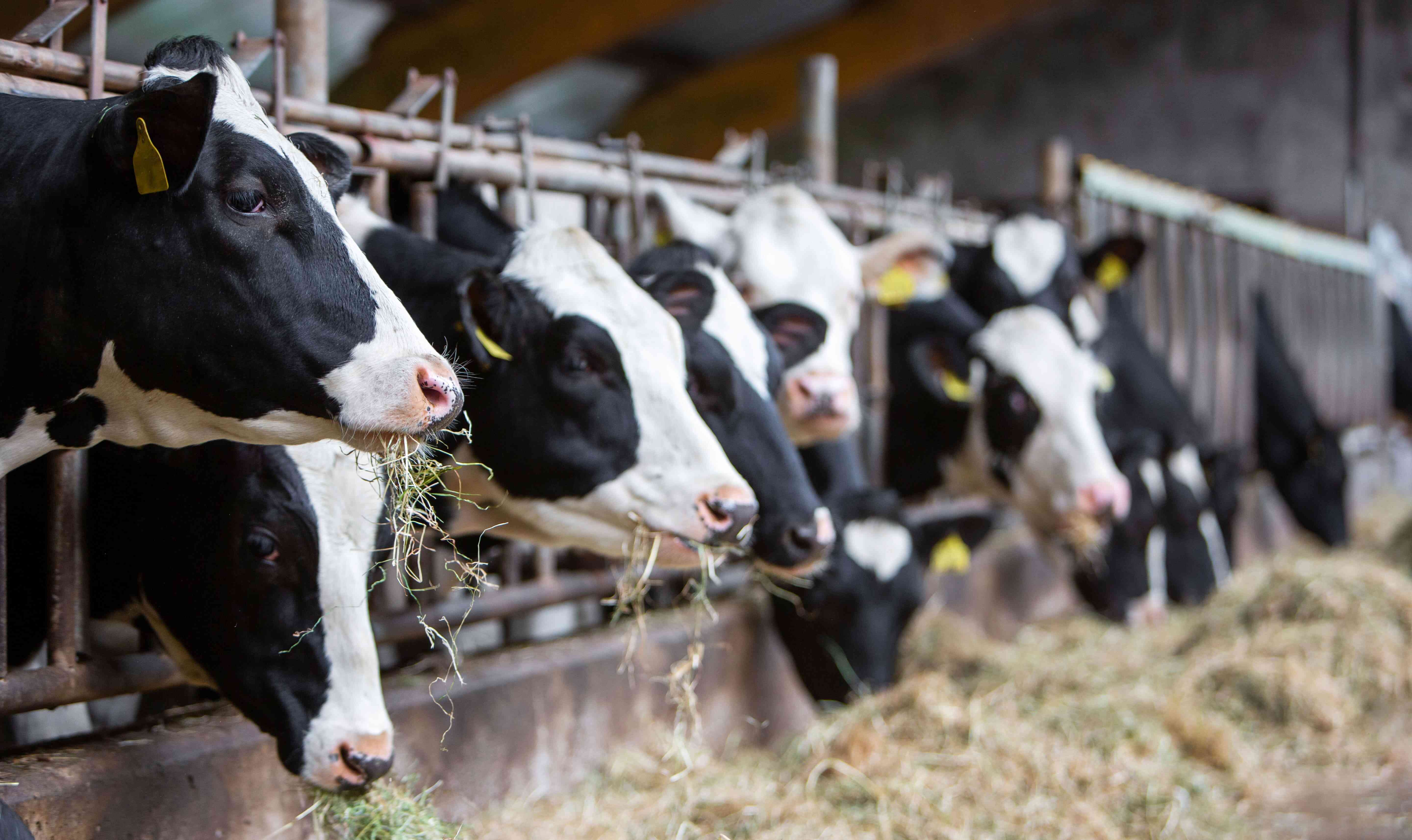
The death of a patient with severe immunodeficiency in Lyon, France, who was suffering from a serious illness caused by the Shamonda virus, has just been confirmed; this is the first human case in Europe. This virus has recently been detected on cattle farms in France. Shamonda is a bunyavirus transmitted amongst cattle by Culicoides, or sand flies, which are small dipterans that also transmit bluetongue. It can also circulate amongst small ruminants and horses.
There is no risk to the general public as this is a case involving an immunocompromised patient; whilst this is a new occurrence for this virus, it is not entirely uncommon. There are many bunyaviruses that circulate naturally amongst mammals in tropical regions and cause sporadic cases in humans. In a globalised world, where animals and goods are on the move and the climate is changing, it is not unusual for cases of human transmission to occur, and we should not be concerned; we simply need to monitor the situation, remain vigilant and be proactive in addressing potential health risks.
Mónica González Candela - virus Shamonda EN
Mónica González Candela
The main hosts of the Shamonda virus are ruminants, and it is transmitted by Culicoides midges, as is the case with bluetongue. It was confirmed in Europe this summer. It is a vector-borne disease; in other words, it is not contagious between animals, but animals become infected via Culicoides midges. In animals, it causes symptoms that are not particularly severe, but it does have an economic impact because it leads to a temporary period of diarrhoea and other mild disturbances which also reduce the animals’ [livestock] production whilst the condition persists. Until now, there had been no reported cases of transmission to humans.
At present, it is known that the affected person had the virus, and it remains to be seen whether the virus has worsened their prognosis. The health authorities are already investigating this. They will probably need to carry out a retrospective study to determine, through serological testing, how many people may be subclinically infected with the virus, without showing any symptoms.
At the moment, I believe there is absolutely no cause for alarm and that the immediate challenge is to strengthen integrated surveillance amongst doctors, vets, biologists and entomologists using a One Health approach.
In the general population, precautions should always be taken against vector-borne diseases. Obviously, if you are going out to a place where there are mosquitoes, you should apply insect repellent, keep your skin covered and avoid the times of day when mosquitoes are most active. You should keep an eye on yourself if you are in an environment where there are vectors such as mosquitoes or ticks, and, if you experience any symptoms after a bite, go and explain to your GP what has happened, so that they can investigate and diagnose you correctly. In this regard, I believe the media play a vital role in raising public health awareness.
José Francisco Ruiz Fons - Shamonda EN
José Francisco Ruiz Fons
This virus has been known in Nigeria since the 1960s and has been detected retrospectively in Japan and South Africa, but it had not been detected in Europe until this year (Germany, France and Switzerland) and a geographical spread such as the one it has now experienced had never been documented before.
It is an orthobunyavirus belonging to the Simbu serogroup, specifically to subclade B of this orthobunyavirus serogroup, in which, to my knowledge, no human infections have ever been detected before, although infections have been recorded in animals (the Akabane virus, for example). Expert virologists did not foresee any risk to humans from this virus, but within the Simbu serogroup there are several viruses—Oropuche and Madre de Dios, for example—which belong to subclade A of the Simbu serogroup and which are indeed infectious to humans and cause clinical problems. As far as we know, these orthobunyaviruses that are pathogenic to humans are largely confined to the Americas, and in Europe the only research being carried out is aimed at understanding the extent to which potential native vector species in Europe might act as significant vectors for these viruses. Risk assessments regarding the introduction of these viruses indicate a low risk; however, there may always be imported cases that could serve as significant routes of introduction if the virus finds competent vectors for its replication and transmission on our continent.
Bunyaviruses are viruses with very high mutagenic potential (they include, for example, the Crimean-Congo haemorrhagic fever virus in the genus Orthonairovirus), because, like the influenza virus, they are RNA viruses with a segmented genome. In this case, the genome of these viruses consists of three segments. Thus, apart from the usual mutations that typically occur over time due to errors in nucleotide assembly caused by malfunctioning viral polymerases, these viruses can exchange large fragments of RNA with one another (recombination) and even exchange entire segments of their genome when different variants replicate within the same cells of a vector or host (rearrangement).
I am unaware of any evidence to suggest that the Shamonda virus was the cause of the clinical case documented in France. It may be that the detection of the virus is not the cause of the patient’s illness and death (as the patient had other secondary clinical conditions that could have compromised their immune function), but rather that the presence of the viral genome was simply detected following exposure to bites from infected vectors. The ECDC is investigating the public health risks in order to provide a response.
It is important to bear in mind that there is already evidence of recombination between Shamonda viruses and other orthobunyaviruses, with serious clinical consequences for horses in some areas where these new viruses emerged; it is therefore not unreasonable to think that this new virus may have undergone changes that enable it to infect humans and cause them problems. We must wait for further updates to determine whether it may have any clinical impact – such as the identification of its complete genome and details of the human clinical case – but the virus itself is causing a multitude of clinical problems in livestock, which is why it is being treated as an emerging virus in Europe.
In Spain, this virus is already circulating in livestock, but we do not yet have clear evidence of its spread beyond occasional reports of problems or detection in animals. This indicates something important: that in Spain we have competent vectors for this virus. Experience with the Schmallenberg virus, which also belongs to subclade B of the Simbu serogroup, showed that its spread across Europe following its first detection in Germany was very rapid, taking place in less than a year. It is possible that the Shamonda virus – not necessarily the virus that may have caused clinical problems in people in France – is currently spreading across Spain because this is still the season when Culicoides are abundant; they do not disappear from most of the country until the end of the year. We will no doubt soon have information from surveillance studies indicating this spread, but it is to be expected that by 2027 the virus will have reached almost the whole of the country, at least mainland Spain.
If it were to be demonstrated that the Shamonda virus circulating in animals has the potential to cause disease in humans, this would have a major impact on public health policies. Should the impact be limited to only a sector of the population with immune system problems, the impact would be much less severe than if it were to affect perfectly healthy people. Controlling Culicoides is extremely complex, not only because of their diversity but also due to their wide distribution and their presence in natural, rural and urban environments. However, control measures for these insects do exist in environments where a risk can be inferred, and we have a great deal of information on the location of these vectors in Spain.
Ben Brennan - Shamonda
Benjamin Brennan
Group leader and senior lecturer at the MRC-University of Glasgow Virology Research Centre, University of Glasgow
The Shamonda virus belongs to a large group of viruses known as bunyaviruses. It is closely related to the Schmallenberg virus, which emerged in Europe in 2011 and caused a serious disease in livestock, particularly reproductive abnormalities and congenital defects in cattle and sheep.
Like the Schmallenberg virus, the Shamonda virus is primarily associated with livestock and is transmitted by small biting insects known as midges. Although scientists have been aware of this virus for many years, until now it had only been linked to infections in animals, not in humans.
This is an important scientific finding, as it is the first recorded case of human infection with the Shamonda virus. However, it is important to put this into perspective. The patient suffered from a serious underlying condition that made him particularly vulnerable to infections, and we do not yet know whether the Shamonda virus contributed to his death.
The detection of a virus in a patient with a severely compromised immune system does not necessarily mean that it poses a significant risk to people who are otherwise in good health. At present, there is no evidence that the Shamonda virus causes widespread illness in humans, although further research is needed to understand its ability to infect people.
At present, we know relatively little about how this person contracted the infection. The Shamonda virus is normally transmitted between animals via sand fly bites, so exposure to an infected insect is a possibility, although this has not been confirmed.
The French health authorities are investigating the circumstances surrounding the infection, including how the patient became exposed and whether the virus played any role in their illness or death. Until these investigations are concluded, it would be premature to draw any definitive conclusions.
Based on the information currently available, there is no cause for the general public in the UK to be unduly concerned. This is a single reported case of human infection in a person who was already suffering from a serious illness and had an impaired immune system, despite the fact that the virus has been circulating amongst animals for many years.
There is currently no evidence of sustained human-to-human transmission, and the virus is typically spread via biting mosquitoes rather than through everyday contact between people.
Whilst this discovery warrants further scientific investigation and ongoing surveillance, it does not, at present, suggest a significant new threat to public health in the UK. For most people, there is no reason to change their usual activities or to take any additional precautions.
Conflictos de interés: "My laboratory studies the molecular biology and pathogenesis of a number of bunyaviruses, including viruses closely related to the Shamonda virus. Although we do not currently have funding specifically earmarked for the study of the Shamonda virus, we are actively seeking to obtain the virus in order to begin studies into its biological characteristics and to better understand its potential to cause disease".