A ship carrying fuel has run aground near Ibiza
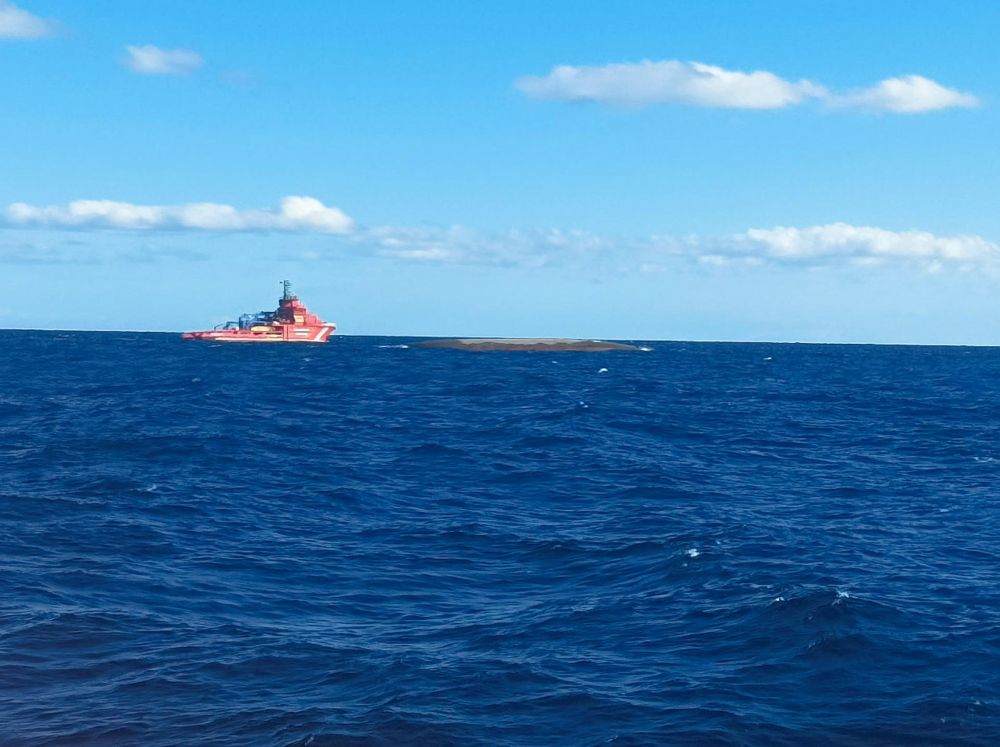
Government sources have reported that, in the early hours of Thursday morning, a Maltese-flagged cargo ship carrying 7,000 tonnes of fuel (more than eight million litres) sank north of Ibiza. One crew member has died and six others have sustained minor injuries.
261126_odei_barco ibiza
Odei Garcia-Garin
The fact that the cargo consists mainly of diesel, with a proportion of aviation fuel, rather than crude oil or heavy fuel oil, changes the situation considerably compared with cases such as that of the Prestige. Both are light products which largely evaporate or disperse within a few days, so I would not expect large quantities of oil sludge to reach the coast; however, they are also amongst the petroleum derivatives with the highest acute toxicity, particularly for organisms in the water column, such as plankton or fish larvae. Furthermore, according to the reports that have emerged, the vessel has capsized within the Mediterranean Cetacean Migration Corridor or very close to its boundary – a marine protected area through which fin whales, sperm whales, various species of dolphins and loggerhead turtles pass. Cetaceans breathe at the very surface where the most volatile compounds are concentrated, and following the Deepwater Horizon disaster, the most exposed dolphins were found to suffer from lung disease, adrenal gland disorders and reproductive failure; that spill involved crude oil and was of an incomparable magnitude, although at least one route of exposure—inhalation—would be the same.
The fact that the vessel remains afloat, albeit capsized, is good news for the time being, as it allows work to be carried out from the surface. The iridescence detected is not surprising on a ship in this situation and, with such a light substance, is the usual way it appears at sea; for now, it seems to indicate small quantities, but it does not reveal how much is leaking or from where. The urgent priority is to locate the source of the leak and determine its rate, and to assess the removal of the cargo as soon as possible, because if the hull were to sink, it would rest on the seabed at depths of around or exceeding 1,000 metres, and a wreck can continue to release fuel gradually over months, as happened with the Prestige, whose fuel was drained at a depth of over 3,500 metres – a process that was possible but not completed until almost two years after the sinking. The response operation is already underway, and it will be necessary to track the drift of these iridescent patches – and of any larger oil slicks – in line with wind and current forecasts, as northerly winds could carry them towards Ibiza and its Posidonia meadows. From an ecotoxicological perspective, I would add one point that is often overlooked: we must take baseline samples of water, sediment and organisms in areas that have not yet been affected, and step up monitoring over the coming months for cetacean and turtle strandings in the Balearic Islands and along the Valencian coast, because without that baseline it will be very difficult later on to attribute any effects to the accident.