What is unwanted loneliness? Is it synonymous with social isolation?
The State Observatory on Unwanted Loneliness defines it as “the negative personal experience in which an individual has a need to communicate with others and perceives deficiencies in their social relationships, either because they have fewer relationships than they would like or because the relationships they do have do not offer them the emotional support they desire.”
Unwanted loneliness is different from social isolation. The latter refers to a substantial lack of social contacts, can be measured objectively, and does not necessarily involve negative emotions. However, unwanted loneliness involves a subjective feeling of not having the desired quantity or quality of social relationships.
As Elvira Lara, professor in the Department of Personality, Assessment, and Clinical Psychology at the Complutense University of Madrid and an expert in this field, explains to SMC Spain, the adjective “unwanted” is applied because "loneliness in itself is not something negative, as it can also be chosen or sought after. Being alone is not the same as feeling lonely.“ In addition, the term ‘loneliness’ is being promoted because ”it allows us to account for all the situations and vulnerabilities that can arise, which are many. It is a situation that can affect us all," she says.
What consequences could this have?
In addition to the suffering it causes, unwanted loneliness is associated with an increased risk of mental health problems, such as depression, anxiety, and suicidal ideation. It is also a risk factor for cardiovascular disease, sleep problems, cognitive impairment, and dementia. Although the exact mechanisms by which it acts are not established, loneliness is associated with less healthy lifestyles and higher levels of stress. In general, the World Health Organization (WHO) considers that “it carries an equivalent or even greater risk of premature death than other well-known risk factors such as smoking, excessive alcohol consumption, physical inactivity, obesity, and air pollution.”
What is the situation in Spain?
The main source of information is the Barometer of Unwanted Loneliness in Spain, conducted by the State Observatory. According to data from 2024, 20% of the population in Spain suffers from unwanted loneliness, with women being more likely to acknowledge it (21.8% compared to 18% of men). Almost 50% of people say they have felt it at some point in their lives.
Although the feeling of loneliness can be dynamic and associated with specific situations in each person's life, two out of three people who suffer from loneliness say they have been feeling this way for more than two years, indicating that there are many long-term cases, which are more worrying. From an economic point of view, it has been estimated that the annual cost of unwanted loneliness in Spain is €14.141 billion (1.17% of GDP), taking into account healthcare costs, reduced productivity, and premature deaths.
Which groups of people suffer from it the most?
Although the concept of unwanted loneliness is often associated with older people, both the barometer and other international studies find higher proportions among young people. Specifically, the Spanish report estimates that 34.6% of people between the ages of 18 and 24 feel lonely. The graphs tend to follow a U-shape, with percentages declining with age until they rise again after the age of 75.window.addEventListener("message",function(a){if(void 0!==a.data["datawrapper-height"]){var e=document.querySelectorAll("iframe");for(var t in a.data["datawrapper-height"])for(var r,i=0;r=e[i];i++)if(r.contentWindow===a.source){var d=a.data["datawrapper-height"][t]+"px";r.style.height=d}}});
In addition, unwanted loneliness is higher among people with disabilities (50.6%), migrants (32.5%), and LGTBIQ+ people (34.4%). Almost half of people with mental health problems suffer from it. Among young people experiencing loneliness, 58.1% say they have been bullied at school or work.
Social class also plays a role, as poverty increases the risk of loneliness. “Economic vulnerability increases stress and the risk of family breakdown, hinders access to services, and reduces opportunities for leisure,” explains Lara.
Being a woman could be considered to increase the risk, according to survey data, even though their social relationships are often considered more intimate and affectionate. However, there are factors that may explain these numbers. On the one hand, older women are in many cases caregivers, which “can affect their identity,” says Lara. In addition, their expectations regarding their relationships may be higher (which may also apply to data between countries) and “they are able to recognize that they feel lonelier than men, who tend to experience loneliness as a stigma to be hidden.”
Other associated risk factors include living alone and, according to the barometer data, living in a medium-sized city. In addition, there are numerous common life events that predispose people to loneliness, such as changing jobs or moving house, separations, or the death of loved ones.
It is said that we are experiencing an epidemic of loneliness. Is it correct to speak in those terms? Can we be sure that the numbers are increasing?
“We don't like it and it's not advisable to talk in terms of an epidemic of loneliness,” Ana Belén Sánchez, social intervention psychologist at Ávila City Council's social services and spokesperson for Ávila at the Official College of Psychology of Castile and León, tells SMC Spain. “First of all, it medicalizes a situation that, although it may be influenced by a certain vulnerability and individual experiences, is above all a social problem,” she adds. Furthermore, the term suggests that there is a large increase in cases, something that cannot be concluded from the current data.
The available studies have various limitations. To begin with, “it is difficult to conceptualize the phenomenon of loneliness,” Lara acknowledges. It is a complex situation to measure, where a lot of information can be lost in dichotomous (yes/no) surveys and where there may be a participation bias: as these surveys are usually voluntary, people who do not respond may have different characteristics that are not captured by the studies. But above all, “there is a lack of comparable data,” explains Sánchez. In other words, there are few studies that have been repeated over time, whose numbers can be correlated and that allow us to clearly observe the evolution of the problem. “In Spain, we have many small, local snapshots that differ from one another,” acknowledges Lara.
Here are some of the available studies that provide information on this issue:
- A study based on surveys of adolescents collected in the PISA report concluded that unwanted loneliness increased significantly between 2012 and 2018 in 36 of the 37 countries studied, even doubling in many of them. One of the countries was Spain, where, however, no increase was observed when considering the period 2000-2018.
- A review of studies on young people who completed the University of California, Los Angeles (USA) loneliness scale over decades estimated that feelings of loneliness had increased between 1976 and 2019, but warned that “the frequently used term ‘loneliness epidemic’ seems exaggerated.”
- Another study conducted among university and high school students in the United States applied the same scale and concluded, on the contrary, that cases of loneliness had decreased between 1978 and 2009.
- Two smaller studies conducted in Sweden found no change in feelings of loneliness among older people from 1992 to 2014 or from 2000 to 2012 in different populations, although the proportion of people experiencing loneliness was very high, at around 50% in all cases.
- A study conducted in Spain in which Elvira Lara participated followed more than 4,000 adults from across the country for 12 years, starting in 2011. Although it was not designed to estimate the evolution of loneliness, it appeared to increase slightly in all age groups.
- A study of adolescents in 28 low- and middle-income non-European countries analyzed data from a WHO survey and found that in 16 of them, the perception of loneliness had not changed between 2003 and 2017. In six, it increased, and in another six, it decreased. However, the authors acknowledged that it was a global phenomenon.
- A study in Denmark found that the perception of loneliness in adults increased by about 8 percentage points from 2000 to just before the COVID-19 pandemic.
- Another study in Germany analyzed data from children and adolescents and found no significant differences in feelings of loneliness between 2006 and 2017, although the figures skyrocketed with the pandemic and in 2024 remained higher than in the immediately preceding period.
“The pandemic brought this problem to the fore,” says Sánchez, which, added to the fact that in recent years there has been more talk about mental health problems, especially among young people, “may cause the numbers in the surveys to grow as well because there is more self-awareness, which is bad for the figures, but ultimately it is something positive, because recognition allows for decision-making,” explains Lara. Although the two experts say that with the available data it is not possible to say for sure that there has been a clear increase in cases of loneliness, they both agree that there is a certain trend and that their subjective feeling in the current context is that “something is happening.” And that, in any case, the magnitude of the problem is already very significant regardless of the possible increase.
Are loneliness issues among young people related to social media? What are the causes?
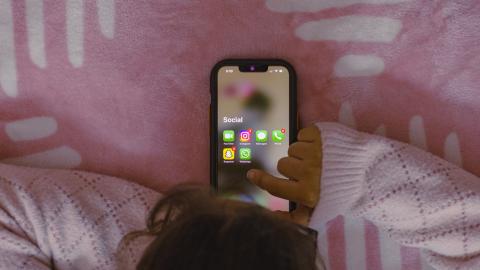
The study mentioned above, which found an increase in loneliness among young people in 36 of the 37 countries analyzed, emphasized and specified that “the psychological well-being of adolescents around the world began to decline after 2012, along with increased access to smartphones and greater use of the internet.” One of the signatories was Jonathan Haidt, a psychologist known for claiming that social media and screens are causing an epidemic of mental illness among young people. However, in the same study (from 2021), they acknowledged that “causality cannot be proven, and more years of data will provide a more complete picture.”
There is still no data to prove this claim. The experts consulted agree that neither screens nor social media are harmful per se, but that their consequences depend on how they are used, and that they are by no means the only variable responsible. There are even studies that describe how they can be positive for introverted people or those with social anxiety. The State Observatory Barometer shows that “50.1% of the Spanish population thinks that technology helps people feel more and better accompanied, and 82.15% think that it is a tool for social connection when it stimulates the establishment of relationships outside the internet.”
However, “it is a variable that can be harmful if its use is problematic,” says Lara. “Social media can fuel an individualistic, consumerist, and short-termist model of society where suffering is hidden and trivialized. In that sense, it can indeed be a breeding ground for feelings of loneliness,” warns Sánchez.
Other studies do not focus on social media as the problem, but rather on the constant changes and prolonged instability that young people tend to experience today. A very recent study in the United States concludes that it is not so much a period of isolation as it is a period of transition. The young people surveyed did not seem to lack friends or social opportunities, but the frequent changes, uncertainty, and delay in achieving a certain stability characteristic of societies in recent decades prevent them from establishing routines and make many feel both “alone and connected.”
The study participants who showed greater social well-being tended to be older, less stressed, and lead more predictable lives. Although they had fewer friends than young adults, their social networks were more stable. This is what the study calls “ontological security”: a sense of predictability and belonging that allows people to project themselves into the future and underpins social well-being. Without it, according to the authors, even a full social life can be fragile.
For Lara, “it's a very interesting concept” because routines and environments “serve as structural support.” Sánchez also values this approach very positively, as it connects with the fact that “the age groups in which loneliness is most prevalent are also those in which the most existential questions are asked: youth and old age. This is something that needs to be worked on more, and not just in terms of what we might call emotional loneliness.”
What kind of interventions should be implemented to improve the situation?
The magnitude of the situation can be seen in the fact that some countries, such as the United Kingdom and Japan, have created a Ministry of Loneliness. In Spain, a State Strategic Framework against Loneliness is being prepared, which is still pending approval and which, according to Lara, “should serve as a guide and be equipped with sufficient resources.” For Sánchez, right now “there is a big difference in the level of care provided by different communities, but the quality of the responses must come from public initiatives and particularly from local councils.” “To do something big, you have to start small,” adds Lara.
Both experts agree that interventions must be cross-cutting and structural. “There are sufficiently complex variables that require it to be addressed as a global responsibility, which does not mean that the individual cannot also be an active agent,” explains Lara.
These are some of the interventions proposed by the experts:
- Carry out campaigns to destigmatize, identify, and raise awareness. It is necessary for those affected to be able to recognize their situation and facilitate their access to support services. In addition, it is advisable to increase public awareness of the problem, as citizens can also act as active agents.
- Create meeting places in cities and municipalities that facilitate face-to-face interaction. “People demand them and respond very quickly when they are available,” acknowledges Sánchez.
- Establish networks of both individuals and health, social, and third sector entities.
- Given the breadth and scope of the problem, and beyond specific plans, “it is necessary to adopt a perspective that considers loneliness in all policies,” summarizes Lara.
When it comes to reporting, Lara recommends “giving the problem its rightful place without reducing it to an extreme or reactive interpretation. Loneliness is something that should be addressed through action and offering tools.”
Resources for reporting and learning about unwanted loneliness
- State Observatory on Unwanted Loneliness.
- “Te acompaña” service offered by the Red Cross to combat unwanted loneliness.
- Prevention of unwanted loneliness by Madrid City Council.
- Information on unwanted loneliness from Barcelona City Council.
- Araba a Punto, a community-focused initiative launched by the Provincial Council of Álava with information on this problem.