Bellvitge Biomedical Research Institute (IDIBELL)
If you are the contact person for this centre and you wish to make any changes, please contact us.
ICREA Research Professor and Coordinator of the Regenerative Medicine Programme at the Bellvitge Biomedical Research Institute (IDIBELL), member of CIBER-BBN, Director of the Clinical Translation Programme in Regenerative Medicine in Catalonia, and Professor of Physiology at the University of Barcelona.
Lecturer of the Department of Social Psychology and Quantitative Psychology at the University of Barcelona, researcher at the Bellvitge Biomedical Research Institute (IDIBELL) and CIBERSAM
Head of the Hereditary Cancer Research Group at the Catalan Institute of Oncology-IDIBELL
Coordinator of the Neuro-oncology Unit of the Bellvitge Biomedical Research Institute (IDIBELL) and researcher of the Neuroplasticity and Regeneration Group of the Autonomous University of Barcelona
Principal investigator, Digital Health Programme ICOnnecta't, and member of the Group of Psycho-oncology and Digital Health at IDIBELL
Head of the Cancer Virotherapy Group at the Bellvitge Biomedical Research Institute (IDIBELL).
Head of Medical Oncology at the Catalan Institute of Oncology (ICO), head of the Colorectal Cancer Research Group, Oncobell programme (IDIBELL) and associate professor of Medicine at the University of Barcelona
Principal Investigator of the Nutrition and Cancer Unit of the Catalan Institute of Oncology (ICO) and the Bellvitge Biomedical Research Institute (IDIBELL)
Emeritus researcher at the Catalan Institute of Oncology (ICO), senior researcher at the Bellvitge Biomedical Research Institute (IDIBELL) and lecturer in the Faculty of Health Sciences at the Universitat Oberta de Catalunya (UOC)

For women diagnosed with early-stage breast cancer, the long-term risk of developing a second primary cancer is low, around 2–3 per cent higher than that of women in the general population. This is one of the conclusions of a study published by The BMJ, which analysed data from nearly half a million women diagnosed in England between 1993 and 2016 with early-stage invasive breast cancer who underwent surgery. During a follow-up period of up to 20 years, around 65,000 women developed a second primary cancer, but the absolute excess risk compared to the risks in the general population was small.

Research involving more than 200 patients with depression, whose symptoms had not improved after NHS talk therapy shows that those who took part in eight group sessions of mindfulness-based cognitive therapy saw their depressive symptoms reduced, compared with those who received treatment as usual. The study is published in The Lancet Psychiatry.

A research team has managed to ‘rejuvenate’ embryonic stem cells from mice to give them greater differentiation potential, according to an article published in the EMBO Journal. Changing the type of sugar these cells use to grow modifies their metabolism and, according to the researchers, could improve their therapeutic potential or their use in in vitro fertilisation treatments.

In women, high consumption of sugary drinks is associated with an increased risk of oral cavity cancer, according to a study published in JAMA Otolaryngology-Head & Neck Surgery. Among research participants who consumed one or more sugary drinks per day, the rate of these cancers was 5 cases per 100,000 people, compared to 2 cases per 100,000 among those who drank less than one per month. The analysis is based on data from more than 162,000 nurses followed for 30 years in the United States. According to the authors, further studies with larger samples, including men, are needed to validate these results.

The sperm of men infected with high-risk genotypes of the human papillomavirus (HPV) suffers more damage from oxidative stress and has a weaker immune response, which can lead to reduced fertility. This is one of the conclusions of a study published in the journal Frontiers in Cellular and Infection Microbiology. The research compared the semen of 20 adults infected with high-risk genotypes, seven infected with low-risk genotypes, and 43 adults without infections.

Both sex and gender are associated with distinct networks in the brains of boys and girls, according to an analysis of brain images of 4,757 children in the US. Understanding these neurobiological patterns is important for identifying how sex and gender influence health and for developing specific diagnostic tools, the research team writes in Science Advances.
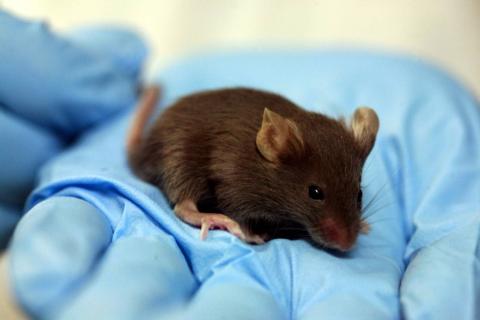
A drug in gel form cured 100 percent of mice with a very aggressive brain tumor. The authors hope that this is a first step towards helping human patients with glioblastoma, one of the most dangerous brain tumors in humans. The article is published today in PNAS.

A phase 2 clinical trial has tested a type of immunotherapy based on oncolytic viruses in combination with chemotherapy for the treatment of triple-negative breast tumours. The results are published in the journal Nature Medicine.

In the United States, the human papillomavirus vaccine began to be recommended in 2006 for girls aged 9-26 years. A study published in the journal JAMA Health Forum concludes that the campaign significantly reduced the risk of HPV infection in vaccinated women. In addition, herd immunity reduced the likelihood of infection in unvaccinated women.