CEIGRAM
If you are the contact person for this centre and you wish to make any changes, please contact us.
Researcher at the Research Centre for the Management of Agricultural and Environmental Risks (CEIGRAM)
Agricultural economist specialising in the Common Agricultural Policy and agricultural markets, associate researcher at CEIGRAM, member of the Advisory Council on European Affairs of the Community of Madrid and of the Committee of Experts of Foro Agrario
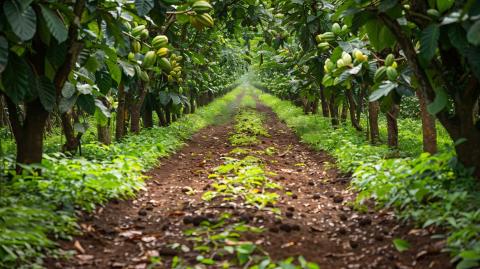
A team from Harvard University (United States) and the University of Ghana has analysed the meteorological factors that can most significantly affect cocoa crops, the raw material used to make chocolate. In addition to low rainfall during the dry season – a long-standing concern – heavy rainfall during the wet season has emerged as a key factor. This pattern was observed in all three countries studied, which are major cocoa producers: Ghana, Ecuador and Indonesia. The authors, who have published their findings in PNAS, emphasise that rainfall harmful to cocoa is linked to larger-scale climate patterns, such as El Niño or variations in sea surface temperature in the Atlantic; consequently, it is possible to predict some poor harvest years before the damage occurs, with sufficient advance warning to alert farmers.
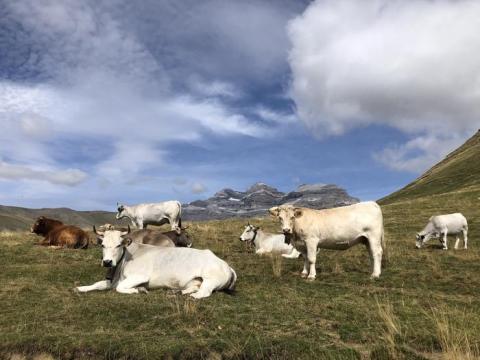
Although extensive livestock farming has increased in some regions, it has also decreased in 42% of pastures dedicated to this purpose, according to a study published in the journal PNAS that analyses data from 1999 to 2023. The decline has occurred in wealthy areas of the world, such as Europe, North America and Australia, where consumption trends have shifted towards animals such as pigs and chickens. The increase was seen in poorer areas, specifically in Africa, Asia, South America and Central America. The authors of the study, one of whom is Spanish, state that ‘reductions in livestock stocking rates can have significant ecological consequences at regional and global scales,’ affecting biodiversity and fire regimes.
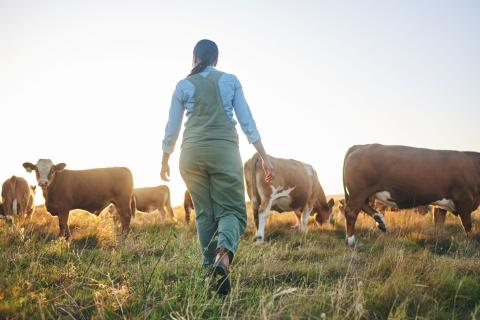
The adoption of plant-based diets could reshape agricultural employment worldwide. This is the main conclusion of an international study that estimates that by 2030, between 5% and 28% less agricultural labour would be needed, i.e. between 18 and 106 million fewer full-time jobs. The countries most affected would be those with agriculture based largely on livestock farming, while others, especially low-income countries, could need between 18 and 56 million more workers to grow fruit, vegetables, legumes and nuts. The study is published in The Lancet Planetary Health.

[This article has been retracted by Nature on December 3, 2025]. The global economy could lose, on average, 19% of income by 2049 due to increased carbon emissions over the past four decades, says an analysis published in Nature. To estimate the future economic damages of climate change, the authors used temperature and precipitation data for 1,600 regions worldwide in the past 40 years. Low-income countries will be more affected by these losses than higher-income countries, the authors warn.
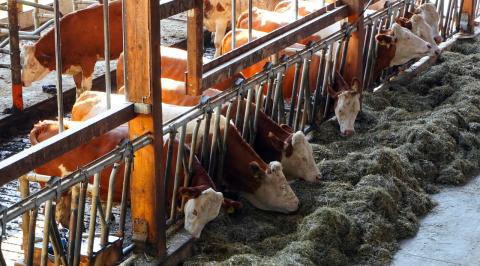
Eighty-two percent of EU farm subsidies articulated through the Common Agricultural Policy (CAP) financed high-emission livestock production in 2013, according to a study published in Nature Food. The analysis, which is based on data from 1986 to 2013 - the latest year for which records are available - highlights that 82% went to animal products in the following proportions: 38% directly and 44% for feed production. The authors note that food of animal origin is associated with 84 % of the greenhouse gases emitted by EU food production.