CENIEH
If you are the contact person for this centre and you wish to make any changes, please contact us.
Lecturer of Palaeontology at the Complutense University of Madrid (UCM) and affiliated researcher at CENIEH
Researcher at the National Centre for Research on Human Evolution (CENIEH)
Technician of the Laboratory of Experimental Archaeology and Taphonomy of CENIEH.
Research Professor at CSIC and Coordinator of the Paleobiology Programme at the National Centre for Research on Human Evolution (CENIEH), Burgos
Coordinator of the Geochronology and Geology Programme at CENIEH
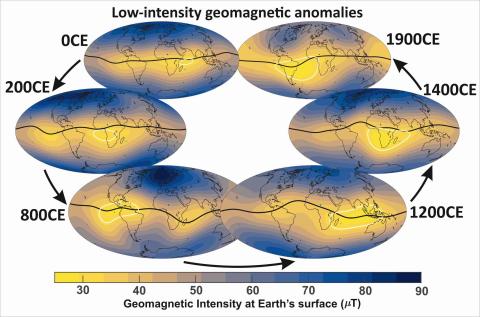
The geomagnetic field protects Earth from harmful cosmic radiation. Over the past two centuries, this field has weakened, coinciding with the growth of the South Atlantic Anomaly—a region of reduced magnetic intensity spanning South America and the South Atlantic Ocean—which poses risks to satellites and space missions. Research led by a Spanish team shows that this anomaly is a recurring event on timescales ranging from centuries to millennia, according to a reconstruction of the geomagnetic field over the past 2,000 years. The study, published in PNAS, shows that the current anomaly emerged after the year 1100 in the Indian Ocean and crossed Africa before reaching South America.
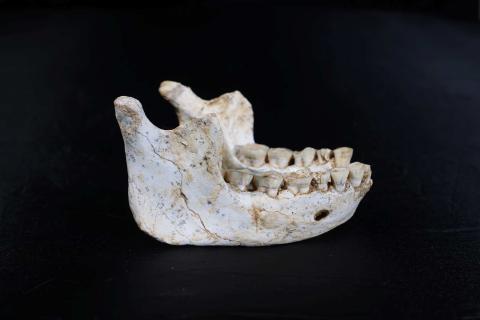
An international team with Spanish participation has analysed hominid remains discovered in Casablanca (Morocco) and concluded that they could be very close ancestors of early modern humans. The fossils date from around the same period as the Homo antecessor found in Atapuerca—some 773,000 years ago—but are morphologically different. According to the authors, who published their findings in Nature, the fossils offer clues about the last common ancestor shared with Neanderthals and Denisovans, and support an African, rather than Eurasian, origin for H. sapiens.
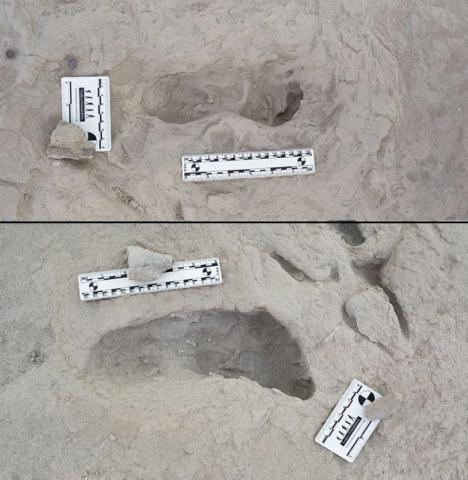
At least two hominin species - Homoerectus and Paranthropus boisei- coexisted in Kenya's Turkana Basin around 1.5 million years ago, a study published in Science confirms. The authors describe the first physical evidence of this coexistence in the form of footprints, found at several sites in the area.
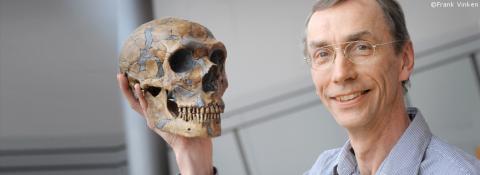
The Karolinska Institute has awarded the Nobel Prize in Medicine or Physiology to Swedish biologist Svante Pääbo, a specialist in evolutionary genetics, for his discoveries on the genomes of extinct hominids and human evolution.
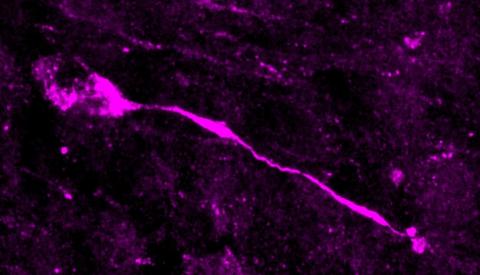
A single amino acid change in a protein (TKTL1) may have given modern humans an advantage over their older contemporaries, such as Neanderthals, by allowing greater neocortical neuronal formation, according to research published in Science.
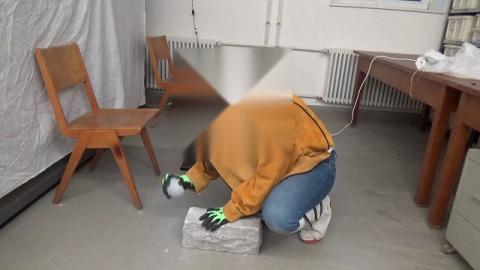
A study published today in the journal Science Advances shows that modern humans do not need cultural transmission to make primitive tools.