Network Biomedical Research Center for Liver and Digestive Diseases (CIBEREHD)
If you are the contact person for this centre and you wish to make any changes, please contact us.
Professor at the Faculty of Medicine of the University of Zaragoza, a researcher at the Aragón Institute for Health Research (IIS Aragón) and CIBERehd, and an honorary professor at the University of Hong Kong (China)
Senior researcher at the Aragon Institute of Health Sciences, the Aragon Health Research Institute, and member of the CIBER in liver and digestive diseases (CIBERehd)
Research Professor at IDIBAPS-Hospital Clínic de Barcelona and Scientific Director of CIBEREHD - Carlos III Health Institute
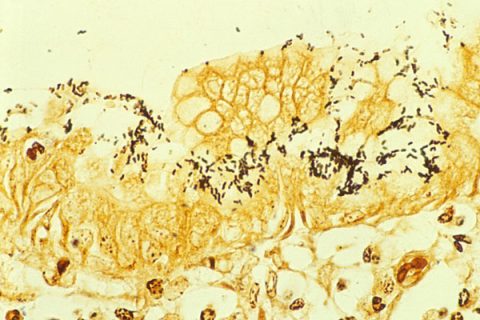
Infection with the bacterium Helicobacter pylori is a known risk factor for stomach cancer. Its link to colorectal cancer, however, remains an unconfirmed hypothesis. An international team has reviewed 43 studies on this subject and found that 22 per cent of colorectal cancer cases could potentially be linked to this infection, although when they selected the 14 most reliable studies, the figure fell to 12 per cent. According to the authors, exposure to Helicobacter pylori could be contributing significantly to the number of cases of colon cancer worldwide, but they point out that their study is only exploratory and that more robust research, such as clinical trials, is needed to establish a causal link. The results have been published in eGastroenterology.
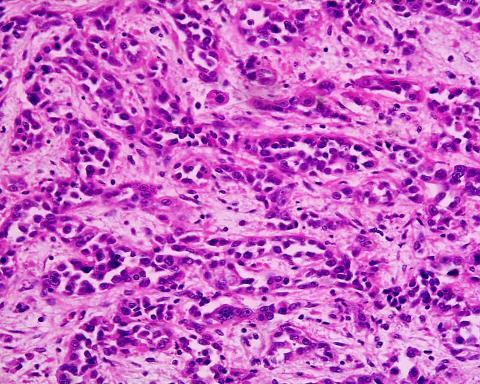
Research estimates that 15.6 million people born between 2008 and 2017 worldwide will develop gastric cancer at some point in their lives if current trends continue. In Spain, there would be 58,641 cases, or 1.24% of people in this age group. The team used data on gastric cancer from 185 countries in 2022 combined with mortality projections based on United Nations demographic data. The estimates, published in the journal Nature Medicine, show that 76% of cases could be attributed to Helicobacter pylori, a common bacterium found in the stomach.
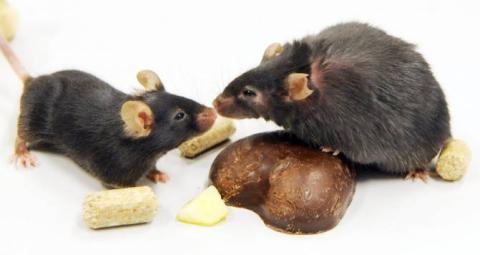
Five out of ten potential treatments move from animal studies to human studies; four to randomised controlled clinical trials; and one in 20 moves on to approval by regulatory agencies, an analysis estimates. Concordance between positive results in animals and in clinical studies is 86%, according to the study, published in PLoS Biology, which pools the findings of 122 published studies on 54 different human diseases.