University of La Rioja
If you are the contact person for this centre and you wish to make any changes, please contact us.
University professor, chemistry department
Researcher at the Ramón y Cajal Hospital and member of the Specialised Group for the Study of the Human Microbiota of the Spanish Society of Infectious Diseases and Clinical Microbiology (SEIMC-GEMBIOTA)

A study has analysed structural changes in the female brain during the three main hormonal transitions: puberty, pregnancy and the menopause. To do this, using longitudinal neuroimaging – which records images of the brain over time – the researchers compared women transitioning from one hormonal phase to another with participants currently in those hormonal phases – more than 1,000 women in total. The results, published in Nature Communications, show that the transitions of puberty and pregnancy lead to a reduction in cortical grey matter, whilst women going through the menopause did not show a significant decrease in either cortical grey matter or total brain volume.

We hadn’t seen a total solar eclipse on the Iberian Peninsula since 1912, and this Wednesday, just before sunset, the celestial bodies aligned once more. That perfect cosmic dance between the Sun, the Moon and the Earth could be seen from numerous regions across Spain. Among the millions of people who observed the phenomenon in Spain, eclipse experts share their impressions with SMC Spain.
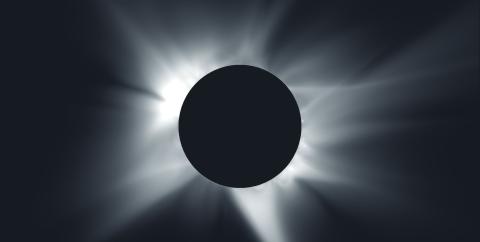
There are just a few days to go until 12 August, when we’ll be able to enjoy the first of the three eclipses we’ll see in Spain. This is a total solar eclipse — the Moon will completely cover the Sun’s disc — something not seen on the Iberian Peninsula since 1912. Experts from different regions of Spain with extensive experience in observing eclipses offer their recommendations. Choosing the right viewing spot, using approved eclipse glasses, coping with the heat and respecting the natural environment are key to observing the eclipse safely and enjoying the experience.
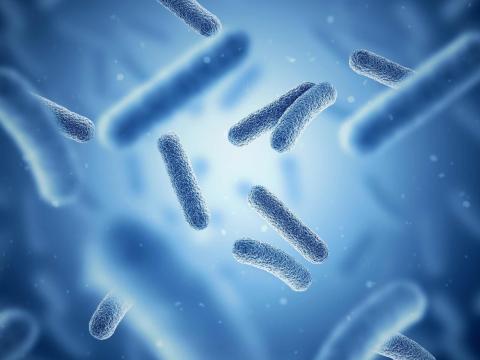
One of the best-known genetic risk factors for developing Parkinson’s disease is carrying variants of the GBA1 gene. A new study published in the journal Nature Medicine compared the microbiomes of 43 carriers of this gene who had not developed the disease with those of 271 Parkinson’s patients and 150 healthy individuals. The results showed, in addition to alterations in the microbiome in the patient group, that 25% of the microbiome of carriers of this gene exhibited alterations, representing an intermediate profile between the other two groups. The results were validated using independent cohorts from the United Kingdom, South Korea, and Turkey. According to the authors, “alterations in the gut microbiome can identify individuals with both genetic and non-genetic risk in the general population who may be progressing toward Parkinson’s disease.”
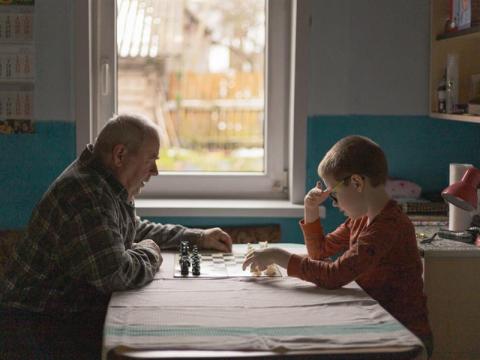
A research team identified five major phases of brain topology throughout human life—changes in the structure of neural connections—as detailed in an article published in Nature Communications. Using brain images from 3,802 people between the ages of 0 and 90, it defines four turning points around the ages of 9, 32, 66, and 83.
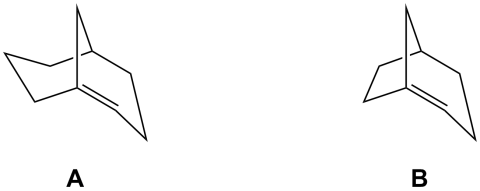
A research team describes in the journal Science how to create organic molecules whose geometry breaks the so-called Bredt's rule. According to this 1924 rule, double bonds between two carbon atoms cannot exist at certain positions in a molecule. Until now, this rule has limited the types of molecules that scientists can imagine and make.

The Nobel Prize in Chemistry 2022 has been awarded to Barry Sharpless and Morten Meldal for laying the foundations of click chemistry, which quickly and efficiently joins molecular building blocks; and to Carolyn Bertozzi, who pioneered bioorthogonal reactions, which use this technique inside living organisms without altering the chemistry of the cell.