chemistry

chemistry

chemistry

Nobel Prize in Chemistry awarded to Susumu Kitagawa, Richard Robson, and Omar M. Yaghi for creating porous materials with blocks of molecules that capture substances and drive reactions

The Royal Swedish Academy of Sciences has awarded the 2025 Nobel Prize in Chemistry to Susumu Kitagawa, Richard Robson, and Omar M. Yaghi for the development of molecular structures with large spaces through which gases and other chemicals can flow. These structures, called metal-organic frameworks, can be used to extract water from desert air, capture carbon dioxide, store toxic gases, or catalyze chemical reactions.

0

A sustainable method for extracting rare earth elements from electronic waste

A US research team has designed an ‘environmentally friendly and economically viable’ method for recovering rare earth elements from electronic waste. It is cheaper than traditional methods, uses less water, acid and energy, and emits fewer greenhouse gases, according to the authors in PNAS. Rare earth elements (REE) are a group of chemical elements needed to manufacture batteries, magnets and electronic components. Both the European Union and Spain are committed to these critical materials in order to reduce their dependence on foreign sources. 

0

Shown a way in which RNA and amino acids might have begun to relate at the origin of life

Amino acids are the building blocks of proteins. These are known as the building blocks of life, but they cannot replicate themselves. To do so, they need the instructions provided by RNA. How this relationship began is still a mystery. Now, a British team has shown how it could have started from relatively simple conditions. According to the researchers, who published their findings in the journal Nature, ‘understanding the origin of protein synthesis is fundamental to understanding where life comes from.’


0

‘Micro-lightning' in water droplets could have generated molecules that were key to the origin of life

Until now, one hypothesis suggested that life on Earth could have arisen from lightning striking a body of water. However, a new study claims that the synthesis of molecules necessary for the emergence of life could have originated from ‘micro-lightning’ in water droplets. According to the study, published in Science Advances, the formation of organic compounds with carbon-nitrogen bonds from gas molecules could be a possible mechanism for creating the basic components of life on the early Earth.

0

Study estimates health and economic damages from exposure to harmful chemicals in plastics

In 2015, the human health impact of exposure to certain chemicals cost the equivalent of $1.5 trillion, says a study published in PNAS. The study estimates cases of ischaemic heart disease and stroke associated with bisphenol A (BPA) exposure; deaths of 55-64 year olds associated with di(2-ethylhexyl) phthalate (DEHP) exposure; and cognitive losses in children of mothers exposed to brominated flame retardants (PBDEs).

0

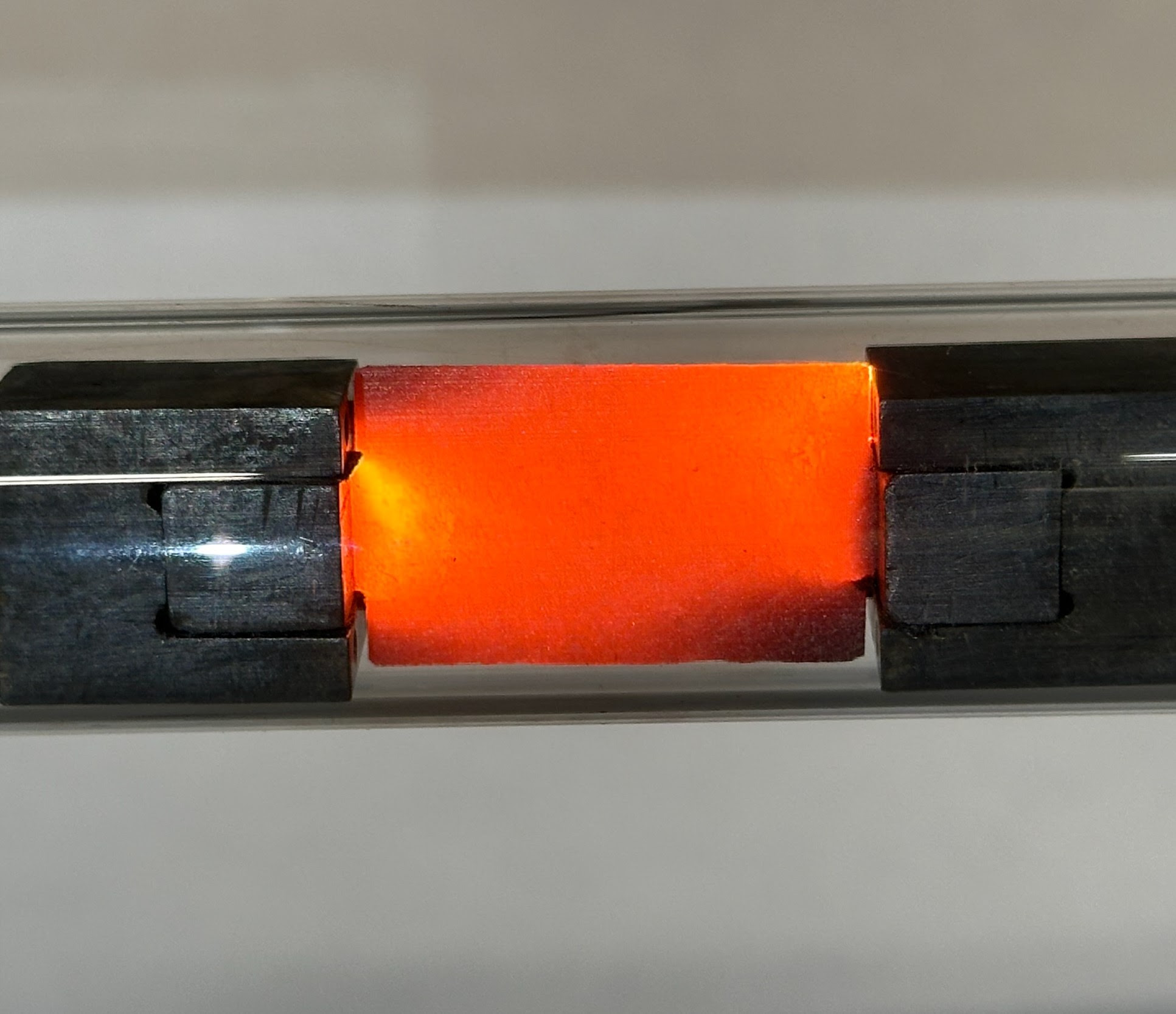
New method developed to capture CO2 directly from the air

Current carbon capture technologies to mitigate climate change only work well when applied to concentrated sources, such as power plant exhaust gases. An international team of researchers has developed a new method using a special porous material capable of capturing CO2 directly from the air, despite its low concentration. According to the authors, who publish their results in the journal Nature, this technology ‘represents a significant step towards clean air’.

0

Reactions: method developed to produce protein-based drugs that can be administered orally

For the treatment of many diseases it is necessary to use large molecules that do not resist the digestion process and must be injected. Now, a group of scientists at the Institute of Chemical Sciences and Engineering in Lausanne (Switzerland) has developed a method for synthesizing a type of protein called cyclic peptides, capable of binding to varied and complex targets, and they have done so in a way that makes them capable of being administered orally. According to the press release accompanying the publication, this opens "a new era in drug development".

0

Reactions: Nobel Prize in Chemistry to Bawendi, Brus and Ekimov for discovering quantum dots

The Royal Swedish Academy of Sciences has awarded the Nobel Prize in Chemistry 2023 to Moungi G. Bawendi, Louis E. Brus, and Alexei I. Ekimov "for the discovery and synthesis of quantum dots." Quantum dots are tiny nanoparticles that diffuse their light from televisions and LED lights, and can also guide surgeons when removing tumor tissue, among many other applications.

0