nobel

nobel

nobel

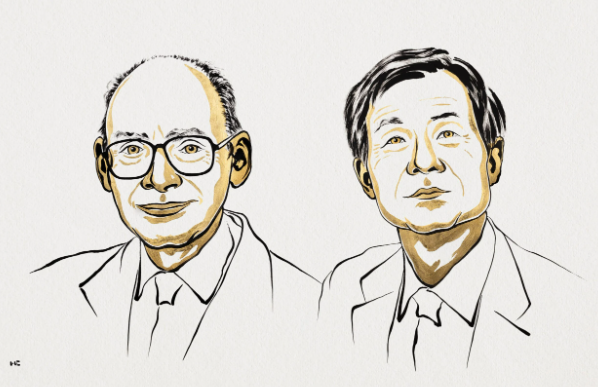
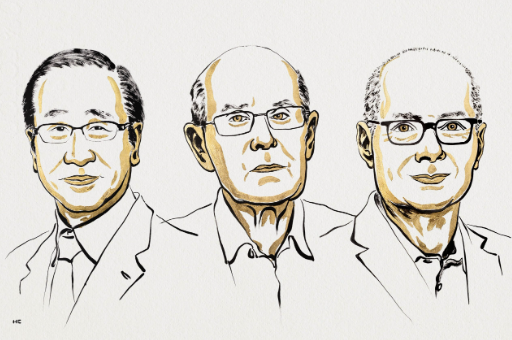
Nobel Prize in Chemistry awarded to Susumu Kitagawa, Richard Robson, and Omar M. Yaghi for creating porous materials with blocks of molecules that capture substances and drive reactions

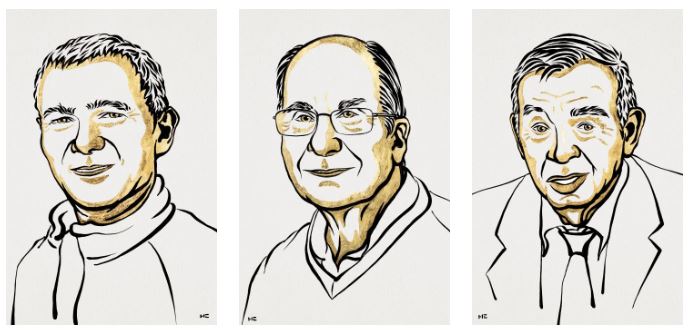
The Royal Swedish Academy of Sciences has awarded the 2025 Nobel Prize in Chemistry to Susumu Kitagawa, Richard Robson, and Omar M. Yaghi for the development of molecular structures with large spaces through which gases and other chemicals can flow. These structures, called metal-organic frameworks, can be used to extract water from desert air, capture carbon dioxide, store toxic gases, or catalyze chemical reactions.

0

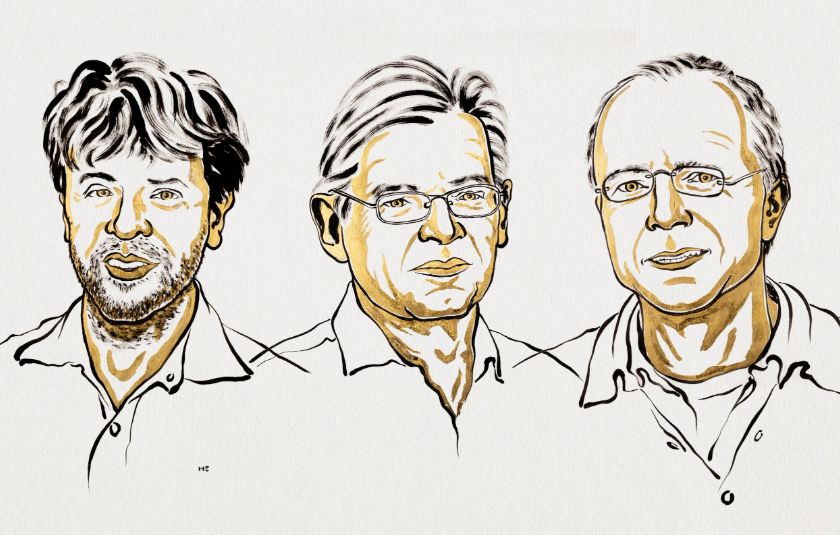
Nobel Prize in Physics awarded to John Clarke, Michel H. Devoret and John M. Martinis for their experiments with a chip that revealed quantum physics in action

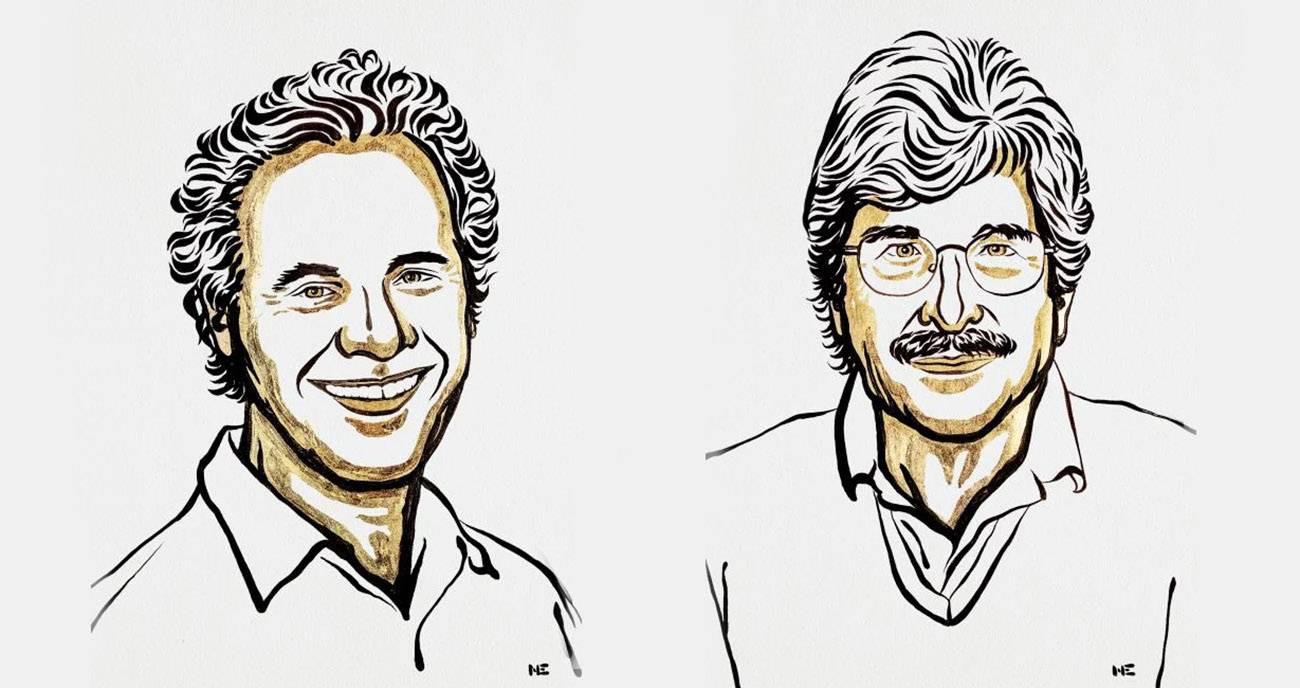
The Royal Swedish Academy of Sciences has awarded the 2025 Nobel Prize in Physics to John Clarke, Michel H. Devoret, and John M. Martinis, who demonstrated both the quantum tunnelling effect and quantised energy levels in a system small enough to fit in the palm of your hand. These advances have served to develop the next generation of quantum technology, including quantum cryptography, quantum computers and quantum sensors.


0

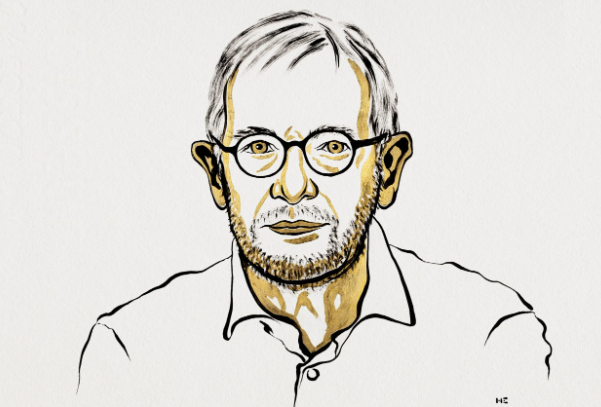
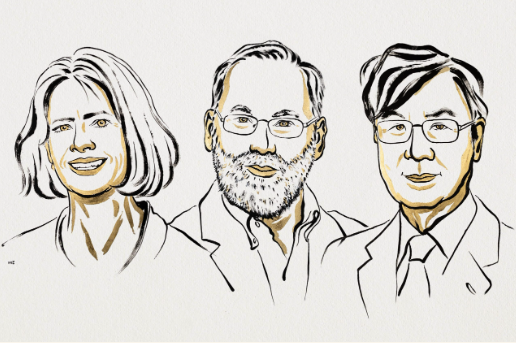
Nobel Prize in Medicine or Physiology awarded to Mary E. Brunkow, Fred Ramsdell and Shimon Sakaguchi for understanding how the immune system is kept under control without attacking organs

The Karolinska Institute has awarded the Nobel Prize in Medicine or Physiology to Mary E. Brunkow, Fred Ramsdell and Shimon Sakaguchi for describing how the immune system is regulated so as not to harm us. His groundbreaking discoveries on peripheral immune tolerance have spurred the development of new treatments for cancer and autoimmune diseases.

0

Nobel Prize in Chemistry for Baker, Hassabis and Jumper for computational protein design and structure prediction

The Royal Swedish Academy of Sciences has awarded the Nobel Prize in Chemistry 2024 on the one hand to David Baker for computational protein design, which makes it possible to construct proteins with functions not present in nature. On the other hand, jointly to Demis Hassabis and John M. Jumper of Google DeepMind, for the development of AlphaFold2, which allows the structure of the 200 million known proteins to be predicted at high speed. 

0

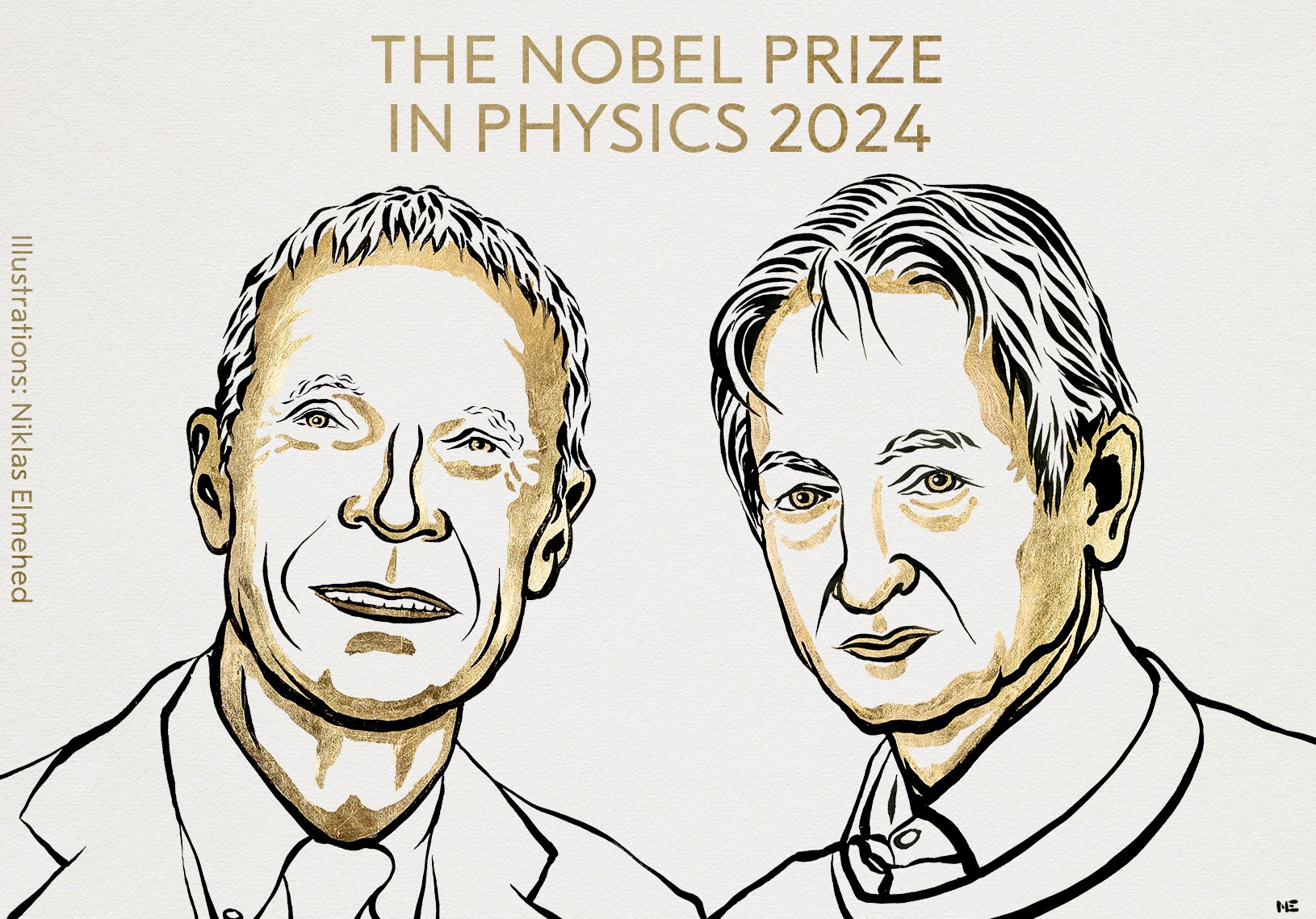
Nobel Prize in Physics for Hinton and Hopfield for discovering the basis of machine learning with artificial neural networks

The Royal Swedish Academy of Sciences has awarded the Nobel Prize in Physics 2024 to researchers John J. Hopfield and Geoffrey E. Hinton for discovering the foundations that enable machine learning with artificial neural networks. Hinton for discovering the foundational basis that enables machine learning with artificial neural networks. This technology, inspired by the structure of the brain, is behind what we now call ‘artificial intelligence’. 

0

Nobel Prize in Medicine or Physiology awarded to Ambros and Ruvkun for the discovery of microRNAs and their role in gene regulation

The Karolinska Institute has awarded the Nobel Prize in Medicine or Physiology to Victor Ambros and Gary Ruvkun for the discovery of microRNAs, small RNA fragments that do not contain instructions for making proteins but instead participate in the regulation of gene expression. Their role is fundamental in processes such as cell differentiation, and their alteration can influence diseases like cancer.

0

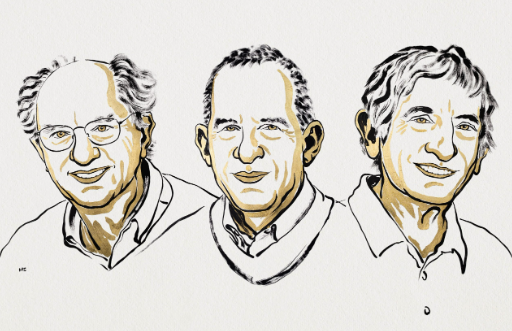
Reactions: Nobel Prize in Chemistry to Bawendi, Brus and Ekimov for discovering quantum dots

The Royal Swedish Academy of Sciences has awarded the Nobel Prize in Chemistry 2023 to Moungi G. Bawendi, Louis E. Brus, and Alexei I. Ekimov "for the discovery and synthesis of quantum dots." Quantum dots are tiny nanoparticles that diffuse their light from televisions and LED lights, and can also guide surgeons when removing tumor tissue, among many other applications.

0

Reactions: Nobel Prize in Physics to Agostini, Krausz and L'Huillier for developing light pulses to study the motion of electrons in matter

The Royal Swedish Academy of Sciences has awarded the 2023 Nobel Prize in Physics to Pierre Agostini, Ferenc Krausz and Anne L'Huillier for developing "experimental methods generating attosecond light pulses". These advances made it possible to observe the motion of particles in atoms on the shortest time scale captured by humans. An attosecond is a unit of time equivalent to one trillionth of a second, roughly the time it takes light to travel the diameter of an atom.

0

Reactions: Nobel Prize in Physiology awarded to Karikó and Weissman for their discoveries that led to the development of effective mRNA vaccines against covid-19

The Karolinska Institute has awarded the Nobel Prize in Medicine or Physiology to Katalin Karikó and Drew Weissman for their groundbreaking discoveries, which have radically changed our understanding of how mRNA interacts with our immune system, and made it possible to develop vaccines at unprecedented speed during the covid-19 pandemic.

0

Reactions: Luis A. Caffarelli wins the Abel Prize, the Nobel Prize in Mathematics, for his contributions to the regularity of partial differential equations

The Norwegian Academy of Science and Letters has awarded the Abel Prize to Luis A. Caffarelli, a native of Argentina with US-Argentine nationality, for his "fundamental contributions to the theory of the regularity of nonlinear partial differential equations". Considered the Nobel Prize of mathematics, the award recognises work over an entire career - unlike the Fields Medal, which is awarded for a result under the age of 40. Caffarelli has become the first Latin American to receive this award.

0