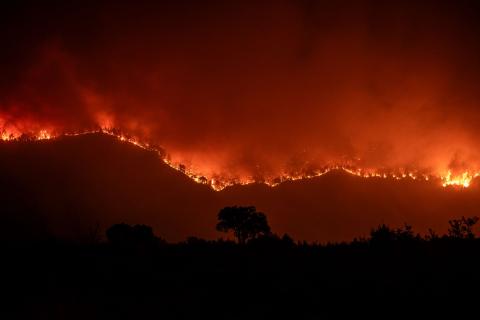
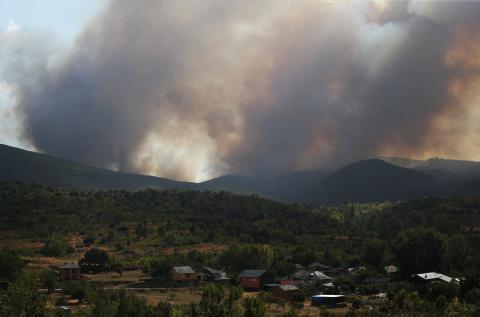
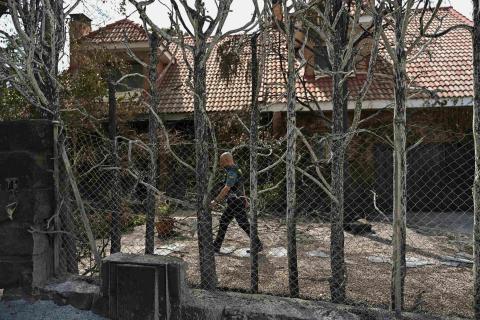
Fires burn the natural landscape of Las Médulas, a World Heritage Site
The fire in Yeres (León) has burned the Las Médulas natural area, included in UNESCO's World Heritage List since 1997. Yesterday, the president of the Regional Government of Castile and León, Alfonso Fernández Mañueco, announced a specific plan for the recovery and improvement of this area. At a press conference, he assured that all the vegetation cover in the area will be restored and a forest restoration plan will be carried out.
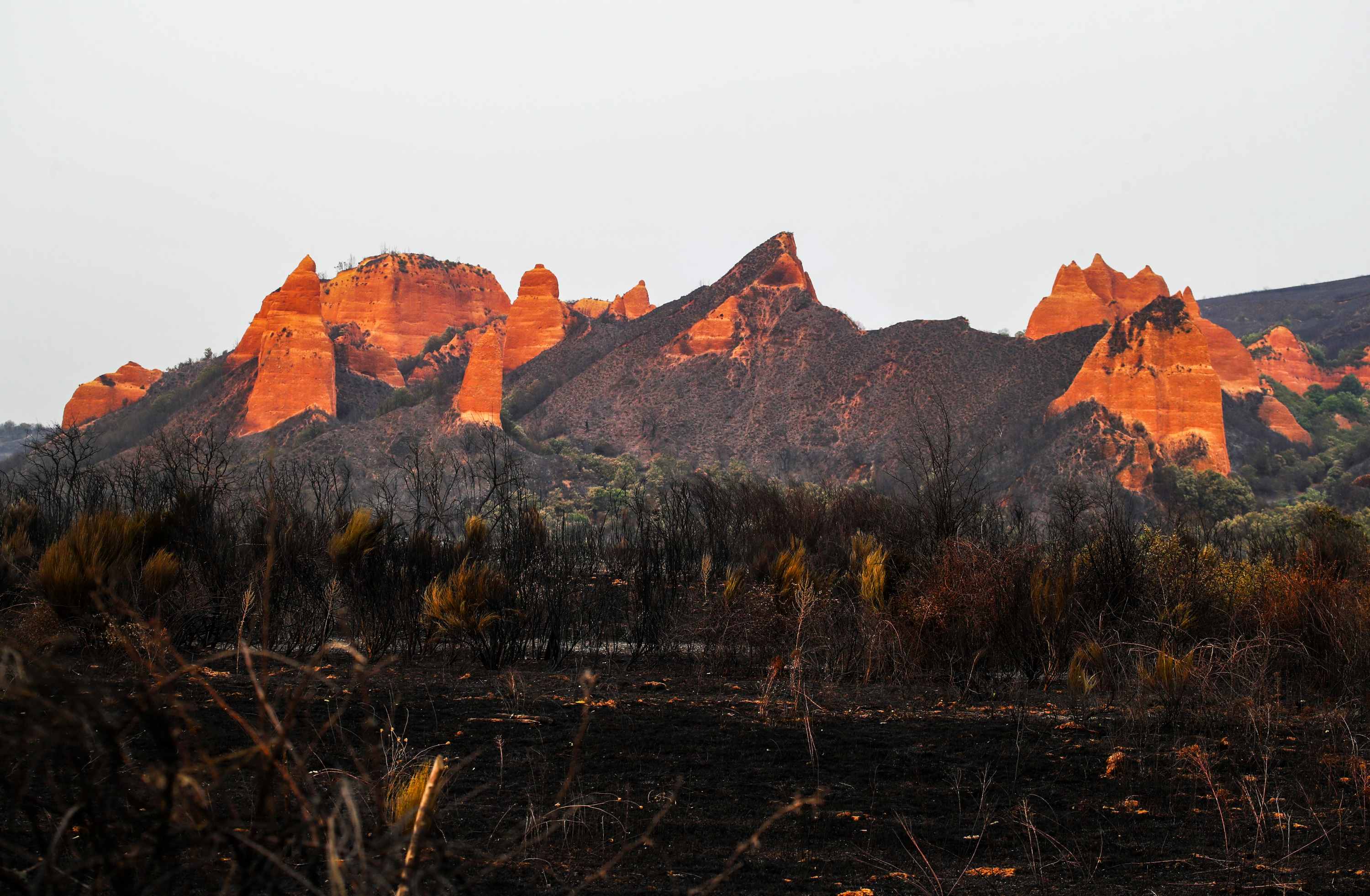
Burnt landscape in the Las Médulas nature reserve in the province of León. EFE/Ana F. Barredo.
F. Javier Sánchez-Palencia y Almudena Orejas - Las Médulas EN
F. Javier Sánchez-Palencia
Honorary Doctor at the CSIC Institute of History, in the Department of Archaeology and Social Processes
Almudena Orejas
Research professor at public research organisations at the CSIC Institute of History, in the Department of Archaeology and Social Processes
Las Médulas is a cultural landscape formed as a result of gold mining in Roman times (1,200 hectares transformed). Chestnut cultivation was also introduced at that time. Thus, the characteristic landscape of Las Médulas, with its green chestnut trees and reddish mining fronts, was a clear example of the union of cultural and environmental values. This comprehensive vision of the BIC (Site of Cultural Interest) and World Heritage Site has been reduced to ashes by the flames. Only a small part of the chestnut trees inside the main sector of the mine and the areas occupied by the villages have been saved.
Due to this indissoluble union, the damage to heritage is not limited to the vegetation cover, which acted as a protector for all the mining structures, which will now be subject to greater erosion and degradation. Furthermore, beyond its aesthetic value, a crucial resource has been lost, both for the inhabitants who live there and make their living from it (from restoration, accommodation or the collection and sale of chestnuts) and for the visitors who enjoy it.
The recovery of the cultural landscape will take almost a generation. Vegetation that is largely centuries old is not easily recovered. According to the most optimistic estimates, which are still provisional, the area burned is around 1,500 hectares within the area declared a Site of Cultural Interest and World Heritage Site (2,208 hectares). As a result of the serious damage caused, UNESCO could include Las Médulas on the List of World Heritage in Danger, the first step towards its declassification, if appropriate measures are not taken urgently.
Future actions should be guided by the recommendations already made by UNESCO, drawing up a comprehensive management plan that takes into account: solutions for the assessment, dissemination and prevention of cultural and environmental assets; the active participation and benefit of local populations; planned visits with controlled access; and the promotion of traditional land uses, including extensive livestock farming, maintenance of the forest and paths. This requires adequate human and technical resources and unified territorial management (rather than the multiple approaches used to date). Only in this way can Las Médulas be turned into a lasting and community-based resource, i.e. a sustainable resource.