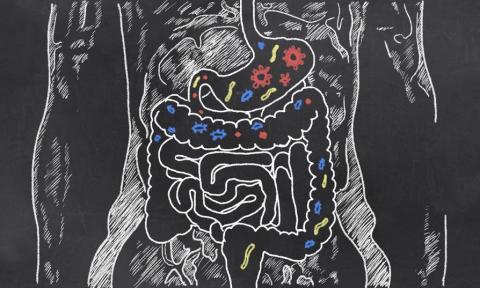
A link between digestive disorders and the development of Alzheimer's and Parkinson's diseases has been shown
An international team with Spanish participation has analyzed data from more than 500,000 people and found a link between digestive disorders such as colitis, gastritis, esophagitis, or functional bowel disorders and an increased risk of developing Alzheimer's and Parkinson's diseases. According to the researchers, who published their findings in the journal Science Advances, “this effort sheds light on the interaction between factors involved in the gut-brain axis and opens avenues for targeted treatment and early diagnosis.”
Lanciego - Gut (EN)
José Luis Lanciego
Senior Researcher of the Gene Therapy in Neurodegenerative Diseases Programme at the Centre for Applied Medical Research (CIMA), University of Navarra
An international team of researchers from various research centers in the US, UK, Spain, and Brazil have analyzed whether different intestinal diseases (gastritis, esophagitis, bacterial intestinal infections, gastroenteritis, and others) contribute to a higher incidence of neurodegenerative brain disorders such as Alzheimer's and Parkinson's diseases. To do this, they analyzed data from half a million clinical records available in the databases of three biobanks.
The results of the studies show that various types of intestinal disorders are already present years before the diagnosis of these neurodegenerative diseases. Specifically, these intestinal pathologies can appear up to 15 years before the diagnosis of Alzheimer's and Parkinson's.
These data corroborate existing evidence about the so-called gut-brain axis, making it important to pay attention to these intestinal pathologies in order to monitor patients closely and attempt to diagnose neurodegenerative brain diseases early.
The digestive system is often considered “the second brain” because it has numerous neurons in its submucosal layer. It is connected to the brain bidirectionally through the vagus nerve. There is ample evidence demonstrating the key role of gut microbiota and its alterations (known as intestinal dysbiosis) in triggering neurodegenerative brain diseases. In fact, a few days ago it was demonstrated that when a certain bacterium present in people with poor oral health is administered to mice, they develop deposits of a protein called beta-amyloid in the form of plaques very similar to those found in the brains of patients with Alzheimer's disease.
Shafieinouri et al.
- Research article
- Peer reviewed
- Observational study
- People