Emotional impact of the crash between two high-speed trains on relatives, survivors and train users
The collision between two high-speed trains in Adamuz (Córdoba) on Sunday afternoon has left at least 39 people dead and more than a hundred injured. The emotional impact of the accident affects the families of the victims, as well as the crash survivors and other train users.
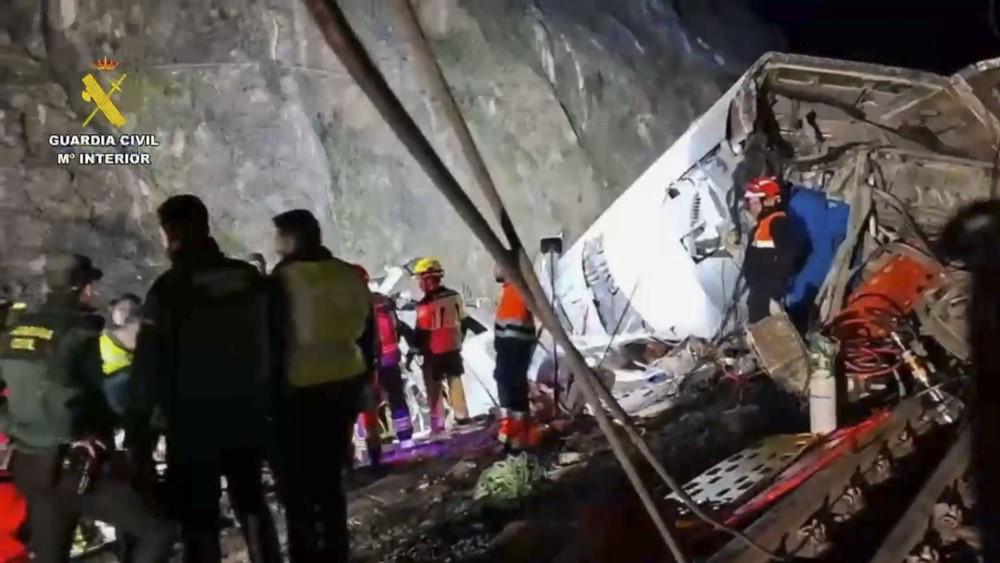
EFE/ Still from video footage by the Spanish Guardia Civil
260119_Adamuz_Rafael Castro-Delgado
Rafael Castro Delgado
Doctor of Medicine, Full Professor of Emergency Medicine at the University of Oviedo, emergency physician (SAMU-Asturias), researcher at the Asturias Health Research Institute, coordinator of the Pre-hospital Care and Disaster Research Group, and director of the Pre-hospital Care Research Network and advisor to WHO technical working groups related to emergencies and disasters
The train accident in Adamuz does not only have immediate physical consequences; the emotional impact can be profound and long-lasting, affecting not only the direct victims, but also their families, the survivors and, to a lesser extent, the population that regularly uses the high-speed train.
In the case of the relatives of the deceased, grief is often marked by the suddenness of the loss, the uncertainty of the first few hours and, on occasions, by media exposure that is difficult to deal with. All of this can lead to anxiety, depressive symptoms or complicated grief processes, which makes it particularly important to differentiate between the emotional reactions that are to be expected in the face of a traumatic loss and those that require specialised and sustained psychological intervention over time.
Among survivors, even when physical injuries have been minor, it is not uncommon for acute stress reactions, intrusive memories, sleep difficulties or persistent fear related to travel to occur. If these symptoms are not identified and addressed early on, there is a risk that they will develop into post-traumatic stress disorder requiring specific and specialised treatment.
We must not forget the first responders (emergency medical personnel, firefighters, police officers, and volunteers), who may also be emotionally affected by the magnitude of the accident. Direct exposure to traumatic scenes, the pressure to make quick decisions, and the sense of responsibility towards the victims can lead to acute stress, anxiety, or difficulties in processing the experience.
Psychological care and post-intervention support are essential to prevent exhaustion, burnout or symptoms of post-traumatic stress in these professionals, which must be approached from a proactive perspective by those responsible for emergency services, through the implementation of psychological care programmes for professionals.
The impact of the accident also extends to regular high-speed rail users. Following an event of this nature, it is understandable that there may be a temporary loss of confidence and an increase in fear of travelling. In this context, clear, rigorous and transparent institutional communication is key to reducing public alarm and restoring confidence.
Experience in emergency management shows that integrating psychological and psychosocial care in an appropriate manner, both in form and in timing, into the response to such events is essential to alleviate suffering and prevent negative consequences in the medium and long term.
260119_Adamuz_Antonio Puerta EN
Antonio Puerta Torres
Responsable del Gabinete de Psicología de la Policía Municipal de Madrid
During the [Madrid train station bombings] on 11 March [2004], I was the deputy coordinator of the emergency response team of the Madrid College of Psychologists, and I was part of the College's Emergency Working Group.
[Regarding the Adamuz train accident] With a tragedy of this nature, with such a high number of fatalities, you have an impact on primary victims, who suffered injuries –I haven't seen the latest data, the figure could reach 200 injured people or more– with the physical and psychological consequences that this may entail for them. Then there are secondary victims: relatives of the deceased, whose numbers are increasing by the minute, as well as the seriously injured; and tertiary victims, in the longer term, workers who will be all those involved in this situation, from the very first minute until, surely, a week later: emergency teams, police, healthcare professionals and psychologists, including ourselves.
And then, a disaster of this nature and magnitude shakes the whole of society. There is a certain fourth-level victimology, which is the impact on people who have experienced similar tragedies. To put it bluntly, their emotions are stirred up. People who have experienced these situations hear about this and begin to recover memories and recollections of what they themselves have experienced.
This emotional shock can occur at all levels. [...] We all know that, when there is grief, psychologists have a follow-up task, to see a posteriori how the situation evolves. Grief is not pathological, but it must be monitored and evaluated to ensure that it does not become something that could be more problematic in the long term.
The predictable pattern of what is happening and what is going to happen is already well known because, unfortunately, we have had similar tragedies, and we can see the repercussions at the levels I mentioned earlier.
260119_Adamuz_Ana Lillo EN
Ana Lillo
Psicóloga sanitaria especialista en intervención psicológica en emergencias, desastres y catástrofes
When we say that psychological intervention is needed in this type of disaster, we are referring to family members; injured people; and those who, although not injured, were on the train, as well as people who travel on a train line such as the one from Madrid to Huelva or Málaga who say: ‘it could have been me’.
We say that psychological intervention is important because one of the things that must always be done is to minimise possible psychological impacts and reduce the possibility of developing future pathologies associated with what has happened, which is a potentially traumatic event. What we seek with early intervention –for people who request it, because not everyone will need early intervention– is to be there, to be present and to reach out to all those who need it. It is about initiating a brief, focused psychological intervention, centred on what has just happened.
And what are we aiming for? If there is a dysfunction, we want to activate coping mechanisms to deal with what has happened. We also want to mobilise adaptive resources. Almost all of us have resilience [...]; we want to activate those resources.
We always tell them to get together with loved ones, to call them, to be accompanied. It is important to go through this whole process and, if necessary, activate some psychological resources, such as emotional self-regulation, or give them strategies for dealing with moments like those experienced when an accident such as yesterday's train crash occurs. Ultimately, it is also about increasing that sense of self-efficacy, giving people what they need based on how they are feeling at that moment, in the present, always from a position of autonomy and empowering that person because it is also correlated with how they are coping.
We also advise watching out for symptoms that stay intense and frequent. At first, it is normal for [those symptoms] to be very intense, but they should gradually decrease over time. If after a month they are still very intense, then referrals will have to be made.
As for the general population, when we read news like this, it has an impact on us because we are people with a certain sensitivity to the event. In general, it does not go beyond that impact, but there are some people who may be more vulnerable. I remember that, [after the Madrid train bombings] on 11 March [2004], one of the things that happened when people started watching television and hearing the news was that some elderly people called because they felt that war was returning to Spain. They were vulnerable because they had suffered quite traumatic experiences at one point, and sometimes it depends on how you view the news or what you see in that moment. You may need [psychological care], but in general, the general population does not need that kind of intervention.
In any case, if anyone feels that their trauma is being triggered by something, they should immediately consult with their specialist [healthcare provider], either by telephone or through groups that are already available, both in Madrid and Huelva, to receive psychological care and be assessed by a professional who can offer them help.
260119_Adamuz_Fernando EN
Fernando A. Muñoz
Lecturer of Psychopathology and Clinical Psychology at CES Cardenal Cisneros
Currently, there are basically three large groups of people directly affected by the situation:
- Relatives of the deceased.
- Passengers who were on the trains involved in the accident, especially those who were injured.
- Relatives/acquaintances of passengers on the trains involved in the accident.
The most common symptoms in the early hours are anxiety and depression, and the intensity/severity of the symptoms depends on multiple factors. Each person's situation must be assessed individually.
The overall management of the critical situation that has occurred (information and assistance received, logistics, etc.) is very important, especially the psychological assistance provided at this time in family care centres/hospitals to help them cope with the current situation, adapted to the specific circumstances of each person, as this will help them manage their symptoms and psychological adaptability in the face of the accident they have suffered.
As for railway users, it is possible that they may experience a certain amount of anxious anticipation and, in some cases, avoidance behaviours; the information conveyed to the population and the management of the double accident will have a significant influence on the population's response.
