More than 20 organic molecules from Mars identified
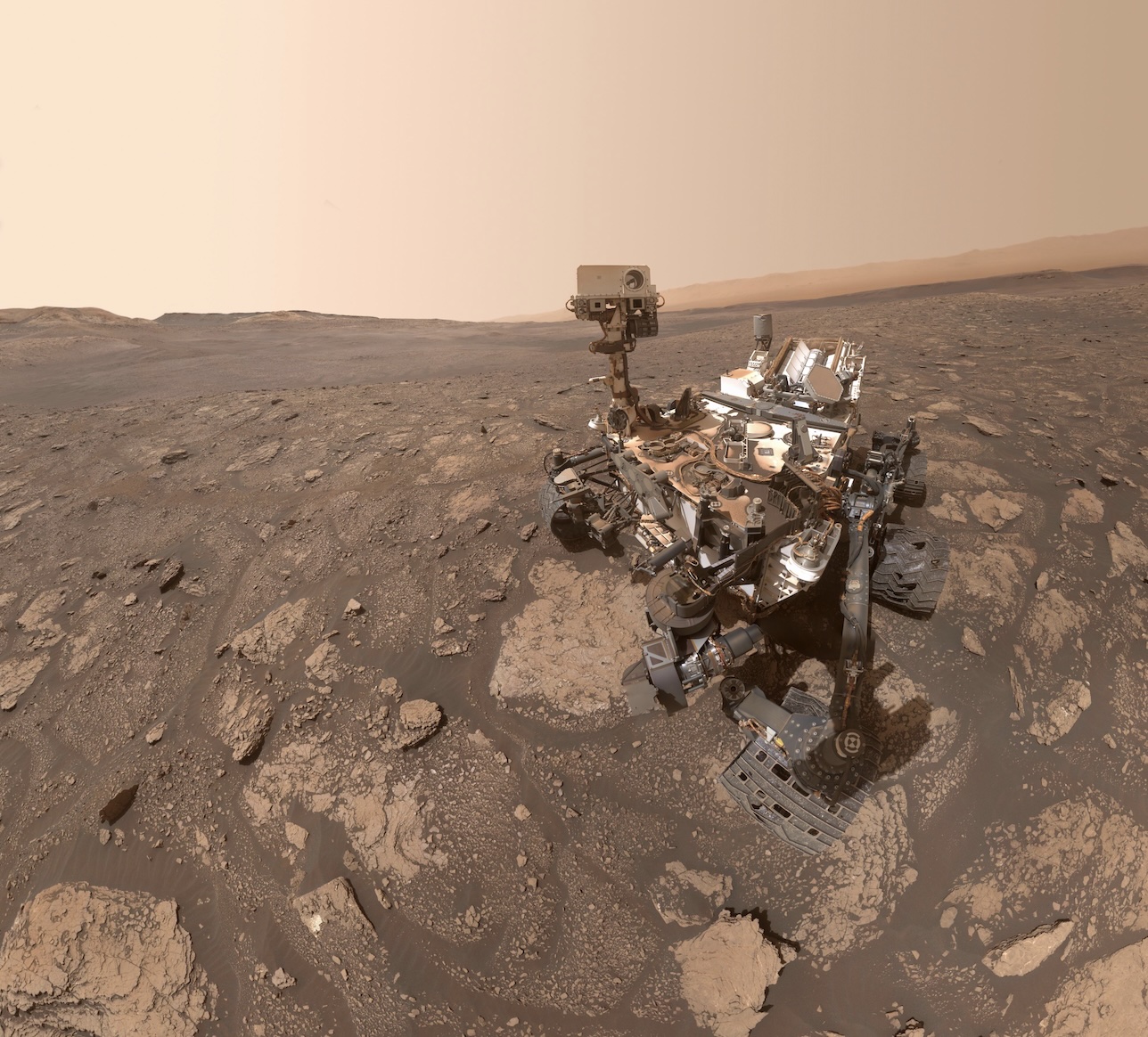
NASA’s Curiosity rover has found more than 20 organic molecules in clay-rich rocks on Mars, according to a chemical analysis published in Nature Communications. Among them is a nitrogen-containing molecule with a structure similar to that of DNA precursors, according to a press release from the University of Florida. This organic matter may have been preserved for more than 3.5 billion years in Gale Crater, the article states.
260421 moléculas marte césar EN
César Menor Salván
Astrobiologist and lecturer of Biochemistry at the University of Alcalá
This study does NOT imply that evidence of life on Mars has been found, nor evidence of past life, nor of biosignatures or biomarkers. Nothing biological. That must be made very clear. All the molecules observed are of abiotic origin. This tells us nothing about possible past life on Mars.
What this study demonstrates is that certain materials on Mars may preserve organic molecules or carbonaceous material. This material may originate from the planet itself, from more recent formations, or from meteorites; that cannot be determined.
These results come from the SAM instrument on the Curiosity rover. The sample analysed is from a sedimentary formation, containing sandstones and clays, in an area where, no less than 3.5 billion years ago, there was a lake. It is an ideal place to look, as the clays could have trapped organic or carbonaceous matter (with certain similarities to our coal).
The instrument performs an analysis such that, if organic matter is trapped in the clays, it can be released by heat. Alternatively, if it is carbonaceous material, it can break down and release molecules that reveal its presence. It is somewhat akin to analysing a slice of bacon by grilling it on a barbecue and analysing the smoke. Just as you can tell you are grilling bacon by the smell, so the instrument identifies what is in the sample by the volatilised molecules.
To put it in slightly more technical terms, Curiosity applied wet thermochemical hydrolysis using TMAH within the SAM instrument to a very ancient clayey sandstone from the Knockfarrill Hill member, in Glen Torridon (Gale Crater), to release and detect organic compounds preserved in the Martian rock.
The real and significant finding is methodological and analytical. They have demonstrated that the TMAH experiment in SAM can extract an organic fraction and have reinforced the idea that ancient Martian rocks preserve aromatic and sulphur-containing organics. That is positive and relevant for future exploration.
The work also addressed a fundamental problem: the analysis was carried out on an instrument that was not chemically ‘virgin’, but rather contaminated and with an internal memory of previous reagents and by-products. So, in some respects, it is unclear whether they have observed genuinely Martian products or are seeing system noise.
Amy J. Williams et al.
- Research article
- Peer reviewed