A method transforms wind turbine blades, which are difficult to recycle, into materials with industrial applications
The difficulties involved in recycling wind turbine blades at the end of their useful life pose a growing problem, as it is estimated that by 2050 more than 40 million tonnes of this waste could have accumulated worldwide. A study published in Chem Circularity presents a method for transforming them into graphene and silicon carbide through rapid heating at high temperatures. The researchers have incorporated the resulting materials into resins and found that they improve some of the resins’ mechanical and thermal properties. The process, which has been tested on a laboratory scale, could facilitate the reuse of discarded blades to manufacture new products.
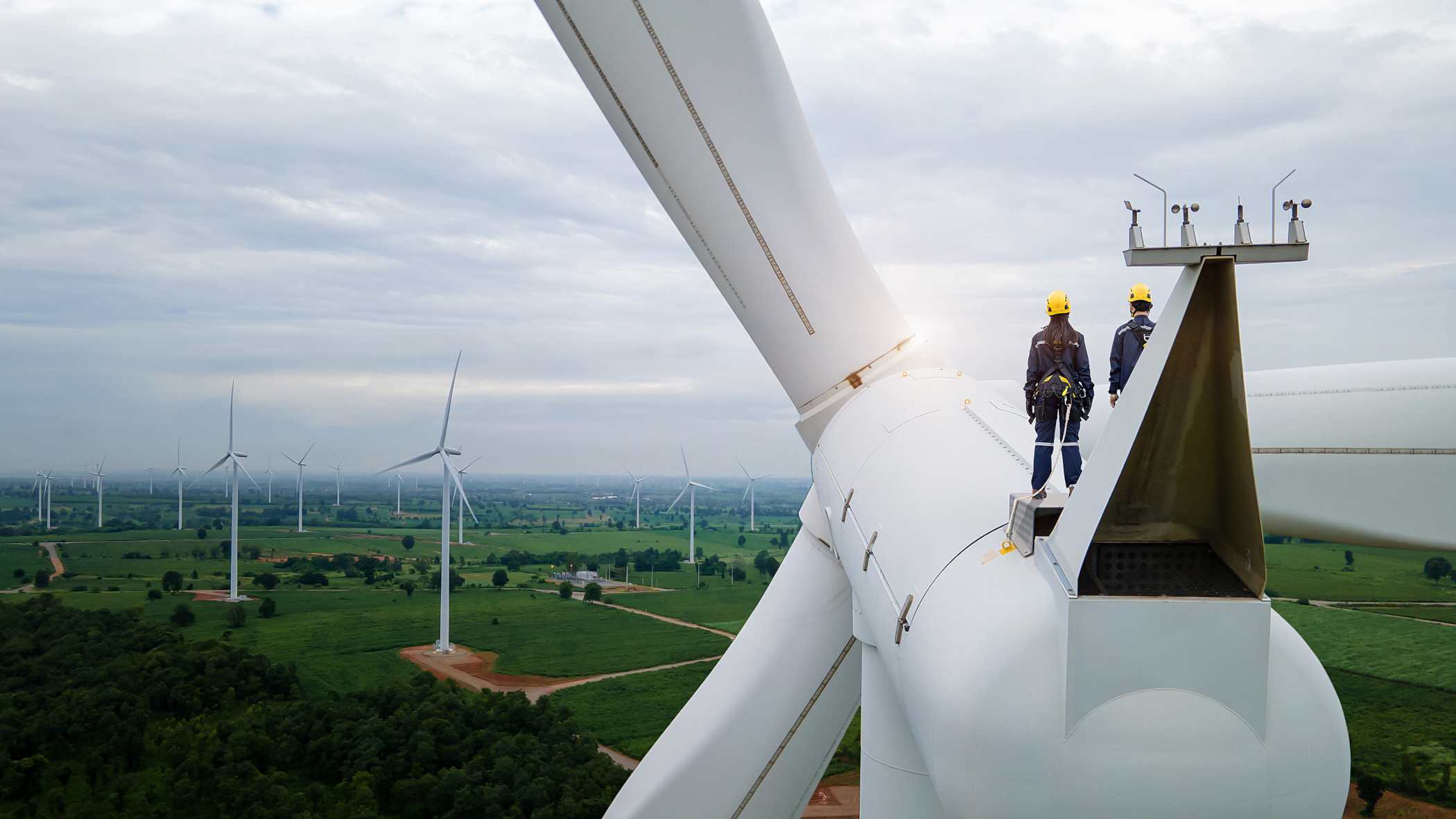
Martín Muñoz Morales - aerogeneradores
Martín Muñoz Morales
Professor and researcher in the field of Chemical Engineering at the School of Agricultural Engineering, Forestry and Biotechnology at the University of Castilla-La Mancha
This study highlights the potential of upcycling as a strategy that goes beyond conventional material recovery, by transforming waste streams into products with higher added value. In this regard, the management of end-of-life wind turbine blades poses a significant environmental challenge, particularly in countries such as Spain, where the expansion of wind energy is expected to lead to a growing volume of this type of waste.
One of the most interesting aspects of the proposed technology is that it enables the various components of the blades to be recovered together, avoiding additional separation stages and utilising their composition to produce a multifunctional additive. The materials obtained have been incorporated into epoxy resins, where a concentration of 0.3 per cent by weight increased the Young’s modulus by 27 per cent and tensile strength by 11 per cent, whilst also improving thermal diffusivity. Furthermore, the study estimates a reduction of over 90 per cent in greenhouse gas emissions compared with recycling via chemical dissolution and points to a potential economic benefit, according to a preliminary techno-economic analysis.
However, these results must still be considered in the context of an experimental demonstration and of environmental and economic estimates that require validation on a larger scale. It is therefore a priority to promote studies aimed at assessing the process’s scalability, its energy consumption and its economic viability under industrial conditions. This objective should be included in future calls for research proposals, particularly through collaborative projects between companies and research organisations that will enable progress towards its industrial implementation.
Bi et al.
- Research article
- Peer reviewed