How far in advance should you start preparing for an international trip from a health perspective?
África González Fernández, professor of immunology at the University of Vigo and former director of CINBIO, tells SMC Spain that the most important thing is to plan for possible vaccines and everything else needed for the trip ‘at least two or three months in advance.’
Those travelling to tropical, subtropical or developing countries should visit a specialist travel medicine centre between four and eight weeks before departure, preferably earlier if planning a long trip or working abroad. It should be borne in mind that demand for this service is higher during the summer, so it is advisable to make an appointment well in advance if you are planning to travel during the holiday season.
On which trips should we pay more attention to health recommendations?
On all international trips, especially those to developing, tropical or subtropical countries, travellers should be aware of the general measures issued by the Ministry of Health, including vaccination recommendations.
‘International travel to any destination carries health risks in itself,’ explains Mar Faraco, head of the Foreign Health Service at the Huelva Government Sub-delegation, to SMC Spain, although it is travel to countries less developed than the country of origin ‘that should be prioritised,’ taking extreme precautions and receiving specific health recommendations in advance. Some of these risks stem from environmental changes or the conditions of the means of transport.
What are the main health risks in these destinations?
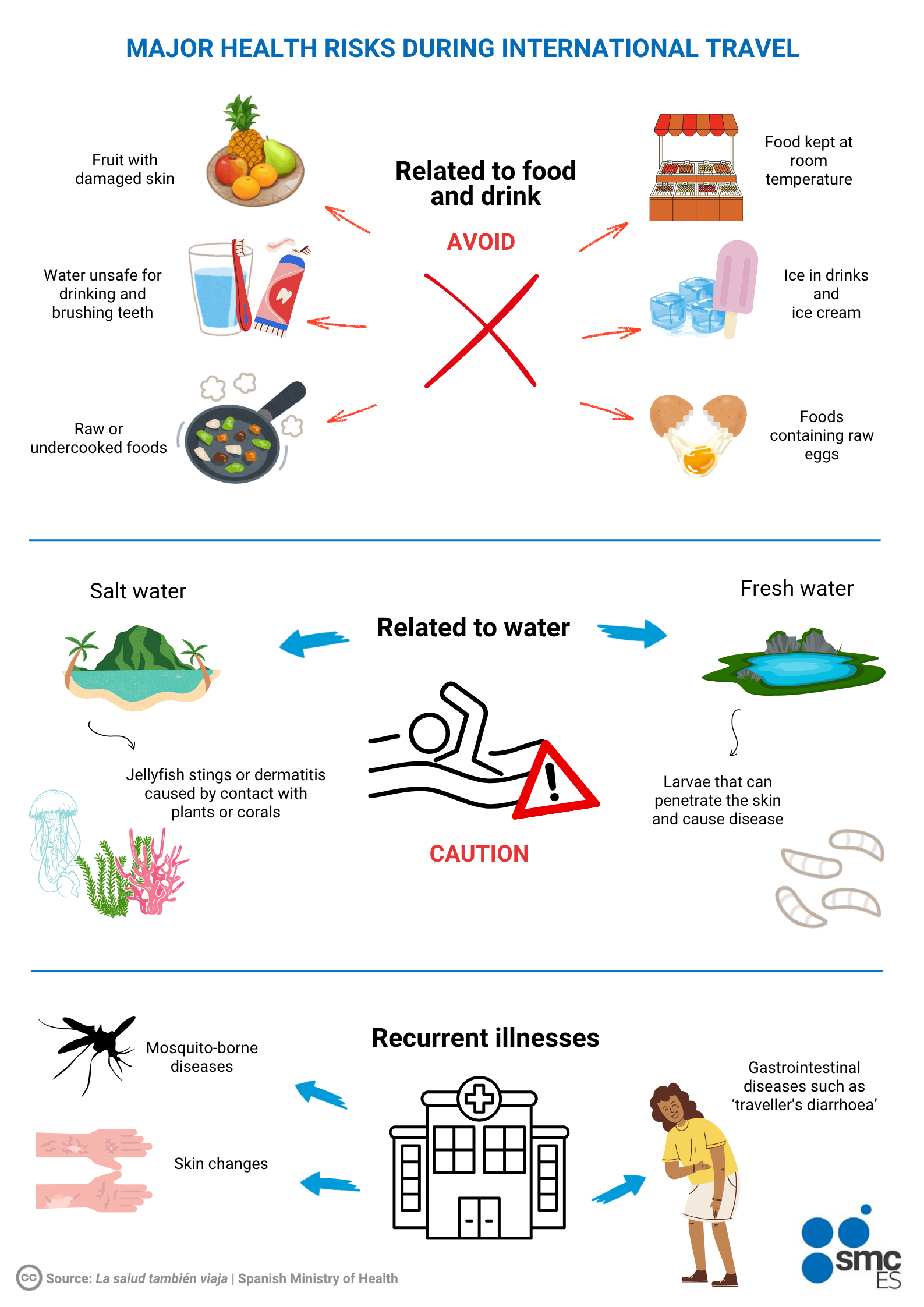
With regard to food, health authorities recommend not consuming food kept at room temperature, raw or undercooked food, food containing raw or undercooked eggs, and fruit with damaged skin.
Special attention should also be paid to water: ice in drinks and ice cream of any kind should be avoided, teeth should not be brushed with unsafe water, and water should be boiled—including drinking water—if its quality is in doubt.
It is important to take care when bathing in both fresh and salt water. Waterways, canals and tropical lakes may be infected with larvae that penetrate the skin and cause disease. Swimming in the sea, although harmless in principle, can result in jellyfish stings or fish bites, as well as dermatitis from contact with corals, crustaceans, shellfish or anemones.
What are the most common diseases?
Rosa López Gigosos, coordinator of the Travel Vaccine Working Group of the Spanish Association of Vaccinology (AEV), classifies the most common health problems into three categories: gastrointestinal diseases, feverish syndromes and skin disorders.
Traveller's diarrhoea is the most common condition and can be caused by certain bacteria (such as E. coli, Shigella or Campylobacter), viruses (such as norovirus, adenovirus or rotavirus) or parasites. Food hygiene is very important in reducing its incidence.
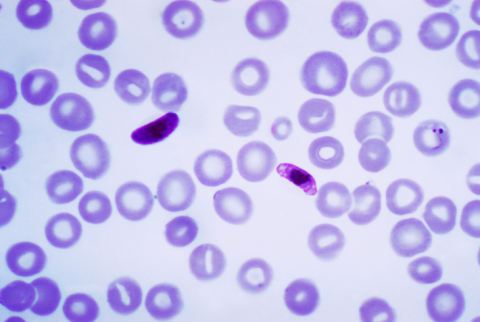
As for feverish syndromes, the specialist points out that most are usually the result of mosquito-borne diseases, ‘such as dengue fever, chikungunya, Zika or malaria,’ although they can also be caused by microorganisms acquired through contaminated water and food, as in the case of typhoid fever.
Finally, skin disorders are usually caused by bites, infections, sun exposure, allergies or contact with local fauna and flora: ‘The main reasons for consultations for skin lesions after travel are skin and soft tissue infections, insect bites and cutaneous larva migrans,’ lists López Gigosos to SMC Spain.
What should you always have in your first aid kit when travelling?
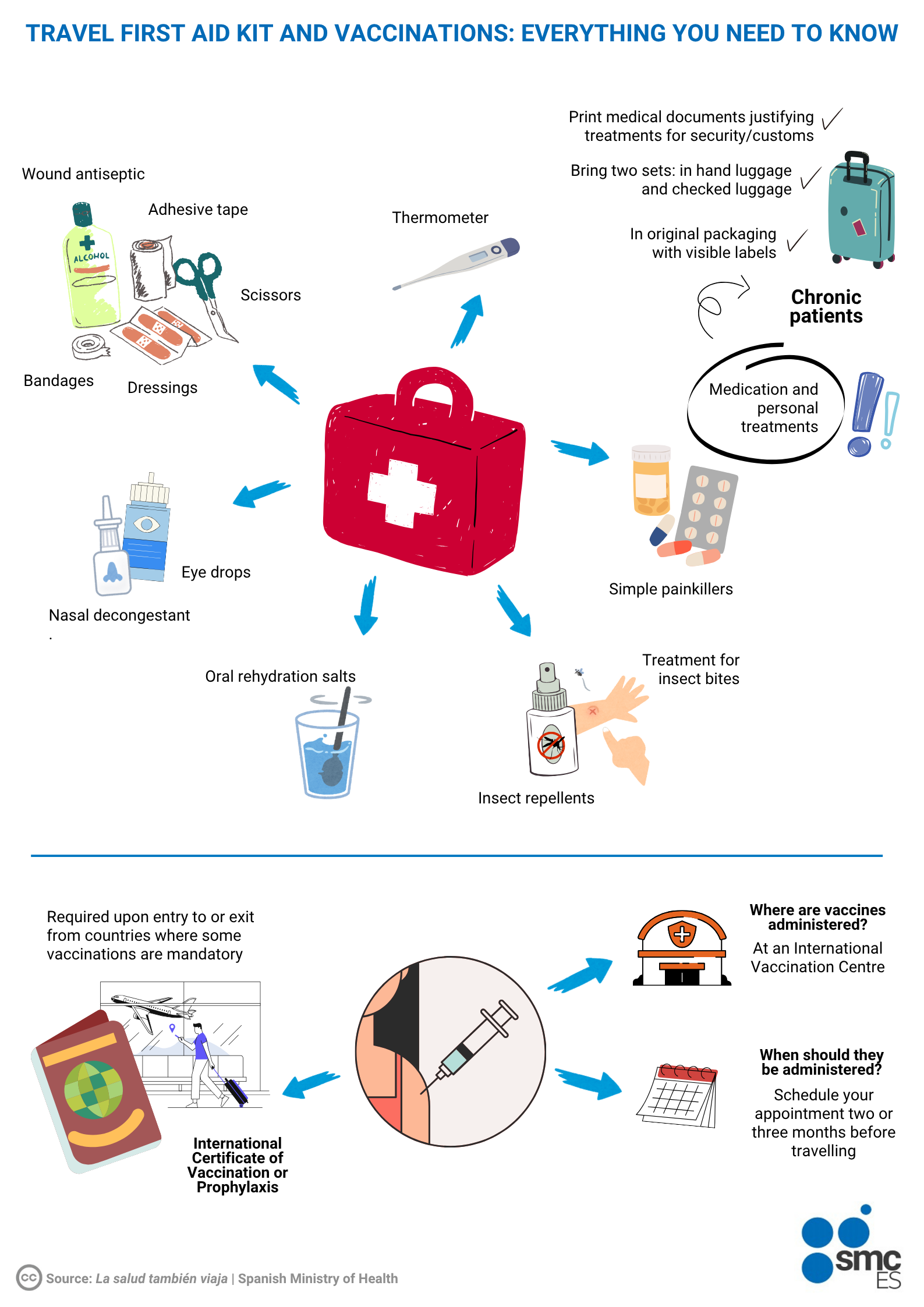
A basic first aid kit should contain: adhesive tape, antiseptic for wounds, bandages, eye drops, insect repellent, nasal decongestant, oral rehydration salts for gastrointestinal ailments, scissors, simple painkillers such as paracetamol, sterile dressings, a thermometer and treatment for insect bites.
Insect repellents containing 45% DEET (applied every three to four hours), Icaridin-Picaridin (Bayrepel/AutanActivo), Dimethylphthalate or essential plant oils can be used.
In addition to any medication that each person takes regularly, other items that can be added to the first aid kit include anti-diarrhoea medication, antifungal powder, anti-malaria medication, condoms, sedatives, syringes and sterile needles, water disinfectants and menstrual products.
Where can I find official, up-to-date information on the health situation in different destinations?
The Ministry of Health has detailed and up-to-date health information for each country. Using the interactive map, you can select the country you are interested in and useful information will appear, such as compulsory and recommended vaccinations (if applicable). It also provides information on the risks of specific diseases associated with the selected territory, specifying the most problematic seasons and areas.
For its part, the World Health Organisation (WHO) has a resource where you can consult data on the health situation in each country, with parameters such as reported cases and incidence of certain diseases or vaccination coverage rates. In addition, it is very useful to consult a doctor individually before travelling.
Which population groups should take extra precautions?
The health risks associated with travel are greater for certain groups of people, including babies and young children, pregnant women, the elderly, people with disabilities or who are immunocompromised, and those with pre-existing medical conditions. In addition, Faraco explains that travellers should take into account other personal factors, such as allergy history, current medical treatments, vaccination history or specific situations such as breastfeeding.
Those with chronic illnesses should carry the necessary medication for the entire duration of the trip, stored in their original containers with the labels visible, especially prescription medications. To avoid risks of theft or loss, the Ministry of Health recommends carrying duplicate medication in your checked luggage.
These travellers should carry all information relating to their medical condition and treatment, including health reports certifying that the medication is necessary for the patient, highlighting any treatments that may cause problems at security or customs checks, such as those administered with syringes.
Is it mandatory to be vaccinated for this type of trip?
It depends. There are mandatory and recommended vaccinations, all of which are linked to the area and time of year you are travelling to. Their recommendation also depends on other factors such as the traveller's personal situation (pregnant women, children, the elderly, people with disabilities or chronic illnesses), the length of stay, the health situation in the country being visited, the specific characteristics of the trip (individual or group organisation, visit to rural or urban areas) or the reason for the trip (tourism, work, adventure, cooperation, visiting relatives, etc.).
Compulsory vaccinations are subject to international regulations and proof of vaccination may be required by the authorities of the country visited in the form of an International Certificate of Vaccination or Prophylaxis. This type of vaccination is only administered at International Vaccination Centres authorised and approved by the WHO. These centres also issue the aforementioned certificate.
Faraco points out that ‘on very rare occasions’ destination countries require that a specific type of vaccine has been administered and comments that the only one specifically mentioned in the International Health Regulations is that for yellow fever.
For her part, the AEV specialist highlights that two other vaccines—polio and meningococcal meningitis—may be mandatory in some countries or specific contexts, and may also be recommended in many destinations where they are not required for entry.
As for recommended vaccines, these are those which, although not an essential requirement for entry into the destination countries, are highly recommended due to their key role in the prevention of infectious diseases. As López Gigosos points out, their main purpose is ‘to protect travellers from diseases prevalent in the destination and prevent their spread’.
Is there an international vaccination card? When is it mandatory to carry it?
Yes, and it is known as the International Certificate of Vaccination or Prophylaxis. It is the official document in which healthcare personnel complete and certify the vaccinations and preventive or prophylactic treatments administered to those who require them for travel. It includes the date, manufacturer of the vaccine, batch number, professional title of the vaccinator and official stamp of the vaccination centre where it was administered. It must be carried by people travelling to destinations where vaccination for a certain disease is compulsory, as it may be required upon entry or exit.
The certificate is only valid if the vaccine is approved by the WHO and if it has been administered at a centre designated by the local health authority. The document must be printed in English or French, with the option of adding another language. In the case of yellow fever, the certificate is valid for life.
Where are these vaccines administered in Spain? Are they free?
In our country, vaccinations for international travellers are administered at International Vaccination Centres. These 101 centres, located throughout the country, carry out activities related to vaccination for the general population and provide vaccination consultations for international travellers.
The Ministry of Health website has a list with their addresses, telephone numbers for appointments and medical consultations, email addresses and opening hours. You can use this link to request, change or cancel an appointment at any of these centres.
The cost of vaccination depends on each autonomous community, with the fee for the yellow fever vaccine and other compulsory vaccines being the only ones managed at the national level, ranging from 20 euros per vaccine.
What are the main recommended vaccines?
López Gigosos emphasises that individualised care is ‘very important’ and that recommendations vary ‘depending on the destination, the type of traveller, their age and other variables’. With this in mind, the specialist points out the most recommended guidelines for young adults travelling to tropical and subtropical countries: ‘Vaccinations against hepatitis A, typhoid fever, yellow fever and a booster shot for tetanus-diphtheria-pertussis.’
What happens if a person does not get vaccinated before travelling?
The professor at the University of Vigo warns of the risks for those who do not follow vaccination recommendations: ‘They are exposing themselves to developing a disease that can be serious or even fatal.’ In addition, González emphasises the importance of vaccines in slowing the spread of diseases and the risk that unvaccinated or immunocompromised people would pose by importing them into their countries of origin.
What role does vaccination play in the current context of emerging outbreaks?
Faraco explains that vaccines are essential in preventing the spread of certain diseases: ‘They are a basic tool for controlling outbreaks and epidemics.’ The expert stresses the importance of international travellers being properly vaccinated according to the vaccination schedule ‘to avoid spreading diseases and causing or spreading outbreaks.’
She also highlights cases where travellers go to destinations where diseases do not exist in their places of origin: ‘In addition to affecting them personally, they can be imported back and cause local outbreaks.’
What are prophylactic measures? In what situations should we take antimalarial drugs?
Faraco explains that prophylactic measures in travel medicine are those taken specifically to prevent malaria, also known as paludism. Chemoprophylaxis is the use of drugs for this purpose and consists of administering a full course of treatment with an antimalarial drug to vulnerable populations at designated times during the period of highest risk of malaria, ‘during the trip and a few days before and after,’ says Faraco.
‘Preventive drugs for malaria [antimalarials] should be taken in regions where the risk is high or moderate,’ says Faraco, who insists on taking other factors into account when prescribing treatment, such as ‘susceptibility and possible severity due to the type of traveller or foreseeable difficulties in accessing rapid and adequate medical care in the event of high fever’.
‘Malaria is a serious, potentially fatal disease which, although treatable, requires early diagnosis and treatment.’ Hence the importance of taking antimalarial drugs ‘at low doses as a preventive measure and in accordance with the risk’ to ‘significantly’ reduce the risk of disease.
The specialist points out that, although there are two vaccines against malaria, neither of them ‘provides adequate protection from the point of view of international travellers’. Both are aimed at reducing overall mortality among young children in endemic populations and are therefore ‘not useful’ as prophylactic measures.
Should precautions be taken once the trip is over, in the places of origin?
Some tropical diseases may cause symptoms once you have returned to your place of origin or even some time after your return. In any case, you should inform healthcare personnel about any trips you have made to tropical areas or developing countries in the last twelve months.
In addition to purely health-related issues, after this type of travel, especially when crossing several time zones, effects may arise from these sudden changes. To minimise the impact of jet lag, a series of recommendations can be followed.