
Autonomous University of Barcelona
If you are the contact person for this centre and you wish to make any changes, please contact us.
Member of the Water and Global Change Research Group at the Centre for Research in Ecology and Forestry Applications (CREAF), at the Autonomous University of Barcelona
PhD in Psychology in the Department of Psychiatry and Legal Medicine at the Universitat Autònoma de Barcelona and coordinator of the GRETA group (Research Group on Evaluation and Treatment of Self-harm)
Associate Professor (Professor Agregat Serra Hunter) at the Department of Applied Economics of the Universidad Autónoma de Barcelona (UAB)
Head of Adult Mental Health at Fundació Hospitalàries Barcelona, assistant psychiatrist at the Vall d'Hebron University Hospital psychiatry department, and associate professor in the Department of Psychiatry and Legal Medicine at the Autonomous University of Barcelona (UAB)
Professor of Ecology at the Autonomous University of Barcelona and CREAF researcher
Senior researcher at the Institute of Environmental Science and Technology (ICTA-UAB) of the Autonomous University of Barcelona
Professor Emeritus of Psychobiology at the Autonomous University of Barcelona (UAB) and full member of the Spanish Academy of Psychology
Coordinator of the Neuro-oncology Unit of the Bellvitge Biomedical Research Institute (IDIBELL) and researcher of the Neuroplasticity and Regeneration Group of the Autonomous University of Barcelona
Juan de la Cierva researcher in the Department of Geology at the Autonomous University of Barcelona
Research Associate in Palaeoprimatology and Human Palaeontology at the Miquel Crusafont Catalan Institute of Palaeontology, Autonomous University of Barcelona
Head of the Diabetes Immunology Group at the Germans Trias i Pujol Research Institute (IGTP, Badalona) and associate professor of Immunology at the Autonomous University of Barcelona
Head of the Laboratory of Gene Therapy in Neurodegenerative Diseases of the VHIR-UAB Mixed Unit
Researcher at the Hospital del Mar Medical Research Institute (IMIM), professor of public health at the Autonomous University of Barcelona and author of the book Vive más y mejor
Research director
Doctor in the Paediatric Oncology and Haematology Department at Vall d'Hebron Hospital and associate professor in the Paediatrics Department at the Autonomous University of Barcelona
PhD in Anthrozoology, and gradute in ethology and Biochemistry by the Autonoma University of Barcelona.
ICREA Research Professor, Director of Andero Lab and the Rodent Behavioral Core at the Autonomous University of Barcelona (UAB), and researcher in the Department of Psychobiology and Methodology of Health Sciences at the UAB and at the Carlos III Health Institute, CIBERSAM
Professor of Biochemistry and Molecular Biology at the Universitat Autònoma de Barcelona and a researcher on the Academia de Excelencia programme
Doctor of Public Health, member of the Research Group on Psychosocial Risks, Work Organisation and Health (POWAH) at the Institute of Labour Studies at the Autonomous University of Barcelona, and member of the Trade Union Institute for Work, Environment and Health (ISTAS)
Researcher at the Universitat Autònoma de Barcelona
Researcher in the Department of Sociology at the Autonomous University of Barcelona and director of the Globalisation, Education and Social Policies research group
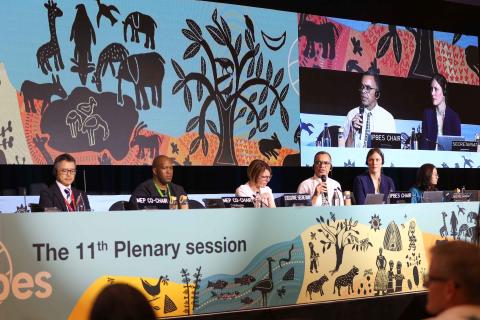
Meeting in the city of Windoek (Namibia), the plenary of the IPBES - Intergovernmental Science-Policy Platform on Biodiversity and Ecosystem Services - has ratified two new reports: the Nexus Assessment and the Transformative Change Assessment. Three of their authors explained the main findings and the changes they propose at a briefing organised by SMC Spain.
A team of researchers has analysed the evolution of 4,550 people aged 25 to 65 diagnosed with type 2 diabetes who had been studied for 30 years in the UK. They found that those diagnosed before the age of 40 had a risk of dying almost four times higher than in the general population. If diagnosed later, the risk was 1.5 times higher. The authors publish their findings in the journal The Lancet Diabetes & Endocrinology.

A report by the Lancet Commission on Self-Harm highlights that at least 14 million episodes of self-harm occur each year - particularly among young people and in low- and middle-income countries. The paper argues that their impact has been neglected by governments globally and sets out a series of recommendations to reduce their incidence.
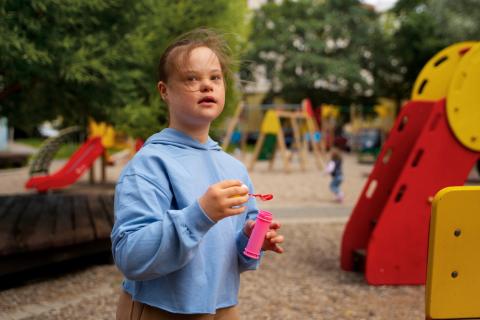
Newborns with Down syndrome, as they grow, face a higher risk of developing leukemia compared to those without the syndrome. An international team has sequenced the genes of more than 1.1 million cells from fetuses with and without Down syndrome, and it has discovered that the extra chromosome 21 they have alters the way DNA is packaged inside cells. According to the authors, whose research is published in Nature, this difference affects the regulation of certain genes and may contribute to the development of leukemia.

An international team of researchers has analyzed various data sources and scientific literature and identified 3,601 chemical substances in human samples such as blood, urine or breast milk that are known to be in contact with food, for example, because they are used in packaging. According to the authors of the study, “this work shows that food contact materials are not completely safe, even if they comply with regulations, because they transfer known substances to food". The research is published in the Journal of Exposure Science and Environmental Epidemiology.
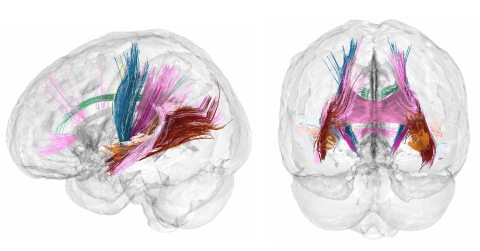
A study describes changes in a woman's brain during and after pregnancy, including a ‘pronounced’ decrease in grey matter volume and cortical thickness, and an increase in ventricular volume and cerebrospinal fluid. Some of the changes are maintained in the postpartum period; others reverse within months. The team performed 26 MRI scans and blood tests on one mother, from pre-conception until two years postpartum, and publish the results in Nature Neurology.

Brain maturation is measured by the thickness of the cortex. It is known that stress accelerates cortical thinning, which is associated with a higher risk of developing neuropsychiatric disorders. A study published in PNAS analyzes MRI data collected from 160 adolescents before COVID-19 and from 130 of them after the measures implemented during the pandemic. The comparison of brain structure before and after reveals accelerated cortical thinning which, measured in terms of equivalent years of brain development, was 4.2 years in girls and 1.4 years in boys.brain maturity

An international team of researchers has studied 241 brain-damaged people apparently unable to respond to external stimuli. Using techniques such as functional magnetic resonance imaging and electroencephalogram, they have detected signs of brain activity in 25 % of them that, according to the authors, ‘suggest that they may be interacting with the outside world’. The results are published in the journal NEJM.
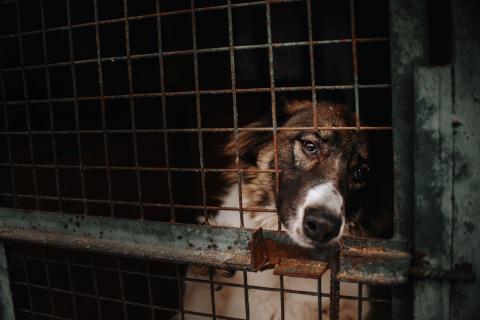
The impact of animal abandonment goes beyond the pets who suffer it, it is a public health, safety and funding issue as well. Although there have been some improvements in recent years, the experts consulted agree that the system continues to fail. In this guide, we analyze what has changed, who does this issue affect, and what must be improved.

In an analysis published in Cell Reports Sustainability, an international team of researchers proposes a regular cash payment for the entire world population, which could increase global Gross Domestic Product (GDP) by 130 %. According to the authors, this basic income could be paid for, in part, by a tax on carbon emitters, which would also help to reduce environmental degradation.