
CSIC Delegation in the Region of Valencia
If you are the contact person for this centre and you wish to make any changes, please contact us.
Director of the Institute of Neurosciences, a joint centre of the Miguel Hernández University of Elche (UMH) and the CSIC
Researcher at the Institute of Molecular and Cellular Biology of Plants (UPV-CSIC)
Professor of Theoretical Physics at the Institute of Corpuscular Physics (IFIC), University of Valencia - CSIC
Researcher at the Climate, Atmosphere and Oceans Laboratory (Climatoc-Lab) at the Desertification Research Centre (CIDE, CSIC-UV-GVA)
Senior Scientist in Social Sciences at INGENIO (CSIC-UPV)
CIDEGENT Distinguished Researcher
Researcher, Instituto de Física Corpuscular
Professor of the Department of Theoretical Physics & IFIC of the University of Valencia - CSIC
Coordinator of the CSIC Global Health Platform and researcher at the Instituto de Biomedicina de Valencia (IBV-CSIC)
CSIC Group Leader at the Institute of Neurosciences (CSIC-UMH)
Research scientist at the Public Research Organisation (PRO) at the Institute of Biomedicine of Valencia of the Spanish National Research Council (CSIC) and principal investigator at CIBERNED
Research professor at the Spanish National Research Council (CSIC) at the Institute of Corpuscular Physics (IFIC) in Valencia (University of Valencia-CSIC), co-principal investigator of the KM3NeT research team at IFIC and co-leader of the VEGA Group at IFIC
CSIC research professor (honorary) at the Instituto de Neurociencias de Alicante (CSIC-UMH) and member of the Royal Academy of Sciences of Spain
CSIC lecturer at CIDE (Centre for Research on Desertification), Valencia
Member of the Food Security and Environment Research Group of the Desertification Research Centre (Valencia)
Senior Lecturer in the Department of Theoretical Physics at the University of Valencia and at the Institute of Corpuscular Physics (IFIC)
Research Professor at INGENIO (CSIC-UPV)
Principal Investigator of the Developmental Neurobiology Group at the Institute of Biomedicine of Valencia (CSIC)
Professor at the University of Valencia, former director of the Institute of Corpuscular Physics (IFIC), University of Valencia - CSIC
CSIC research professor in the Department of Metabolism, Inflammation and Ageing at the Institute of Biomedicine of Valencia (IBV-CSIC)
Principal investigator of the Metabolism and Regulation of Gene Expression group at the Institute of Biomedicine of Valencia (CSIC)
Researcher CIDEGENT
Research Professor at CSIC at the Institute of Neurosciences (Alicante)
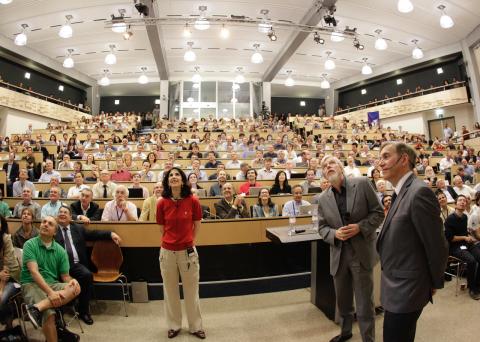
This week we celebrate not only the tenth anniversary of the discovery of the Higgs, but also Run 3: the Large Hadron Collider is back on line to collect a huge amount of data that opens the door to the discovery of new phenomena that could solve unsolved mysteries, such as understanding what makes up the dark matter that makes up 25% of the universe.
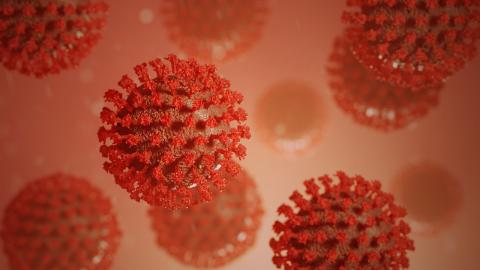
The UK Health Security Agency published in its latest report on 25 March the detection of three recombinant forms of omicron, called XE, XD and XF. The WHO mentions them in its 29 March report, noting that the possibility that XE is more transmissible than BA.2 still requires further study.
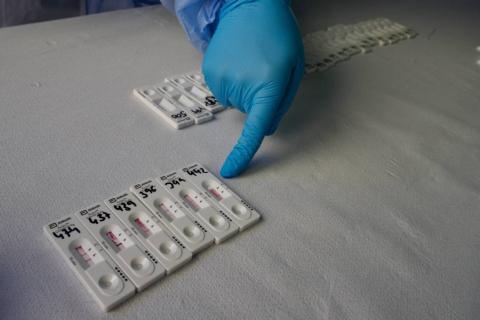
The WHO recommends keeping an eye on the BA.2 variant of Omicron because it is spreading, but it does not appear to cause more serious disease or escape vaccination. Don't be fooled by its evocative nickname: it is perfectly detectable. The misconception that tests do not identify it was propagated by a headline that was corrected.

A new variant of the coronavirus causing COVID-19 has been identified in South Africa, with numerous mutations present in other variants, including Delta. Variant B.1.1.529, as it is now called, appears to be spreading rapidly in South Africa. Attached is the rapid reaction of three Spanish researchers with expertise in genomic surveillance.