University of Cantabria
If you are the contact person for this centre and you wish to make any changes, please contact us.
Professor of Prehistory at the University of Cantabria and director of the EvoAdapta R&D&I Group
Head of the Neurology Department at the Marqués de Valdecilla-IDIVAL University Hospital and Associate Professor of Medicine in the Department of Medicine and Psychiatry at the University of Cantabria
Professor of the Department of Physiology and Pharmacology at the University of Cantabria.
Professor of Pharmacology at the University of Cantabria and President of the Ibero-American Down21 Foundation
PhD in Physics and tenured scientist at the Institute of Physics of Cantabria (CSIC-UC)
Scientific Director of the Valdecilla Health Research Institute (IDIVAL), Head of the Immunology Department, and Professor of Immunology at the University of Cantabria-Marqués de Valdecilla University Hospital
Associate Professor in the Department of Education at the University of Cantabria

A group of trans scientists and family members of trans people have called on their peers to help build a trans-inclusive academic world and rigorous research on sex and gender issues. In an article published in the journal Cell, the authors describe their experience in academia and propose actions that individuals and institutions can take to support trans scientists, such as creating gender-neutral spaces, collecting environmental data, or obtaining information on trans academic outcomes.

Toledo and Alicante are suffering the first outbreaks of measles recorded in Spain since the pandemic, El País reported today. In total, 15 cases have been confirmed since 1 January, of which seven are imported and eight autochthonous.
A team of researchers at the Centre for Genomic Regulation in Barcelona (CRG) has found that a region of the genome is less active in model mice and people with Down's syndrome. This region is found in the so-called dark genome and does not code for a protein. According to the authors of the study, this "leads to reduced neurogenesis and impaired plasticity, which play a direct role in learning and memory". The results are published in the journal Molecular Psychiatry.

A study has analysed more than 100 environmental factors and their impact on the immune response. After studying about a thousand volunteers, its conclusions are that smoking is the factor that causes the most alterations in defences. While some changes are transient, others may remain for years after quitting. The results are published in the journal Nature.
Currently, when an organ transplant is performed, the patient has to take immunosuppressive drugs to prevent his or her system from rejecting the new organ. These drugs must be taken for life and have numerous side effects. In a phase 1 clinical trial, researchers gave patients receiving a liver transplant regulatory dendritic cells derived from the original donor, with the hypothesis that these cells could 'teach' the recipient's immune system to tolerate the new organ. The research, published in Science Translational Medicine, suggests that this treatment could reduce or even eliminate the need for long-term use of immunosuppressants.

The European Medicines Agency (EMA) has licensed Hipra's vaccine - currently called Bimervax - against SARS-CoV-2 as a booster in people aged 16 years and older who have previously been vaccinated with mRNA vaccines. The EMA began the ongoing evaluation of the vaccine, which was expected to be approved in the middle of last year, on 29 March 2022.
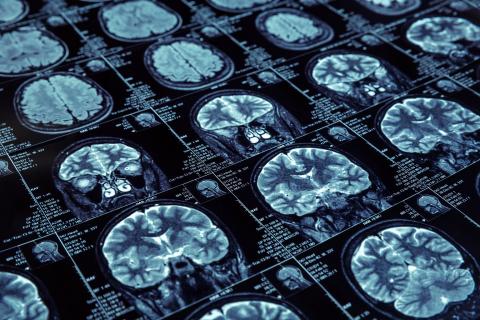
People with Down syndrome are at high risk of developing dementia very similar to that caused by Alzheimer's disease. A study published in the journal PNAS has found that in these people, as had been observed in "classic" Alzheimer's, the characteristic proteins of the disease have prion-like features.

Modern humans may have coexisted with Neanderthals in northern Spain and France between 1,400 and 2,900 years before the disappearance of Neanderthals, according to a study published in Scientific Reports.
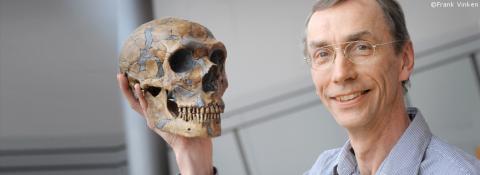
The Karolinska Institute has awarded the Nobel Prize in Medicine or Physiology to Swedish biologist Svante Pääbo, a specialist in evolutionary genetics, for his discoveries on the genomes of extinct hominids and human evolution.

Researchers have tested a gonadotropin-releasing hormone (GnRH) therapy in mouse models and in males (in a pilot clinical trial) with Down's syndrome. The results, published in the journal Science, suggest improved cognitive function.