
University of Zaragoza
If you are the contact person for this centre and you wish to make any changes, please contact us.
Professor of Machines and Heat Engines at the University of Zaragoza, and Head of the Industrial Ecology group at the Energaia Institute
Professor at the Faculty of Medicine of the University of Zaragoza, a researcher at the Aragón Institute for Health Research (IIS Aragón) and CIBERehd, and an honorary professor at the University of Hong Kong (China)
Lecturer in the Faculty of Social Sciences and Labour at the University of Zaragoza
CSIC Tenured Scientist of the Q-MAD group at the Institute of Nanoscience and Materials of Aragon (INMA)
Professor at the University of Zaragoza in the Department of Psychology and Sociology
Full Professor of Economic Analysis at the Faculty of Social and Human Sciences of the University of Zaragoza
Professor of Medicine and Head of the Lipid Research Group at the University of Zaragoza
Full Professor of Preventive Medicine and Public Health at the University of Zaragoza
Lecturer at the Faculty of Business and Public Management of the University of Zaragoza in Huesca
Lecturer in the Department of Analytical Chemistry and researcher at the University Institute of Environmental Sciences of Aragon (IUCA) of the University of Zaragoza
Psychologist in the Behavioural Sciences Methodology Department at the University of Zaragoza
Full Professor at the University of Zaragoza and Director of the Joint Research Institute for Energy and Resource Efficiency (ENERGAIA)
Researcher at the Department of Organic Chemistry, Faculty of Science-Institute of Nanoscience and Materials of Aragon (INMA), University of Zaragoza-CSIC
Professor of International Law and International Relations at the University of Zaragoza
Postdoctoral researcher at the Joint University Institute for Energy and Resource Efficiency of Aragón (ENERGAIA - UNIZAR)
Researcher and Lecturer in the Department of Materials and Fluids Science and Technology at the University of Zaragoza
Ramón y Cajal researcher at the University of Zaragoza working in the field of bioorthogonal chemistry
Family physician, associate professor at the faculty of medicine of the University of Zaragoza, member of the Tobacco Group of semFYC and delegate of the National Committee for Smoking Prevention.

An international team of scientists from the KM3NeT collaboration has detected the signal from the highest-energy cosmic neutrino to date, some 30 times higher than those previously detected. The result suggests that the particle came from beyond the Milky Way, although its precise origin has yet to be determined. The results are published in the journal Nature.
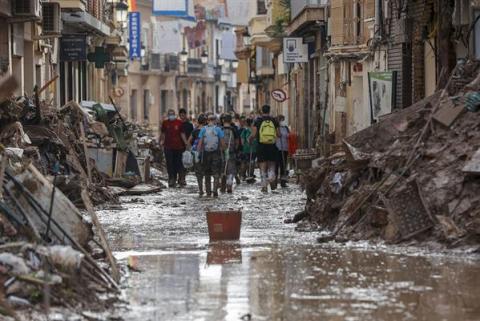
A study by a team from the ClimaMeter project claims that the intensification of rainfall from the DANA that devastated Valencia and other regions on 29 October is mainly attributed to human-induced climate change. Natural climate variability, on the other hand, probably played a modest role. According to the analysis, this DANA was driven by very exceptional weather conditions. The work also shows that the DANA-like depressions that cause flooding in the southeastern peninsular are up to 15 % wetter than they were in the past. In addition, temperatures are up to 3°C warmer, which favours storm formation in these events over the Mediterranean basin.

An international team with Spanish participation has analysed which day of the week has the highest risk of suicide mortality, and it is Monday. The research, published in The BMJ, includes more than 1,700,000 suicide cases registered in 26 countries - including Spain - from 1971 to 2019. The data also show a sharp increase in the risk of suicide on New Year's Day in most of the countries analysed. Taking these results into account, the authors propose that they should be used to define plans and awareness-raising campaigns.

An international report by the Global Commission on the Economics of Water says the water crisis puts more than half of the world's food production at risk by 2050. It also claims that it threatens an average loss of 8% of GDP in countries around the world by 2050, with losses of up to 15% in the lowest income countries.
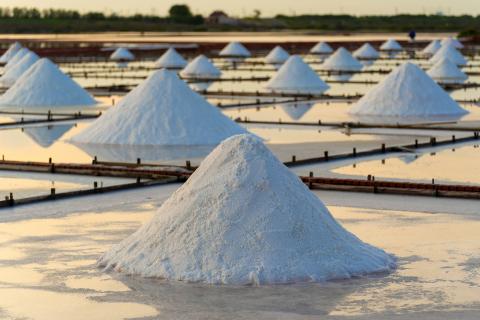
Lithium, a material widely used for battery production, is typically extracted from rocks and concentrated brines, but these reserves are expected to run out by 2080. The alternative is to evaporate more diluted brines (such as seawater), but the traditional process is inefficient, polluting, and consumes large amounts of water. Two new studies published in Science propose two more viable and environmentally friendly alternative methods: the first uses a membrane that filters lithium through a transpiration system similar to that of plants, requiring only solar energy. The second combines electrodes to mimic a battery and move lithium from the brine (cathode) to fresh water (anode).
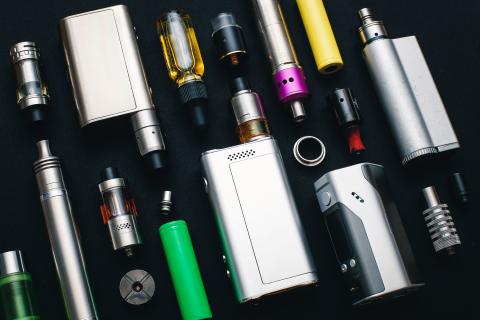
E-cigarettes, vapes, pods, mods... The popularity of these devices continues to grow, especially among young people. According to a Spanish survey, more than half of the adolescents aged 14 to 18 have used them at some point. Vaping control varies from country to country: in Spain, vaping products have been regulated since 2017 and the new anti-smoking plan aims to equate their legislation to that of tobacco, while the United States imposes fewer restrictions. In this brief guide, we explain what is known and not known on controversial issues such as the safety of electronic cigarettes, their risks or whether they are useful to quit tobacco.

In 2022, 62 million tonnes of e-waste were generated worldwide, a figure 82% higher than the 34 million tonnes recorded in 2010, according to a United Nations report. The 2022 figure represents an average of 7.8 kilograms per capita per year worldwide, compared to 19.6 kg in Spain. Only 22.3% of this amount of global e-waste was documented as properly collected and recycled, says the Global E-waste Monitor 2024.

In 2010, nearly 1,000 sub-basins around the world were facing water shortages. But when considering not only water quantity, but also water quality, this figure rises to more than 2,500, according to a study published in Nature Communications. By 2050, the authors estimate that up to a third of sub-basins will face severe shortages of clean water, which could affect 3 billion people. Southern China, Europe, North America and Africa will be the most affected regions.
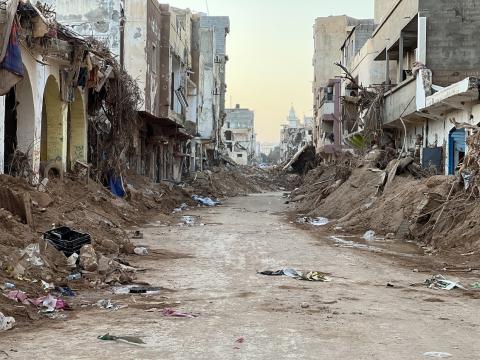
Las lluvias torrenciales caídas en Libia hace dos semanas fueron 50 veces más probables por el calentamiento global provocado por la acción humana. Algo similar ocurría con las lluvias caídas en Grecia, Bulgaria y Turquía, que fueron 10 veces más probables por el cambio climático, según concluye un estudio de atribución rápido de la Word Weather Attribution (WWA). La investigación apunta a que la tragedia en Libia se agravó por otros factores humanos, como construcciones en llanuras inundables y presas en mal estado. Los autores también analizaron las inundaciones registradas en España a principios de septiembre y concluyeron que precipitaciones tan intensas se esperan una vez cada 40 años.
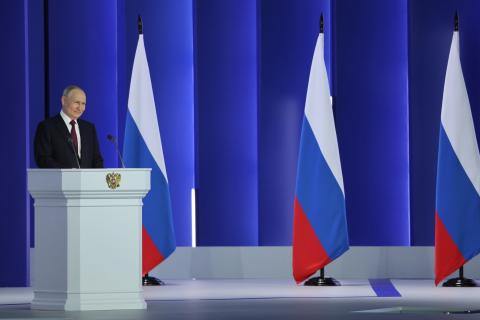
On Tuesday, Russian President Vladimir Putin announced that he is suspending Russia's participation in the New START treaty, a bilateral agreement signed with the United States that has been in force since 2011 and that limits and controls the nuclear armament of both powers.