
University of Zaragoza
If you are the contact person for this centre and you wish to make any changes, please contact us.
Professor of Machines and Heat Engines at the University of Zaragoza, and Head of the Industrial Ecology group at the Energaia Institute
Professor at the Faculty of Medicine of the University of Zaragoza, a researcher at the Aragón Institute for Health Research (IIS Aragón) and CIBERehd, and an honorary professor at the University of Hong Kong (China)
Lecturer in the Faculty of Social Sciences and Labour at the University of Zaragoza
CSIC Tenured Scientist of the Q-MAD group at the Institute of Nanoscience and Materials of Aragon (INMA)
Professor at the University of Zaragoza in the Department of Psychology and Sociology
Full Professor of Economic Analysis at the Faculty of Social and Human Sciences of the University of Zaragoza
Professor of Medicine and Head of the Lipid Research Group at the University of Zaragoza
Full Professor of Preventive Medicine and Public Health at the University of Zaragoza
Lecturer at the Faculty of Business and Public Management of the University of Zaragoza in Huesca
Lecturer in the Department of Analytical Chemistry and researcher at the University Institute of Environmental Sciences of Aragon (IUCA) of the University of Zaragoza
Psychologist in the Behavioural Sciences Methodology Department at the University of Zaragoza
Full Professor at the University of Zaragoza and Director of the Joint Research Institute for Energy and Resource Efficiency (ENERGAIA)
Researcher at the Department of Organic Chemistry, Faculty of Science-Institute of Nanoscience and Materials of Aragon (INMA), University of Zaragoza-CSIC
Professor of International Law and International Relations at the University of Zaragoza
Postdoctoral researcher at the Joint University Institute for Energy and Resource Efficiency of Aragón (ENERGAIA - UNIZAR)
Researcher and Lecturer in the Department of Materials and Fluids Science and Technology at the University of Zaragoza
Ramón y Cajal researcher at the University of Zaragoza working in the field of bioorthogonal chemistry
Family physician, associate professor at the faculty of medicine of the University of Zaragoza, member of the Tobacco Group of semFYC and delegate of the National Committee for Smoking Prevention.
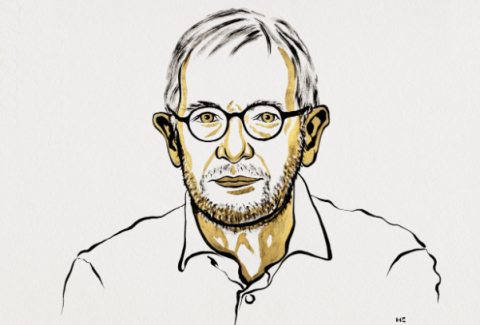
The Royal Swedish Academy of Sciences has awarded the Nobel Prize in Physics to Francis Halzen, the driving force behind the idea of using ice at the South Pole to detect particularly elusive particles known as neutrinos. According to the Academy, his “decisive contributions” have been fundamental to the development of the IceCube Neutrino Observatory: a cubic kilometer of ice equipped with light sensors that allows the scientific community to detect neutrinos originating from extremely high-energy processes in the distant universe, laying the groundwork for an entirely new field of astronomy.

A global review, which analysed 23 meta-analyses containing data on nearly three million children across 64 countries, identified associations between screen use and various aspects of children’s mental health and development. According to the authors, these findings may help to inform and refine guidelines and policies on screen use. The results are published in the journal JAMA Pediatrics.
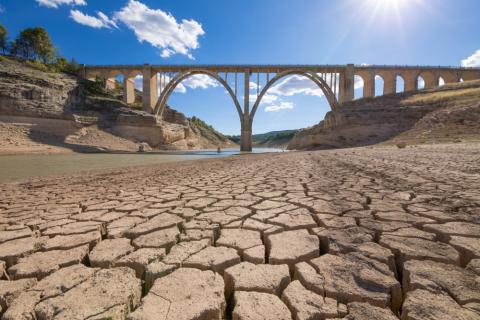
According to a report published by the World Meteorological Organisation, 2025 has been one of the driest years in more than three decades for rivers worldwide. Global water reserves have been declining for more than 10 years, and this is the fourth consecutive year in which glacier losses have been recorded across all regions. Although rainfall in the Iberian Peninsula was above normal in the summer, the west and north-west of Spain experienced a reduction in rainfall of up to 75 per cent below average.
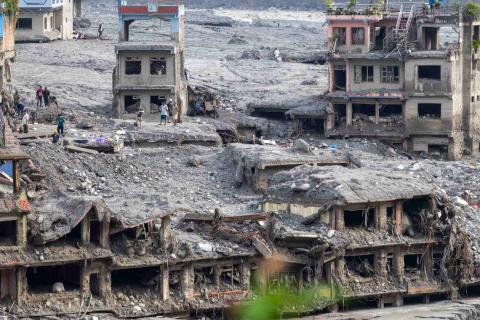
A combination of geological and climatic factors — the latter influenced by anthropogenic climate change — lay behind the catastrophic rock and ice avalanche last August on Nepal’s northern border, according to a review carried out by World Weather Attribution and glaciology experts. The team carried out an attribution analysis to examine the role of climate change in the rise in temperatures in July and August preceding the collapse, as well as in the region’s rainfall. According to the study, human-induced warming has raised the freezing line by around 100 metres per decade, leading to the thinning of glaciers and the thawing of the permafrost that held the mountain together. These factors, together with the destabilisation caused by a magnitude 7.8 earthquake in 2015, are believed to be the main causes of the landslide, which left more than a thousand people dead and thousands missing.
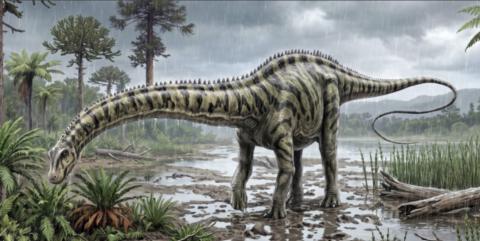
A team from the Teruel-Dinópolis Joint Palaeontological Foundation has discovered, at the La Tejería site in El Castellar (Teruel), the remains of what could be the first diplodocus found outside North America. The research, published in the Journal of Vertebrate Palaeontology, describes 14 exceptionally well-preserved caudal vertebrae from the tail and several cheurones (tail bones). According to the authors, “osteological comparisons and phylogenetic analyses consistently placed the specimen within the genus Diplodocus”. The specimen, which dates back some 150 million years, provides the first intercontinental evidence for this genus and constitutes one of the most robust pieces of palaeontological evidence for episodes of faunal dispersal and exchange between the two continents across the proto-Atlantic Ocean during the Late Jurassic.
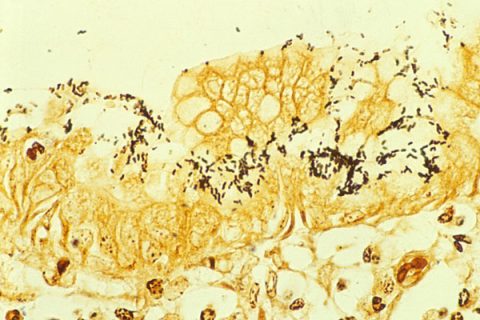
Infection with the bacterium Helicobacter pylori is a known risk factor for stomach cancer. Its link to colorectal cancer, however, remains an unconfirmed hypothesis. An international team has reviewed 43 studies on this subject and found that 22 per cent of colorectal cancer cases could potentially be linked to this infection, although when they selected the 14 most reliable studies, the figure fell to 12 per cent. According to the authors, exposure to Helicobacter pylori could be contributing significantly to the number of cases of colon cancer worldwide, but they point out that their study is only exploratory and that more robust research, such as clinical trials, is needed to establish a causal link. The results have been published in eGastroenterology.

Following the publication of the results of the PISA 2025 report, the question arises as to how to interpret them and explain the possible causes of the decline in reading and maths results, both internationally and in Spain. We have sought the views of experts in education, sociology, inequality, educational technology and pedagogy.

A study published in the journal JAMA Network Open assessed the attitudes of Australian teenagers in the context of the implementation of minimum age restrictions on social media use in their country. The research team found that the majority of respondents expressed their intention to continue using social media after the regulations came into force, despite the fact that, in this sample, symptoms of anxiety and depression were associated with a history of social media use and with a younger age at the time of first use.

In 2023, 1.17 billion people suffered from a mental health disorder, compared to 599 million people in 1990, according to a global study published in The Lancet. Women experienced higher rates of anxiety and depression, while neurodevelopmental and behavioral disorders—such as ADHD or autism—are more common in men. The highest incidence was observed among those aged 15 to 19, which, according to the authors, underscores the need for early prevention and targeted support for this age group.
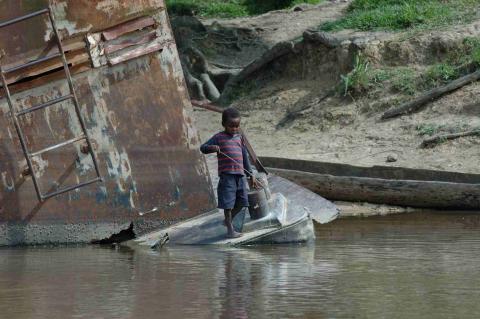
The accelerated extraction of critical minerals such as lithium and cobalt is causing water insecurity and health risks, according to a report by the United Nations University Institute for Water, Environment and Health (UNU-INWEH), which refers to them as the “oil of the 21st century.” The high water consumption of mining operations limits access to water for other purposes such as agriculture, fishing, and human consumption. Furthermore, data from various regions in South Africa, Bolivia, and the Democratic Republic of the Congo reveal “widespread heavy metal contamination and exposure to toxic waste,” the report states. This leads to health problems including fetal malformations and chronic diseases, which disproportionately affect women and children.