Electrical brain stimulation could improve mathematics learning in people with more difficulties
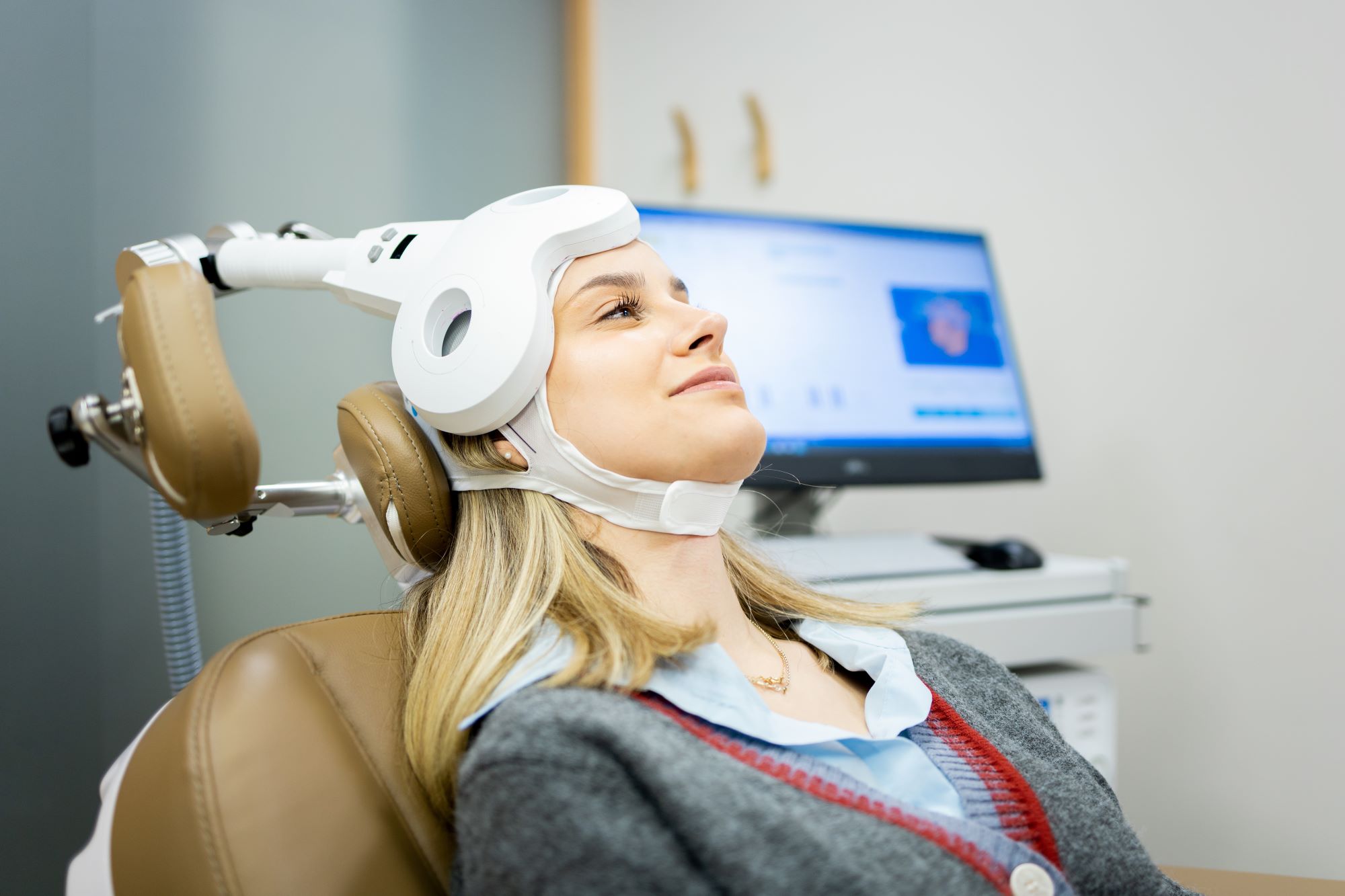
An international study with 72 participants has found that greater connectivity between certain brain areas is associated with greater mathematical computational ability. In addition, weak electrical stimulation in a particular area was associated with improved computational learning in volunteers with lower connectivity. The results are published in the journal Plos Biology.
Ruz - Matemáticas (EN)
María Ruz
Professor in the Department of Experimental Psychology and Director of the Mind, Brain and Behavior Research Center (CIMCYC) at the University of Granada
The overall study is very interesting, with good experimental control and a use of state-of-the-art techniques and methodology; the results are promising in a field of both theoretical relevance (in relation to brain functioning) and applied relevance (design of interventions to help people with difficulties in specific cognitive areas, such as mathematical computation).
It also stands out for its multimodal approach, including measures of behavioral execution, macrocerebral (connectivity between two areas relevant to mathematical reasoning) and more molecular (GABA and glutamate levels). On the other hand, the consideration of individual differences is another aspect in favor, since there is a lot of variability from one person to another and it is good to look for ways to analyze them and take them into account in the conclusions.
There is some previous literature showing a positive effect of brain stimulation on mathematical skills, as well as in other areas. This study adds to this evidence and adds more information on biological variables that mediate the effectiveness of the intervention.
The practical implications, in my opinion, are limited. Mainly because it uses as a measure effects on the speed of responses (on the order of milliseconds), but not on how well people do the calculations (it is measured, but no differences are found: people have the same accuracy in doing the tasks).
In training environments (school, high school, undergraduate, etc.), the benefits to be achieved with training are mainly improvements in execution (for example, to solve mathematical problems that previously could not be solved or were done badly) and not in getting to do it just a few milliseconds faster (which, for practical purposes, may not mean anything). It also shows effects only on one mathematical task, but it concludes on all “mathematics” and well, it is a huge leap.
It would be nice to be able to see the effects of brain stimulation in the medium term (e.g., weeks or months after stimulation) and also in more everyday contexts (e.g., in children's math test evaluations, in class). In addition, I think it would have been good to compare this brain stimulation intervention with a behavioral one, related for example to those done in school classes, to contrast whether one offers benefits over the other.
The most important limitation I see is at the theoretical level, when insisting on the biological root of individual differences, perhaps implying innate or birth factors (this impression is given when reading the press release as well). The argument ignores the importance that contextual and social factors may have on these biological phenomena. The differences in brain connectivity that are initially found, and that mediate the effects, may be partly biological/inborn in origin, but may also be partly or wholly caused by the person's upbringing environment and the learning opportunities they have had, as well as being affected by expectations, stereotypes, family socioeconomic status, etc. The person's environment also changes the connectivity between different brain regions, these need not be innate biological differences.
In more concrete aspects:
- The age of the participants (21 years on average) could be a limitation to extrapolate the results to child populations, which is where, according to the introduction of the study, the initial “biological” individual differences that are proposed to be modified with the intervention occur. It would be good to replicate the study in a child population, with mathematical tasks adapted to the development of their skills at that age.
- The total sample size of 72 participants may seem high, but these people are divided into 3 experimental groups (of 24 people each), which could have a rather limited statistical power. Given the existence of previous similar studies, perhaps it would have been appropriate for the authors to detail the expected effect size and to make explicit the statistical power of the experimental design to detect the effect.
Miriam Rosenberg-Lee - estimulación matemáticas EN
Miriam Rosenberg-Lee
Director of the Mathematics, Reasoning, and Learning Laboratory (MRLab) at Rutgers University (New Jersey, USA)
This is a strong study with a rigorous methodology. The distinction between calculation and memorization is well-established and the training program works well to produce each type of learning. The brain areas stimulated, frontal and parietal cortex, are important for math cognition. The only concern is the sample size as noted below.
This work is important because it provides causal evidence about the role of frontal-parietal connectivity in math learning. We know from prior work that adults with stronger frontal-parietal connectivity tend to have better math skills, but we don’t know which if the better connectivity helped them learn math or if learning math well increased their connectivity. This works shows that altering frontal activity with brain stimulation improved math learning in those with low connectivity, suggest the connectivity differences are driving learning differences. The exciting part is that these results suggest that changing connectivity with stimulationcould unlock learning potential in struggling students.
[Regarding possible limitations] While the overall sample size is relatively large for this kind of work and reasonable for examining the main question, I would say it’s under powered for examining the effects of brain changes with learning and stimulation.
Zacharopoulos et al.
- Research article
- Peer reviewed
- Experimental study
- People