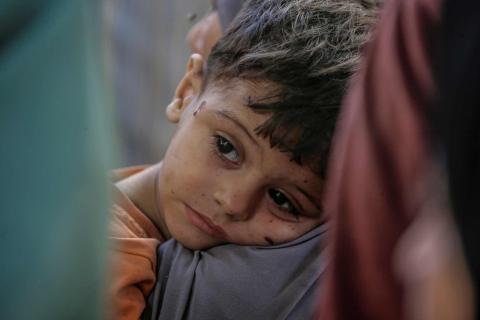
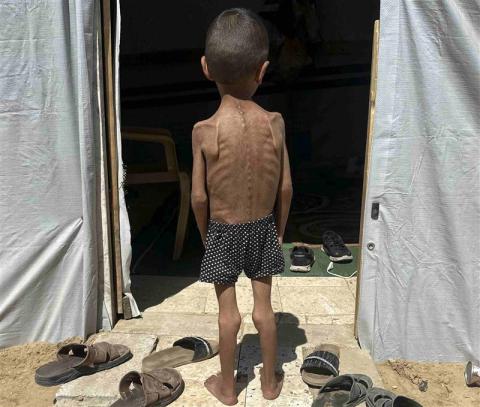
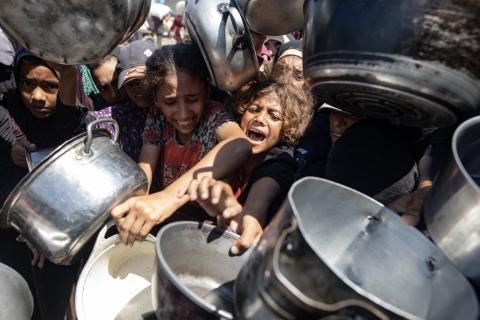
High psychological distress in Gaza has tripled since the start of the genocide among those over 40 years of age
A new article published in eClinicalMedicine measures mental health problems in the Gaza Strip among the population over 40 years of age before and after the genocide committed by Israel. The study indicates that the proportion of these adults experiencing high levels of distress has tripled in the last five years, with a peak following the escalation of the massacre since October 2023. It was already known that chronic stress factors affecting victims pose a serious threat to mental health, but no longitudinal study had yet been conducted comparing distress in the same individuals before and after the genocide.
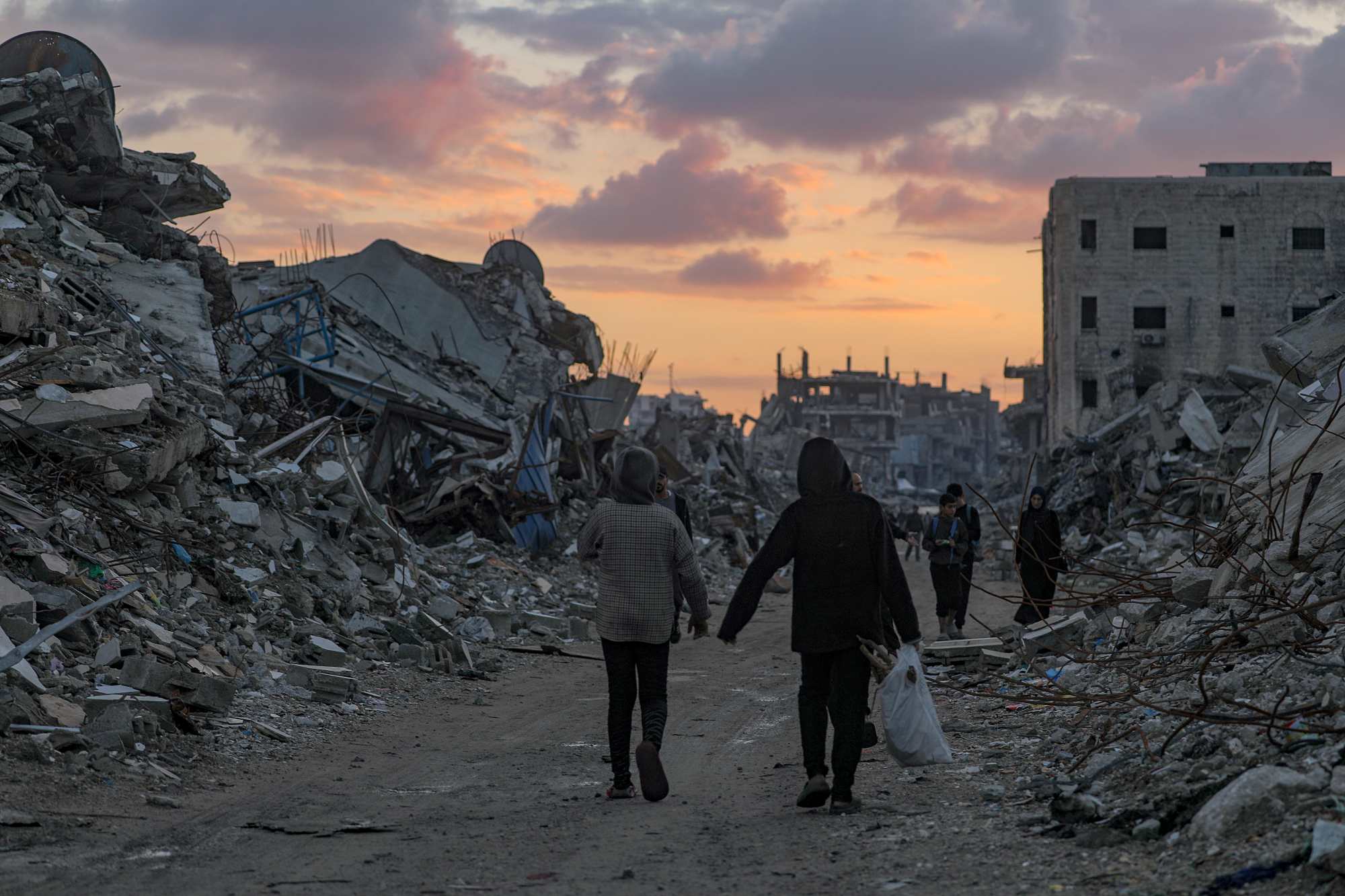
Palestinians walk near destroyed buildings on a rainy day in eastern Gaza City, Gaza Strip, on 16 November 2025. EFE/EPA/MOHAMMED SABER.
2025 11 25 Antonio Lucas Manzanero Gaza EN
Antonio Lucas Manzanero
Accredited professor, lecturer at the Faculty of Psychology and director of the Research Group on Testimony Psychology at the Complutense University of Madrid
The study is very interesting because it uses a longitudinal study to show how the current massacre committed against Palestine by the Israeli Government has had an impact. Longitudinal studies are always very difficult to carry out because the stability of the sample of participants evaluated is affected by the passage of time, especially in the current conditions in the Gaza Strip, where access to the population is very limited due to forced displacement and killings. Maintaining a sample of 677 participants in the three surveys is an enormous effort that should be appreciated.
The results show that the impact of the massacre committed by Israel in Gaza seriously affects the mental health of Gazans, with a prevalence of psychological distress of 67.2% in 2025 compared to 19.5% in 2020, i.e. more than three times higher than before the genocide. The data are consistent with what is expected from other studies that have assessed the effects of armed conflict in Palestine and other countries. Our research group assessed adults, children and adolescents in Gaza after the bombings of summer 2014, finding a high prevalence of post-traumatic symptoms.
The greater resilience of those over 60 and those with higher education is interesting, as is the absence of a relationship with gender.
The main limitation of the study is that the GHQ12 [12-item General Health Questionnaire] was administered by telephone, and that it is a screening tool that only allows for the establishment of possible self-reported impairment and not a clinical diagnosis. The statistical treatment of the data also has limitations. I hope that in the future the authors will publish an article with more data and analysis that will allow for further conclusions to be drawn.
In any case, the results should be taken into account when establishing policies for redress and psychological care for genocide survivors. There is a clear need for psychological care for the population of the Gaza Strip. There are numerous proposals for intervening with this type of population, which has specific characteristics. UNRWA's psychological care programmes in recent decades mean that its experience and knowledge should be taken into account in future actions.
2025 11 25 Pedro Ignacio Arcos González Gaza EN
Pedro Ignacio Arcos González
Epidemiologist and Director of the Emergency and Disaster Research Unit at the University of Oviedo
This is a reasonably well-designed study, considering the difficulties of field research in complex emergencies, conducted through interviews with the exposed population in 2020, 2023, and 2025, with an adequate analysis of results. Although there is already abundant published evidence on the deterioration of the mental health of the population of Gaza and the study is not strictly speaking a cohort follow-up study, the article does provide a picture of the evolution of this deterioration over time, as it includes three time periods and therefore covers the most violent phase of the Israeli attacks (2023 to 2025).
Its limitations are those inherent in attempting to obtain a representative sample of a population that has been displaced multiple times and is in a complex emergency situation. Overall, the article contributes to reinforcing the existing estimate of the enormous impact on the population of Gaza of Israel's violent and repeated attacks and the effects of the blockade and the destruction of its health system, particularly in the area of mental health.
Marta Guarch - salud mental Gaza EN
Marta Guarch-Rubio
Professor and Vice-Dean of the Bachelor's Degree in Psychology at San Jorge University, Zaragoza
This research responds to the academic need to highlight the psychological damage experienced by the Palestinian population in the Gaza Strip. The current situation of prolonged conflict, blockade of humanitarian aid, and damage to infrastructure and basic services makes life in Gaza a constant threat to mental health.
The relevance of this study lies in the use of longitudinal data from 677 adults who participated in three self-report surveys. These were conducted from their homes in 2020, 2023, and 2025 in the Gaza Strip. Seventy per cent of respondents were between the ages of 40 and 59, and 51 per cent were women.
This study shows a longitudinal increase in psychological distress among those assessed. In Gaza, there is a 12 times greater likelihood of experiencing psychological distress in 2025 compared to 2020. Although this study does not establish a causality between the variables, the current situation of ethnic cleansing and the living conditions of Gazans contextualise the results.
In this regard, academic literature supports a direct relationship between exposure to traumatic situations and the risk of psychological distress (anxiety, depression, post-traumatic stress disorder, among others). Furthermore, it has been shown that the cumulative factor of trauma increases the likelihood of psychological damage if there is greater exposure to traumatic events. This reality applies to the Palestinian context, as prior to the 2023 offensive, the population was psychologically shaken by periodic military attacks.
In short, the authors express the need to consider the psychological impact that the current conflict has on the Gazan population. In turn, they anticipate that future research will assess the long-term psychological impact, resilience strategies, and intergenerational consequences that trauma has on the civilian population.
Ultimately, and by way of interpretation of the study, the measures to be taken to provide psychological assistance to a people such as the Gazans must be framed within the context of respect for human rights and the cessation of the conflict. However, understanding the state of psychological devastation of a community always facilitates its recovery process.
Brugger et al.
- Observational study
- People
- Peer reviewed
- Research article