Large wildfires and major volcanic eruptions had an impact on global atmospheric temperatures
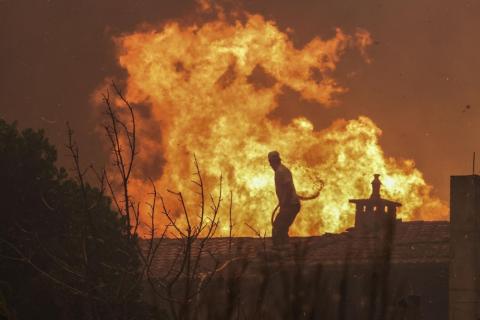
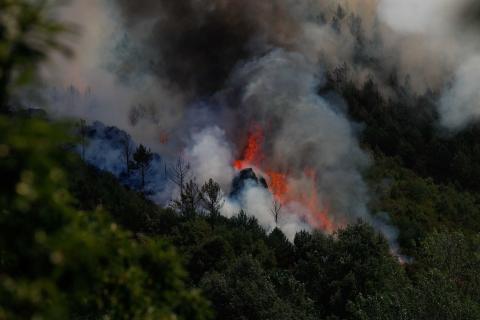
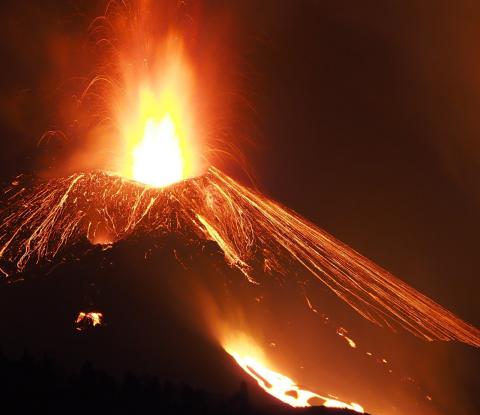
A study published in PNAS reveals the effects of large-scale wildfire smoke and aerosols from major volcanic eruptions on global atmospheric temperatures. Using satellite observations, the team estimated the temperature disturbances associated with the 1991 eruption of Mount Pinatubo in the Philippines, the 2019–2020 Australian wildfires, and the 2022 eruption of the submarine Hunga Tonga volcano in Tonga. All three events had measurable impacts on global atmospheric temperatures. Sulfate particles from Pinatubo caused cooling in the troposphere and warming in the stratosphere, confirming previous measurements. Aerosols from the Australian wildfires —though only about 5 % of the aerosol mass emitted by Pinatubo— also produced both effects, while water vapor from Hunga Tonga led to tropospheric cooling.
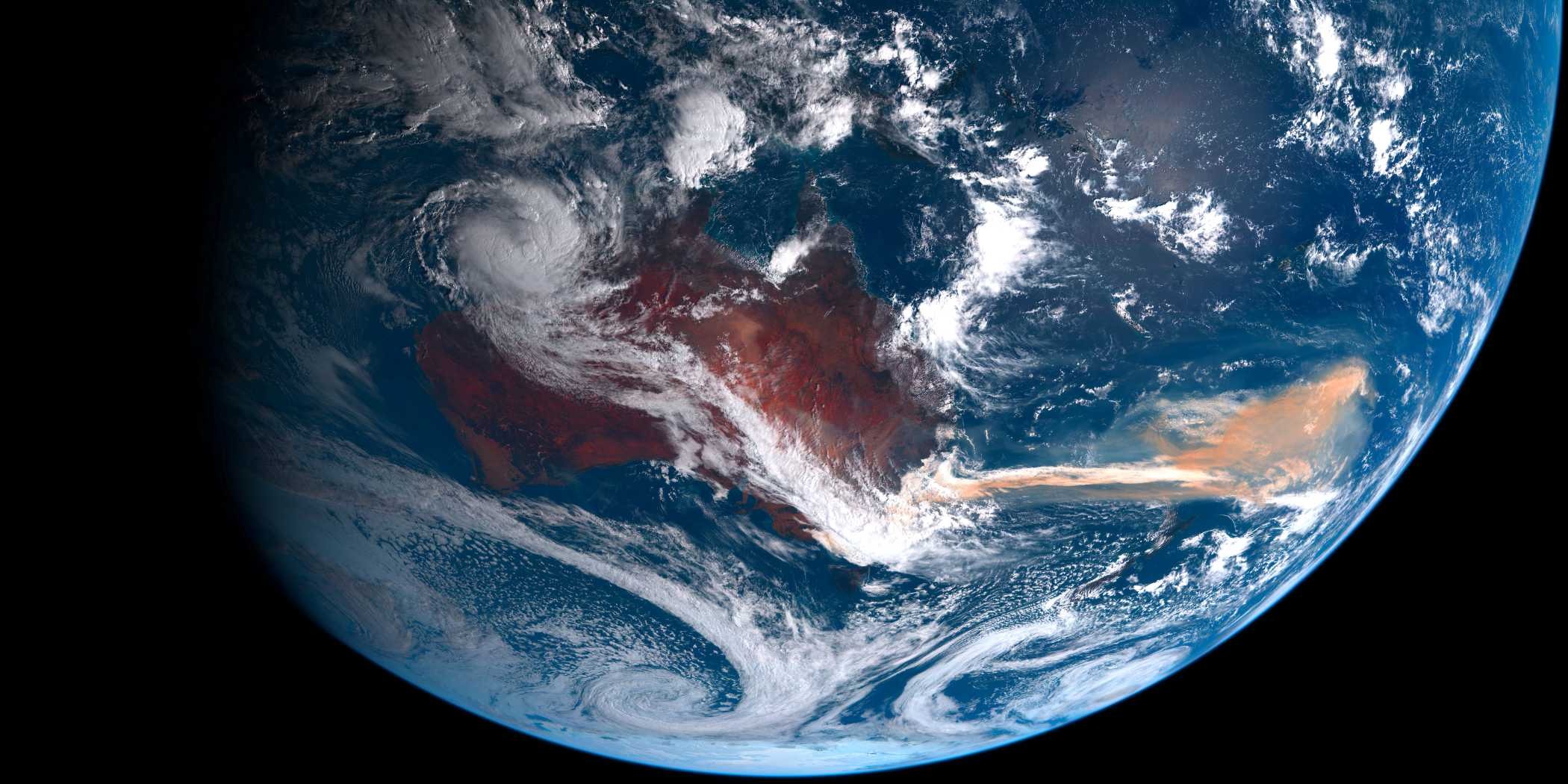
2019–2020 Australian wildfires seen from space. NASA.
2026 02 23 Joan Martí Molist volcanes EN
Joan Martí Molist
Research Professor at the Institute for Environmental Diagnoses and Water Studies (IDAEA-CSIC) and Director of the Natural Risk Assessment and Management Service (NRAMS)
Is the study of good quality?
“Yes, it is methodologically high-quality. It uses global satellite records, which are the best available source for analyzing the vertical structure of the atmosphere, and applies a rigorous statistical framework that removes known sources of natural variability (ENSO, solar activity, QBO). Additionally, it compares several different types of physical perturbations within the same detection system, allowing for a more consistent and robust assessment than previous studies focused on a single event".
Does it have any limitations to keep in mind?
“Yes. Although the approach is robust, the number of events analyzed is limited (mainly Pinatubo, the 2019–2020 Australian wildfires, and Hunga Tonga 2022), which restricts generalization. It also relies on statistical methods to separate signal from noise, which always introduces some uncertainty. Moreover, current climate models still imperfectly represent some of these forcings, especially wildfires and volcanic water vapor".
What are the implications, and how does it fit with existing evidence?
“It reinforces well-established conclusions, such as that volcanic aerosols—mainly concentrated sulfuric acid droplets formed by the oxidation of sulfur dioxide in the atmosphere—cool the troposphere and warm the stratosphere, and provides new quantifications of their duration, magnitude, and detectability. It also shows that other recent natural forcings, like wildfire smoke and volcanic water vapor, have globally detectable effects. This improves the scientific ability to correctly attribute observed changes and to validate climate models against real-world observations".
How can studying volcanic eruptions and wildfires help clarify the human role in climate?
“Because they act as ‘natural experiments’ with known and relatively sudden causes. By observing how the atmosphere responds to these natural forcings, scientists can check whether models reproduce these responses accurately. If the models explain natural changes well, but there is still sustained additional warming, this strengthens the evidence that such warming is mainly due to human causes, such as greenhouse gases. This increases confidence in attributing anthropogenic climate change".
Yaowei Lia et al.
- Peer reviewed
- Modelling