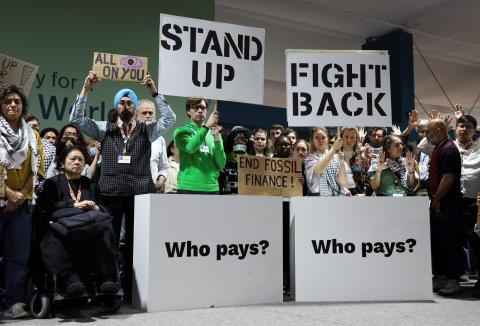
The International Court of Justice will issue its advisory opinion today on countries' obligations to address the effects of climate change
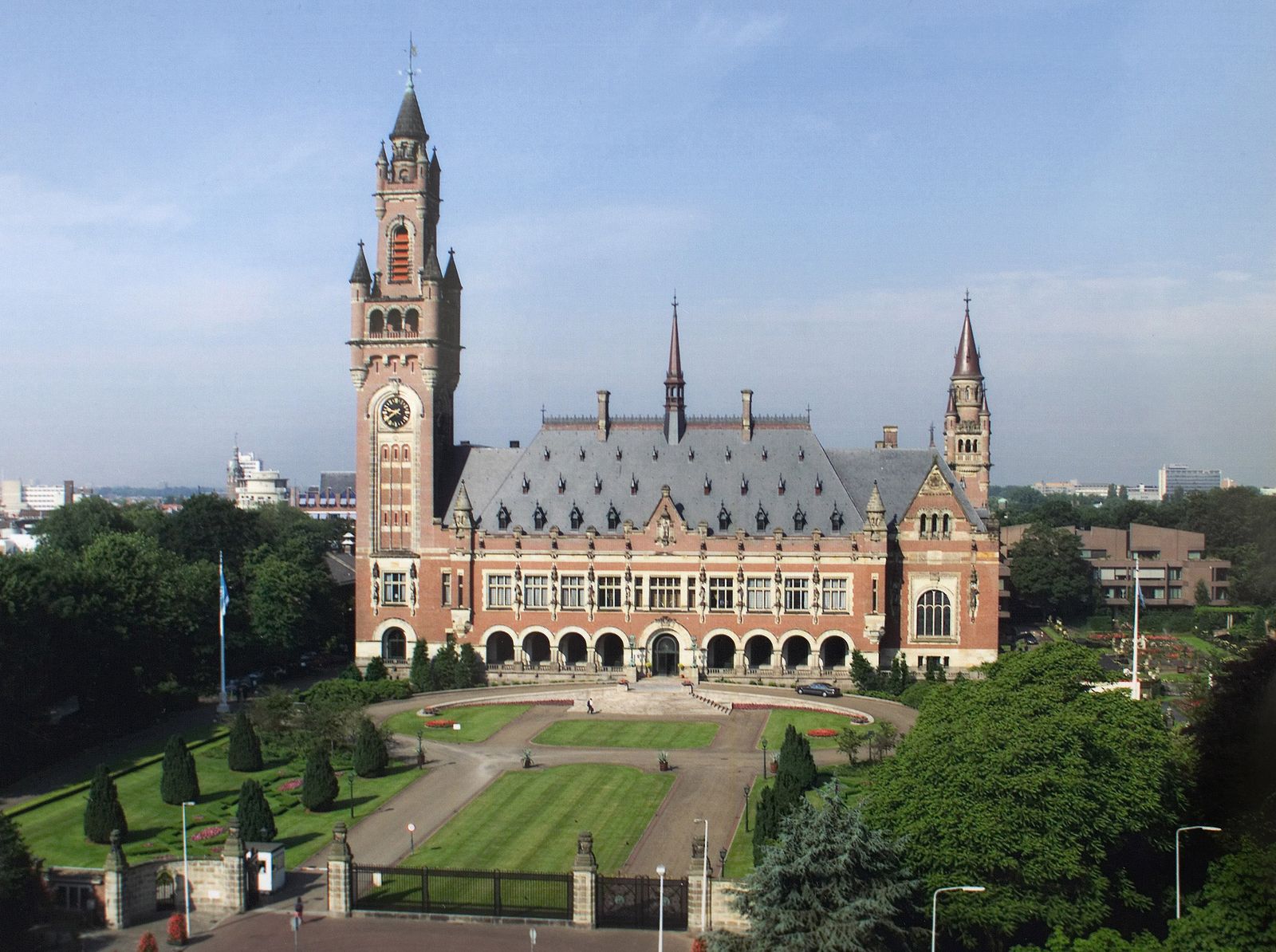
Today at 3:00 PM CEST, the International Court of Justice in The Hague, the principal judicial body of the United Nations, will issue its advisory opinion on the obligations of states in relation to climate change and the legal consequences of those obligations. The case stems from a Pacific youth initiative, taken up by the small island nation of Vanuatu, which led a coalition of 132 countries to request an opinion. It is expected to determine whether large, polluting countries should be held accountable for damages caused to small island nations.
Borràs Pentinat - Haya (EN)
Susana Borràs Pentinat
Associate Professor of Public International Law and International Relations at Rovira i Virgili University, coordinator of the Master's Degree in Environmental Law and researcher at the Tarragona Centre for Environmental Law Studies (CEDAT)
Although it has barely received any media attention, today could mark a historic turning point, crucial for the future of humanity and the planet. The International Court of Justice (ICJ) in The Hague, one of the principal organs of the United Nations, will issue an advisory opinion on the obligations of States in the context of the climate emergency, in accordance with international law.
This opinion—expected to be published today at 3:00 PM (CEST)—was promoted by Vanuatu, a small island nation particularly affected by the effects of climate change. The initiative received the support of more than 100 countries and was formally submitted by the UN General Assembly, which asked the ICJ to rule on two key questions: What obligations do States have, under international law, to address the climate crisis? And what legal consequences will they face if they fail to act and cause irreversible damage?
Although the ICJ's advisory opinion is not legally binding, it does have significant, internationally recognized normative value. It represents a unique opportunity to strengthen global legal frameworks on climate change, reaffirm the principle of common but differentiated responsibilities, and protect human rights in the context of this crisis, which particularly impacts the most vulnerable populations, such as small island states, and future generations, who, despite having contributed minimally to global warming, will suffer the worst consequences.
The climate emergency is already generating serious violations of fundamental rights, such as access to water, food, and even the most basic right: the right to life.
This pronouncement comes at a particularly decisive moment. Scientifically, the Intergovernmental Panel on Climate Change (IPCC) has conclusively confirmed the seriousness of the situation. For the first time in history, the critical threshold of 2°C of global warming in one day above the pre-industrial era average has been reached. Furthermore, last year, the International Tribunal for the Law of the Sea issued its first ruling on States' climate change obligations, with explicit reference to human rights. A month earlier, the European Court of Human Rights had already ruled against a State's climate inaction (Switzerland), recognizing how this omission directly affects fundamental rights. At the same time, strategic climate litigation is multiplying worldwide, with more than 2,000 lawsuits demanding legal accountability from States for their inaction or lack of climate ambition. More recently, on July 3, the Inter-American Court of Human Rights issued Advisory Opinion OC-32/25, which, for the first time in the Americas, directly links the climate emergency with the protection of human rights. Furthermore, the African Court of Human Rights is working on formulating an advisory opinion in this regard.
We are undoubtedly at a historic moment, one that responds to the urgent need of the moment. The legal responses, as well as the scientific ones, are now unanimous worldwide: we need urgent measures to address climate change, but also measures to confront the political irresponsibility, especially from the Global North, that endangers life on the planet.
Perales -Haya
Carlos de Miguel Perales
Environmental Lawyer and Lecturer of Civil and Environmental Law at ICADE Law School (Comillas Pontifical University)
The advisory opinion that the ICJ is expected to release today is eagerly awaited, and rightly so. It must address essential questions for the fight against climate change, primarily what legal obligations states have in this area, what the consequences are if they fail to meet their obligations, and what remedies may be available to the most affected states. Although not directly binding, its content may at least have moral force and serve as support for claims brought before other courts.
Gharbaoui - Haya
Dalila Gharbaoui
Political scientist and sociologist, Research Associate at the University of Canterbury
The International Court of Justice (ICJ) will issue a pivotal advisory opinion that will clarify countries’ legal responsibilities in tackling climate change and protect vulnerable communities globally, a vital step toward climate justice and equity. This decision was prompted by Vanuatu that pushed the United Nations to request this opinion, emphasizing the urgent need for climate justice for vulnerable countries threatened by rising sea levels and extreme weather events.
The ruling is expected to hold major polluters accountable and guide future climate litigation and policy. While not legally binding, it still has the potential to provide a basis for greater coherence, unify climate law and reshape national and international legislation. It also provides the historical opportunity to emphasize fairness for frontline communities—such as low-lying island nations—by empowering local voices and strengthening global climate action.
Despite ongoing questions about enforceability, this marks a significant development in climate law, with the potential to reshape both international and national legislation and carry far-reaching implications for governments, corporations, and communities worldwide. The outcomes could reshape how countries approach climate commitments, offering a crucial opportunity to drive meaningful progress in the race against time to address climate change, while ensuring that no one is left behind.
Karen Scott -Haya
Karen Scott
Faculty of Law, University of Canterbury
When the International Court of Justice (ICJ) delivers its advisory opinion this week, I will be particularly interested in what it says about the following:
- Whether the ICJ concludes that the United Nations Framework Convention on Climate Change/ Paris Agreement regime is the primary set of legal obligations to determine what states have to do in order to address climate change or whether it engages with a wider set of legal rules and obligations;
- Whether the ICJ finds a due diligence obligation to address climate change and how it defines due diligence in this context, particularly in light of the principle of common but differentiated responsibilities;
- How the ICJ engages with the science of climate change, in particular, in light of how the International Tribunal for the Law of the Sea (ITLOS) treated the science in the 2024 Advisory Opinion;
- Whether the ICJ applies the precautionary principle and, if so, how it does so;
- Whether the ICJ engages with the law of the sea and how it deals with the ITLOS advisory opinion – does it support those findings (which were quite far reaching);
- Whether the ICJ engages with human rights – it would not have had the benefit of the Inter-American Court of Human Rights' decision but does it take a similar approach?;
-
If it finds states in breach of their obligations, how does it address what should follow – how does it apply state responsibility in this situation – do the normal rules apply?
Sandra Morrison -Haya
Sandra Morrison (Ngāti Rārua; Ngāti Maniapoto; Ngāti Whakaue)
Professor, Faculty of Māori and Indigenous Studies, University of Waikato
States actions to respond to the climate crisis over the past few decades have not curtailed the rise in greenhouse gases, resulting in ongoing severe impacts on people, communities and livelihoods. As is known and accepted, it is particularly the developing countries and, in our region, the nations of the Pacific who are most challenged.
"As we await the advice of the International Court of Justice (ICJ) on States' obligations to climate change, I reference the 2030 UN Agenda for Sustainable Development and its 17 Sustainable Development Goals (SDGs), agreed to in 2015, particularly SDG 13 on climate action. I would expect to see the ICJ clarify to States the importance of a global partnership and that to preserve our environment is dependent on reducing social disparities, upholding human and Indigenous rights, and the need for a real push to have climate and environmental impacts as an integral consideration of development initiatives and policy. For some time, developing countries have been pushing for State responsibility and liability on loss and damage mechanisms and we should expect to see the ICJ force a stronger position on States in this regard as well.
"We await the guidance of the ICJ with hope and pay tribute to Vanuatu who spearheaded this process to hold major polluting countries to account.
Harj Narulla -Haya
Harj Narulla
Barrister specialising in climate law and litigation, Climate and Environmental Justice, UK
Today's decision from the ICJ is a landmark moment in the global fight for climate justice. This is the largest case in ICJ history, with nearly 100 States participating. The Court is expected to re-affirm that under international law, States must rapidly reduce their emissions to keep us on track for a 1.5-degree world. The decision will reverberate around the world and strengthen climate litigation before domestic and international courts.