Comillas Pontifical University
If you are the contact person for this centre and you wish to make any changes, please contact us.
Environmental Lawyer and Lecturer of Civil and Environmental Law at ICADE Law School (Comillas Pontifical University)
Researcher and professor at the Faculty of Economics and Business Administration at the Comillas Pontifical University, specializing in the transition to sustainability with a focus on consumption and the market
Professor in the Department of Mechanical Engineering and Director of the Repsol Foundation Chair in Energy Transition at Comillas Pontifical University
Full Professor of Psychology and Criminology at the Pontifical University of Comillas and researcher attached to UNINPSI (Clinical Psychology Unit)
Researcher at the Chair of Energy and Poverty at Comillas Pontifical University

A study published in Nature estimates that more than 10 million children in countries across East and Southern Africa and Southeast Asia have experienced at least one form of online sexual exploitation and abuse, including harassment, the sharing of images without consent, and blackmail. This means that one in six children who use the internet is affected. The analysis is based on data from nearly 12,000 children aged 12 to 17 in 12 countries across Africa and Asia collected between 2020 and 2021, and warns that the actual number could be higher, as many of these incidents went unreported. When they did report incidents, minors primarily turned to informal channels, especially friends, rather than formal reporting mechanisms such as the police or helplines.
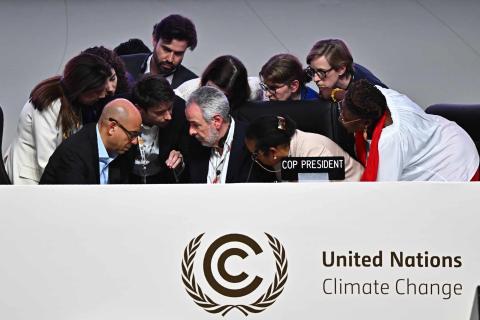
One day after the deadline, COP30 in Belém (Brazil) has finally reached a minimal agreement. The text does not mention a roadmap for abandoning fossil fuels, as requested by more than 80 states, including the European Union. The agreement states that countries agreed to accelerate climate action and triple funding for developing countries facing extreme weather events.
COP30 will kick off on 10 November in Belém, a Brazilian city and gateway to the Amazon. Expectations are high because it coincides with the tenth anniversary of the Paris Agreement, whose goal of limiting the temperature increase to 1.5 °C was shattered in 2024. In addition, this year countries must present a new version of their measures to combat climate change in a turbulent geopolitical context, marked by the Trump administration's abandonment of the climate agenda.

A team conducted a meta-analysis of 100 studies, including more than 430,000 participants from 42 countries, to understand what factors drive energy-saving habits in homes. Their conclusions are that attitudes and moral sentiments are more influential than socioeconomic factors such as education and income level, which were barely related to energy-saving behaviors. According to the authors, who publish the results in the journal Cell Reports Sustainability, "the research suggests that exploring these deeper psychological factors is a way to get as many people as possible committed to saving energy."
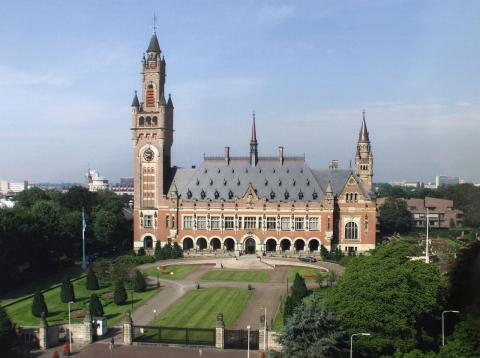
Today at 3:00 PM CEST, the International Court of Justice in The Hague, the principal judicial body of the United Nations, will issue its advisory opinion on the obligations of states in relation to climate change and the legal consequences of those obligations. The case stems from a Pacific youth initiative, taken up by the small island nation of Vanuatu, which led a coalition of 132 countries to request an opinion. It is expected to determine whether large, polluting countries should be held accountable for damages caused to small island nations.

In the early hours of the morning, after more than two weeks of negotiations and on the verge of collapse, participants at COP29 in Baku (Azerbaijan) reached an agreement to set the new climate finance target. In the end, at least 300 billion dollars a year will be contributed by rich countries to the least developed countries until 2035, within a broader global commitment of up to 1.3 trillion dollars directed at these same countries. The renewal of this target was part of the Paris Agreement and will enable governments to support developing countries in their climate action on adaptation, mitigation and damage from the climate crisis. The previous target - set at the Copenhagen Summit in 2009 - was $100 billion per year.

Next Monday sees the start of COP29 in Baku, the capital of Azerbaijan, a summit marked by Donald Trump's victory as president of the United States on Tuesday. His denial of climate change and his commitment to fossil fuels during his previous term in office will weigh down a meeting from which no major agreements are expected and from which experts are calling for greater ambition.

After an intense night of negotiations in Dubai (United Arab Emirates), the countries participating in COP28 reached a historic agreement by mentioning for the first time "moving away from fossil fuels" in the Global Stocktake document - the assessment of progress made towards achieving the climate goals set out in the Paris Agreement. The agreement comes after the first draft presented by the presidency did not make this mention - it referred only to "reducing consumption and production" of these fuels - which was described as "unacceptable" by countries such as Spain.
With just days to go before COP28 kicks off in Dubai -a major city in the oil-rich United Arab Emirates- climate experts are torn between mistrust and hope that world leaders will reach ambitious agreements to combat the climate crisis.
Capping the consumption of European households who consume most energy - those with the highest incomes and education levels - could achieve "considerable emissions reductions", according to a UK research team. This benefit could also be achieved by simultaneously increasing the consumption of the poorest and most vulnerable users. The analysis, published in Nature Energy, estimates that limiting the energy use of the top 20 % of consumers in 27 countries in Europe would reduce emissions from domestic energy consumption by 11.4 %, 16.8 % from transport, and 9.7 % from total energy consumption. The article states that the association between high income and high energy consumption is particularly strong in countries such as Spain, where income inequality is relatively high.