First pig-to-human lung transplant performed
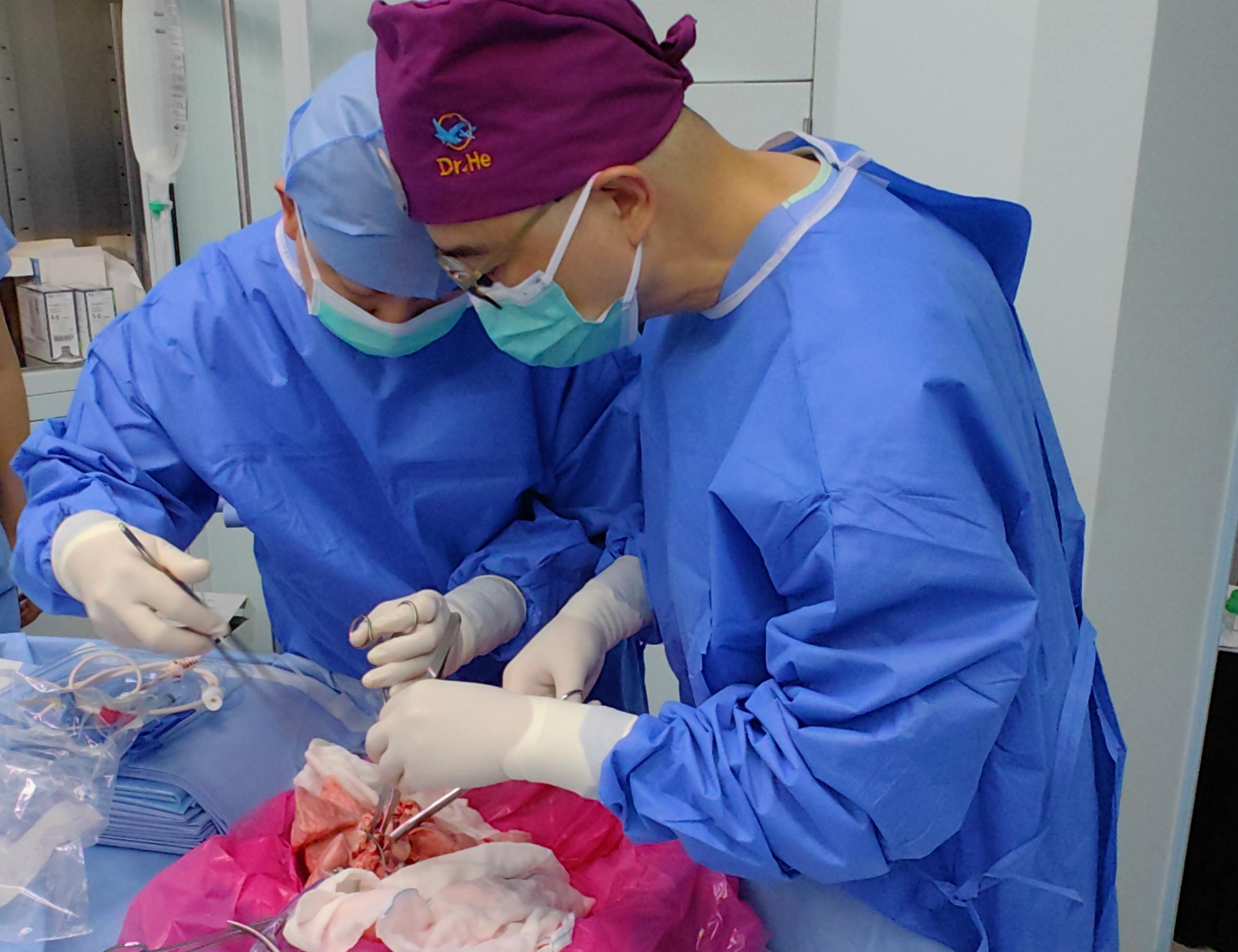
A team in China has transplanted a pig lung, genetically modified using CRISPR, into a brain-dead human. According to the researchers, this is the first time a lung transplant of this kind has been performed. The organ remained viable for the nine days of the study, although it showed some signs of damage and immune rejection. The results are published in the journal Nature Medicine.
Beatriz Domínguez - trasplante pulmón cerdo EN
Beatriz Domínguez-Gil
Director of the National Transplant Organisation
What do you think of the article overall?
"This study marks a milestone in translational medicine: for the first time, a genetically modified pig lung has been implanted in a brain-dead human. The organ, which underwent six genetic modifications to make it more compatible with humans, remained viable and functioning for nine days. During this time, no signs of hyperacute rejection or infection were detected, although complications did arise, such as primary graft dysfunction attributed to ischaemia-reperfusion injury and episodes of antibody-mediated acute rejection.
The significance of this advance lies in the fact that, until now, xenotransplantation experiments in humans had been limited to kidneys, hearts and livers, but never to lungs. This organ poses an even greater challenge due to its delicate physiological balance: it receives a very high blood flow and is continuously exposed to the ambient air, making it particularly vulnerable.
The authors of the study emphasise that this first published case is a key step, but not a definitive one. To make lung xenotransplantation viable in a real clinical setting, it will be necessary to refine genetic modifications, organ preservation techniques and the immunosuppression protocols used in the recipient. The challenge is enormous, but the work, rigorous in its design and development, opens up an unprecedented avenue towards new alternatives to the critical shortage of lungs for transplantation.
How does this fit in with existing evidence and what new information does it provide? What implications could it have?
"This new study is part of growing evidence that xenotransplantation—the transplantation of animal organs into humans—is technically possible, although it still faces significant challenges. Advances in gene editing (CRISPR) have accelerated this field in recent years, bringing it closer and closer to becoming a real clinical option. Nevertheless, it should be emphasised that it remains an experimental technique: to assess its efficacy and safety, it is essential to carry out more procedures in the context of carefully designed clinical trials with short-, medium- and long-term follow-up.
In this case, as in previous studies in the United States, the researchers used a brain-dead person as an experimental model, which allows them to study the viability of the graft in human conditions without risk to living patients. This model, which is of great scientific interest, always requires strict ethical and legal regulation.
The lung represents a unique challenge in the field of xenotransplantation. Unlike other organs that have already been transplanted experimentally—kidneys, livers and hearts—its high exposure to air and enormous blood flow make it more vulnerable and difficult to preserve. This is precisely why this study is particularly significant: it provides proof of concept that, with further improvements, lung xenotransplantation could in the future become a real option for saving lives. The clinical need is enormous. According to the Global Observatory on Donation and Transplantation (GODT), coordinated by the National Transplant Organisation (ONT) as a collaborating centre of the World Health Organisation (WHO), 8,236 lung transplants were performed worldwide in 2024, an increase of 6% over the previous year. However, demand far exceeds the availability of organs. In the European Union alone, 2,221 patients received a lung transplant in 2024, compared to 3,926 who remained on the waiting list throughout that year; of the latter, 216 died before receiving a transplant. In Spain, a world leader in this practice, 623 transplants were performed in 2024, representing a rate of 13.1 per million population, the highest rate in the world.
These figures illustrate the magnitude of the problem: every year, thousands of people face the possibility of not receiving the organ that could prolong and improve their lives in time. If xenotransplantation becomes established as a safe clinical option, it could radically transform access to lung transplantation and decisively alleviate the current organ shortage.
Are there any important limitations to consider?
"Yes, there are limitations, several of which are recognised by the authors themselves. First, oedema was observed in the transplanted organ at 24 hours, along with signs of acute antibody-mediated rejection. This highlights the need for further research and optimisation of different aspects of the technique, such as genetic modifications of donor organs, immunosuppression protocols and graft preservation strategies, which I have already mentioned.
Furthermore, it should be noted that in this study, a single animal lung was transplanted, while the recipient retained their native contralateral lung. This detail is not insignificant: the presence of a native organ could influence both the functioning of the graft and the immune response, limiting the direct extrapolation of the results to situations where a native lung is not retained.
Iván Fernández - trasplante pulmón cerdo EN
Iván Fernández Vega
Full professor of Pathological Anatomy at the University of Oviedo, Scientific Director of the Principality of Asturias Biobank (BioPA) and Coordinator of the Organoid hub of the ISCIII Biomodels and Biobanks platform
What is your overall impression of the article?
“The article is of high quality, published in Nature Medicine, and rigorously describes the first transplant of a genetically modified pig lung into a brain-dead human. The authors accurately detail both the surgical procedure and the immunological and pathological follow-up, which instils confidence in the robustness of the data.
This is a pioneering, highly relevant and well-executed study. The Guangzhou Medical University (China) group, led by Jianxing He, has an outstanding track record in thoracic surgery, clinical lung transplantation and high-impact scientific production.
The authors provide a detailed account of both the surgical procedure and the very thorough follow-up in four areas (functional, radiological, immunological and pathological), which lends credibility to the data.
How does this fit in with existing evidence and what new information does it provide? What implications could it have?
"The novelty is that this is the first pig lung transplant with six genetic modifications to a brain-dead human. The graft remained viable and functional for 216 hours (nine days) without hyperacute rejection, although there was early oedema and signs of antibody-mediated rejection on days 3–6, with partial recovery on day 9. This is the first human evidence in the lung and confirms the technical feasibility, although challenges remain in terms of oedema, rejection and infection. In addition to previous work on the heart and kidney, a xenotransplantation of a pig liver to a human (heterotopic auxiliary xenotransplantation) in brain death was also recently published (Nature, 2025). In that study, the organ remained functional for 10 days, producing bile and albumin of porcine origin and without immediate rejection.
These studies reinforce that xenotransplantation is entering a clinical experimental phase with reproducible results in several organs, each with specific challenges (e.g., PGD or primary graft dysfunction and particular immunological barriers in the lung; haemodynamics and coagulation in the liver). Both studies used pigs with six modifications (GGTA1, B4GALNT2, CMAH KO + hCD46, hCD55, hTBM), provided by Chengdu Clonorgan Biotechnology, suggesting a convergent genetic platform to minimise hyperacute rejection and endothelial dysfunction.
Are there any important limitations to consider?
"The study has important limitations that should be noted and are explicitly acknowledged by the authors in the article itself. First, the transplant was performed on a brain-dead patient, which means that the results cannot be directly extrapolated to living people, as neither the clinical tolerance nor the actual side effects of the procedure can be assessed. In addition, follow-up was limited to nine days, so we do not know how the graft would evolve in the medium and long term and whether additional complications such as chronic rejection or late infections would appear.
Another key aspect is that the lung presented primary graft dysfunction (PGD) very early on, with severe oedema at 24 hours, which compromised its function from the outset. This was compounded by the appearance of early humoral rejection, with antibody deposits and complement activation from the third day onwards, showing that the immune barrier remains a considerable challenge. It should also be noted that an extremely intensive and complex immunosuppression regimen was used, which is difficult to apply in clinical practice with living patients due to its toxicity and the risk of infections. In this regard, although no serious active infections were detected, traces of latent porcine viruses did appear, indicating that microbiological safety is not yet fully guaranteed.
Finally, this is a single case, which limits the generalisation of the results and requires caution until they are replicated in further studies.
Rafael Matesanz - trasplante pulmón cerdo EN
Rafael Matesanz
Creator and founder of the National Transplant Organisation.
In the race between American and Chinese researchers to position themselves in the promising world of xenotransplantation, and following experiments on living and/or brain-dead humans with kidneys, hearts and livers, a group from Guangzhou University (China) has tackled what is probably the most delicate and complex organ when it comes to achieving a successful transplant: the lung.
To do this, they performed a single-lung transplant using an organ from a genetically modified pig on a 39-year-old brain-dead patient, keeping the other lung of the deceased patient alive for a period of nine days with a strong immunosuppression regimen. This is the first known case of a pig xenotransplantation to a human, and the positive findings include no hyperacute rejection or graft-related infection, with the lung apparently maintaining reasonable functionality during the study period. However, oedema was recorded in the first few days, probably due to ischaemia-reperfusion, and signs of rejection in the following days. Given the time constraints of the brain death situation, it was not possible to assess its evolution, apart from the fact that, as the native lung was preserved with good function, the assessment of the functional evolution of the graft is complicated.
All in all, apart from demonstrating that it can be done, this study raises more questions than it answers. It is clear that further research is needed in this area, but the possibility of achieving a good outcome with one of these lungs in a patient, with acceptable survival rates, seems remote and certainly much more complicated than in the case of the kidney or liver.
In short, another small door has been opened in the world of xenotransplantation, but with many more questions than answers.
He et al.
- Research article
- Peer reviewed
- People
- Animals