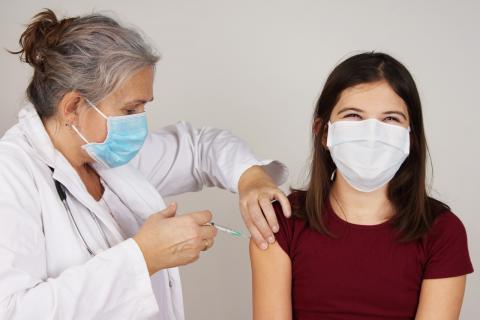
The risk of myocarditis in children vaccinated against COVID-19 between in the United Kingdom was much lower than in those infected
The Pfizer-BioNTech COVID-19 vaccine has been linked to rare cases of heart inflammation in children and young people. The largest study of these risks in children, published in The Lancet Child & Adolescent Health, concluded that receiving the vaccine is associated with a risk of developing myocarditis or pericarditis within six months of 0.85 additional cases per 100,000 vaccinated children; while after COVID-19 infection, the risk is 2.24 additional cases per 100,000. The study used data from 98% of the British population under the age of 18 (almost 14 million) between January 2020 and December 2022.
Ángel Hernández Merino - miocarditis vacuna covid EN
Ángel Hernández Merino
Pediatrician and collaborator of the Advisory Committee on Vaccines, the Spanish Association of Pediatrics and the Spanish Association of Primary Care Pediatrics
This study quantifies and compares the incidence and risks of serious adverse events of a vascular and inflammatory nature following the first COVID infection and following vaccination with Pfizer's RNA product in children and adolescents.
Although it is a retrospective observational study, it is valuable because it is based on the electronic records of virtually the entire population (approximately 14 million) of children under 18 years of age between January 2020 and December 2022.
The study confirms, first, that both scenarios—infection versus non-infection or prior to infection; and vaccination versus non-vaccination or prior to vaccination—are associated with serious but rare or very rare adverse events. And second, that the risks are substantially lower after vaccination compared to those associated with the first COVID infection.
COVID infection caused an increased risk of arterial or venous thromboembolism, thrombocytopenia, myocarditis/pericarditis and other inflammatory conditions for several weeks, even up to 12 months. COVID vaccination was associated with a risk of myocarditis/pericarditis during the 4 weeks following vaccination (1.84 cases/100,000 vaccinated). Over a 6-month period, the risks of myocarditis/pericarditis were 2.24 additional cases (per 100,000) for COVID infection and 0.85 additional cases/100,000 for vaccination.
Given that the risk of exposure to COVID-19 and, therefore, of infection is estimated to be very high, and that it is practically impossible to avoid repeated exposure to the virus, the data provided by this study are important for health authorities and professionals when recommending and facilitating vaccination for children and young people. The data are also valuable when informing young people and their families about the benefits and risks associated with vaccination as opposed to those of infection. The data shown by the study could be applicable to our population.
Quique Bassat - miocarditis vacuna covid EN
Quique Bassat
Director General and ICREA Research Professor at the Barcelona Institute for Global Health (ISGlobal)
This analysis, which includes nearly 14 million British children and adolescents, clearly shows that the risk of cardiovascular side effects in children is significantly higher after an acute episode of COVID-19 than after vaccination with mRNA vaccines. In this age group, vaccine side effects, although they do exist, are extremely rare, and vaccinating children remains justified since the risk of similar effects as a result of natural infection is greater.
Adam Finn - miocarditis vacunas covid EN
Adam Finn
Professor of Paediatrics, University of Bristol
This important study uses whole population data-linkage to describe associations between both COVID-19 infections and receipt of the Pfizer COVID-19 vaccine and several cardiovascular conditions including blood clots and inflammation of the heart in children aged 5-18 years in 2020-2022. They conclude that the risks of these complications were bigger and more long lasting following the infection than following the vaccination.
While this information is important and would, of course, have been very useful if somehow it could have been known to policy advisers at the time, it is important to remember that it relates to the strains of SARS CoV2 that were circulating then (not the more benign strains circulating now) and to children most of whom had little or no immunity to the virus (unlike 5-18 years olds now, most of whom will have had the infection one or more times already).
In general people justifiably expect the risks of vaccination of their children to be near non-existent and very much less than those of the disease being prevented, so this work encourages us to continue to improve the safety profile of the vaccines we develop to prevent this disease and potential future pandemic agents.
Conficts of interest: AF was an investigator on trials of several COVID-19 vaccines during the pandemic and leads a large study of lower respiratory tract disease in adults funded by Pfizer which was used to evaluate the effectiveness of COVID-19 vaccines in 2021.
Alexia Sampri et al.
- Research article
- Peer reviewed
- Observational study
- People