Medicines for obesity control are associated with a healthier shopping basket
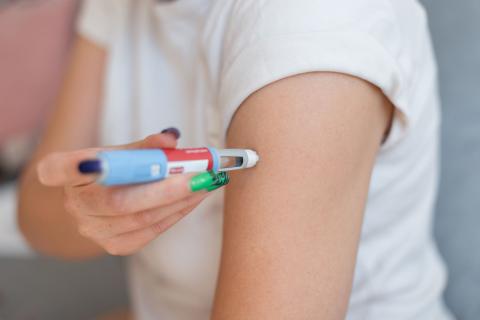
Glucagon-like peptide-1 (GLP-1) receptor agonist drugs, used to control obesity and type 2 diabetes, are associated with changes in food purchasing in favour of healthier options. This result, published in the journal JAMA Network Open, was obtained by analysing nearly two million shopping receipts from more than 1,100 participants in Denmark. Those who started treatment with GLP-1 drugs began to make purchases with fewer calories, sugars, saturated fats and carbohydrates, along with a modest increase in protein content. A decrease in the purchase of ultra-processed foods was also observed.

Joana Nicolau - cesta compra fármacos obesidad EN
Joana Nicolau
Researcher at the Endocrinology and Nutrition Service, Vascular and Metabolic Diseases Research Group, Hospital Universitario Son Llàtzer, Instituto de Investigación Sanitaria de las Islas Baleares (IdISBa)
The study recently published in JAMA Network Open, which analyses changes in food purchasing patterns after starting treatment with GLP-1 receptor agonists, is a high-quality methodological work with an innovative approach. It uses objective purchasing data from supermarket receipts, linked to drug prescription records in a well-characterised population cohort, which reduces one of the major problems commonly encountered in nutrition: reliance on self-reporting. From the point of view of novelty, this study stands out precisely because it analyses purchasing behaviour, an indirect but highly relevant marker of actual eating behaviour. Until now, most research has focused on changes in intake or stated preferences; having objective large-scale consumption data represents an interesting advance and opens the door to new lines of research.
That said, as with observational studies, it is important to interpret the results with caution, as the design itself does not allow a direct causal relationship to be established between the start of treatment with GLP-1 analogues (aGLP-1) and the change in food choices. It is reasonable to think that some of the changes observed may be influenced by other concurrent factors, such as the start of closer medical monitoring, nutritional counselling, or greater motivation to change habits when starting a new treatment. In fact, the authors acknowledge this limitation, as well as the absence of relevant clinical data such as body mass index or body composition data, which would help to better contextualise these results.
Even so, the findings fit well with the physiological and clinical evidence accumulated in recent years. We know that GLP-1s not only reduce appetite and increase satiety, but also modulate central circuits related to reward, impulse control, and hedonic response to food. In this context, it is not surprising to see a reduction in the purchase of ultra-processed products, rich in sugars and fats, and a shift towards less processed foods with higher nutritional quality and protein content. The study adds another piece to a puzzle that is beginning to show that these drugs can influence not only how much we eat, but also what we choose to eat.
One of the most interesting questions raised by the study is whether GLP-1 agonists can facilitate more profound and sustained behavioural changes. In clinical practice, we are increasingly observing that these drugs can “silence” food noise, reduce cravings and decrease emotional eating, creating a window of opportunity to work on habits that were previously very difficult to change. This does not mean that the drug replaces behavioural intervention, but rather that it can act as a facilitator of it.
In this sense, the key message would be that the maximum benefit of these treatments is achieved when they are integrated into a multimodal approach: pharmacology, nutrition, exercise and psychological support. Interpreting GLP-1 agonists as a purely “biological” solution would be an oversimplification. Studies such as this suggest that their impact may go beyond body weight, influencing everyday decisions that, in the long term, are decisive for cardiometabolic health and quality of life.
Cristóbal Morales - cesta compra fármacos obesidad EN
Cristóbal Morales
Head of the Metabolic Health, Diabetes and Obesity Unit at Vithas Hospital in Seville and member of the Spanish Society for the Study of Obesity (SEEDO)
I like the study; it is ingenious, even though it is an observational study with the consequent limitation that causality cannot be attributed, only association. The choice of two populations, one taking GLP-1 medication and the control group, together with the analysis of shopping receipts, provides a fairly interesting approximation of reality. Have we found the vaccine for ultra-processed foods? It seems so. UNICEF already declared war on ultra-processed foods in its latest report on malnutrition two months ago, pointing out that obesity was the leading cause of malnutrition in the world.
What the study does show is nothing we don't already know in real life. A patient taking this type of medication tends to make healthier choices, even with a simple nutritional prescription, in a fairly automated way. This is related to the areas of the brain on which these drugs act. In animal experiments, we have known for a long time that laboratory rats stopped running towards Nutella and Coca-Cola and went for grain instead. In clinical trials, which is where we can establish causality, we have also collected patterns of eating behaviour and analysed that there is a lower intake of ultra-processed foods and a higher intake of healthy products in patients taking these drugs.
What is interesting about this study is the approach they use to shed light on the problem: the analysis of shopping receipts. What interests me most here is that it emphasises that patients taking the drug consume foods with lower energy density, less sugar, fewer carbohydrates, less saturated fat, slightly more protein and, very interestingly, less ultra-processed foods. It is not that they eat less, but that the quality of what they consume is better. Logically, patients who put themselves in the hands of an endocrinologist want to change their lives and also receive nutritional advice, although this has not been measured in the study. Therefore, it is not possible to say how much is attributable to the drug and how much is due to the endocrinologist or nutritionist who helps them make this lifestyle change.
Drugs are not the ultimate solution to obesity, far from it: they are the beginning of the solution. Patients must be very clear about this. The drug is a facilitator for adopting healthy lifestyle habits, which our biology and genetic programming make very difficult for us. These drugs are vaccines against ultra-processed foods; they are facilitators of a healthy lifestyle. We recently learned about their rebound effect with the publication in the British Medical Journal. It is important to note, and this is a very important message for the population, that people who use them well—and there are many who do—use them as a long-term health tool, always implementing healthy lifestyle habits. At the beginning of a new life, the rebound effect is prevented by a very good long-term health vision, incorporating habits. It is important that these drugs are not used lightly, but rather that they are used by specialised multidisciplinary groups, with a long-term health vision and good use, which much of the population—I would say the majority—does, although we often focus on misuse.
In summary, the study is interesting, I think it sparks many conversations and also reminds us that, in the end, we are the product of our biology. The neuroscience part, the brain part, the obese brain, continues to have a lot of power in leading us to an unhealthy weight.
2026 01 26 Josefa García Barrado medicamentos GLP EN
Josefa García Barrado
Full Professor of Pharmacology and researcher in the Neuroendocrinology and Obesity group at the University of Salamanca
Is the study of good quality?
“The study puts forward an interesting idea for exploring the population’s dietary habits. However, from a formal and scientific standpoint, its contribution is limited, as the results presented do not reach a particularly high level of depth or relevance
As regards the methodology, the analyses conducted are appropriate, although the work contains some gaps that could be addressed to strengthen the interpretation of the results. Overall, the study has potential, but it would require further development to aspire to publication in a journal of the impact level at which it is aimed".
Are there any limitations that should be taken into account?
“The study itself acknowledges several limitations that should be borne in mind when interpreting the results. In my view, the most notable is the lack of relevant data on participants’ characteristics, which makes it difficult to extrapolate the findings in a way that is properly aligned with the stated objectives. To begin with, the participants are individuals willing to share their shopping receipts, and this can be interpreted in many different ways. In addition, there are no data on body mass index, age, the presence or absence of other associated conditions, or regular engagement in physical exercise, which represents another important limitation. Moreover, it cannot be ruled out that some of the observed changes at this early stage of treatment are related to support from other healthcare professionals involved in the weight-loss process, rather than being attributable exclusively to the intervention analysed.
On the other hand, the length of the follow-up period and the high number of recorded purchases partially offset the small sample size. Finally, as the authors themselves point out, another potential limitation of the study is the possible misclassification of some of the foods purchased".
What implications does it have, and how does it fit with the existing evidence?
“Honestly, I do not consider this study to represent a significant advance in the current scientific evidence. Nevertheless, it can be seen as a first step towards new approaches to research in this area, which could in future be complemented by larger studies with more robust methodological designs".
Is it novel?
“Yes, the study may be regarded as novel insofar as it proposes a different way of approaching research, by moving it beyond the controlled laboratory environment and closer to the real-life habits of the population. This approach allows behaviours to be observed in a more everyday context, which may provide a perspective that complements the existing evidence".
Can medicines of this type help to change behavioural patterns?
“From my perspective, these medicines are unlikely to offer a behavioural benefit over and above that provided by other drugs. As with antihypertensive agents or antidiabetic treatments such as insulin, their effectiveness depends to a large extent on patients’ habits, routines and adherence to treatment. Therefore, while they may contribute to physiological goals, they neither replace nor enhance behavioural therapy in and of themselves".
Kathrine Kold Sørensen et al.
- Letter
- Peer reviewed