Counties in the United States near operating nuclear power plants have higher cancer mortality rates
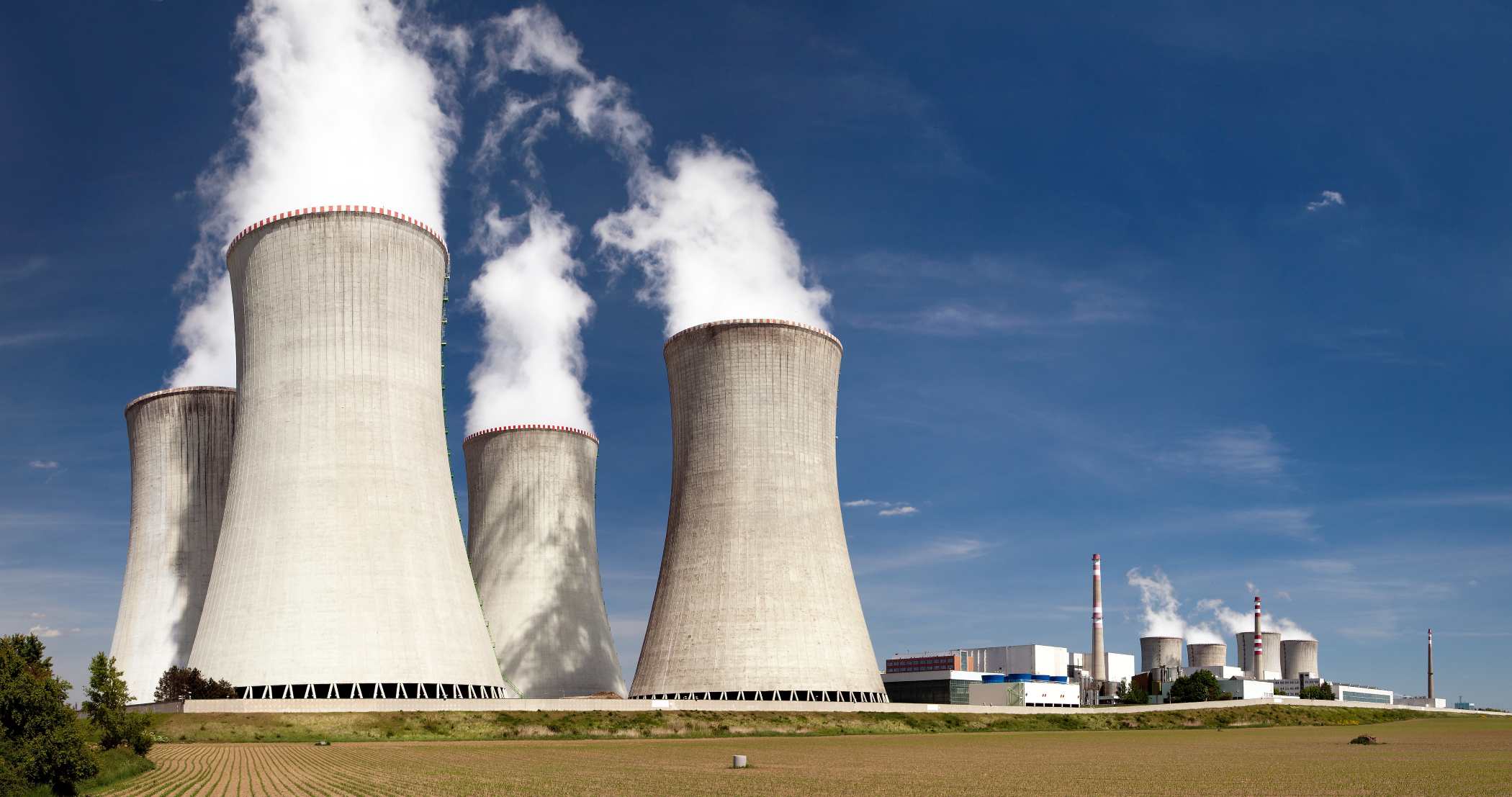
Counties in the United States closest to operating nuclear power plants have higher cancer mortality rates than those further away, according to a new study led by the Harvard T.H. Chan School of Public Health, published in Nature Communications. Using data from 2000 to 2018, they assessed spatial patterns of cancer mortality in relation to proximity to nuclear facilities, taking into account socioeconomic, environmental, and health factors. Cancer mortality was higher in both men and women, with the strongest associations among men aged 65 to 74 and women aged 55 to 64. The findings do not imply causality.
Amy Berrington - cáncer nucleares EN
Amy Berrington de Gonzalez
Professor of Clinical Cancer Epidemiology, Director, Centre for Trials & Population Data Science, Division of Genetics & Epidemiology, The Institute of Cancer Research, London, UK
Whilst they found that living near a nuclear power plan was associated with higher risks of cancer mortality this cannot necessarily be attributed to the radiation exposure. Several of the findings do not fit with our understanding of radiation and cancer. The pattern of risks with age are not what we would expect with radiation exposure, which is usually higher risks with younger age at exposure not the reverse. Secondly, the size of the risk is much higher than we would expect based on the typical radiation exposure levels around nuclear power plants.
An important limitation is that they did not look at the types of cancer - we know some cancers are more strongly related to radiation and if these cancers were increased that would have provided more evidence that the findings were due to radiation. It is surprising that they did not look at this and although they mention this is a limitation they don't explain why they did not do this analysis even though the data should have been available in the CDC dataset.
The findings should not be extrapolated to the UK as we don't know whether there could be other explanations for the increased cancer mortality risks around these nuclear power plants specific to the US.
260223_Jim Smith_cancer nucleares
Jim Smith
Professor of Environmental Science, University of Portsmouth
This study provides no evidence that there is a causal relationship between radiation emitted from nuclear power stations and cancer mortality. It finds an association between distance from nuclear power stations and cancer mortality. But an association in no way proves causation even when some potential confounding factors such as socioeconomic status and smoking are accounted for.
A key problem with this study is that it makes no attempt to evaluate radiation dose from nuclear power stations and fails to consider how dose changes with distance. There is no evidence whatsoever that radiation doses are significant to people living near nuclear sites. Nor is there any evidence that there is a significant change in dose over the large distances (tens of kilometres) considered in this study. Both these conditions (significant dose and significant change in dose) would be needed to imply a causal effect of radiation on cancer rates.
Radiation doses to people from nuclear power stations under normal operating conditions are very low and much lower than radiation doses from cosmic rays, natural radiation in the Earth and radiation doses from medical diagnostics (CT scans, X-Rays). There are three dose pathways for radiation to potentially affect our DNA: External Radiation, Internal (incorporated in our bodies from food we eat) and Inhalation. External radiation from emissions from nuclear power stations is much lower than, for example, external radiation from natural cosmic rays and naturally occurring radioactive potassium in the soil. Inhalation doses are tiny and decrease very rapidly with distance over a few kilometres from the site - there can be no significant inhalation dose at the distances (tens of kilometres from nuclear sites) studied in this research. Small amounts of radiation from operating nuclear power stations can get into the food chain, but this again is much lower than natural potassium-40 and carbon-14 in our bodies. It is certainly not significant at distances of tens of kilometres from nuclear power stations. Changes in dose over tens of kilometres from nuclear sites are determined much more by differences in natural and medical diagnostic radiation than by emissions from nuclear sites.
Proof of a causal relationship requires a plausible mechanism to explain the association between nuclear power stations and cancer - this paper presents no plausible mechanism to explain how radiation doses could be significant, or could change significantly in relation to distance over tens of kilometres from nuclear sites.
The authors note that their study in no way proves a causal relationship. But given the intense public concern of radiation risks from nuclear sites, this study will likely get much media attention. A key message is likely to be missed - that the study presents no evidence whatsoever that radiation doses are significant, or that they change significantly over distances of tens of kilometres from nuclear sites. I think that Harvard communications and the authors should have made a better attempt to highlight this major weakness in the article and press release. It is certainly highly speculative, and I think irresponsible, to attempt to calculate numbers of excess cancer mortality based on this study.
I think it very likely that the apparent association is due to the study's (unavoidable) inability to account for all possible confounding factors. For example, proximity to nuclear power sites is not geographically evenly distributed (see Figure 1 of the study) and may be linked to factors such as degree of urbanisation at the distance scales studied. There are likely to be differences between populations near and far from nuclear sites which cannot be fully accounted for by the potential confounding factors (e.g. socioeconomic status) considered by the study.
A study of childhood cancer in relation to nuclear sites in the UK found no evidence of any association with distance.1
I think a better approach to evaluating radiation risk from nuclear power stations is to study groups who have been exposed to potentially significant radiation doses and which have a known and sufficient variation in dose.2,3 Such studies, together with evaluations of dose to members of the public4 present clear evidence that risks of radiation to the public from operating nuclear sites are tiny.
1 https://doi.org/10.1093/ije/dyaf107
3 Radiation | Million Person Study
4 Radioactivity in food and the environment (RIFE) report - GOV.UK
Additional information: Ionising radiation: dose comparisons - GOV.UK
Conflict of interest: “I did a small (< £5k) project for Japan Atomic Energy Agency about 12 years ago and had a NERC grant 2012-2017 which was part-funded by the Nuclear Decommissioning Authority. I don’t currently do consultancy work or have any nuclear industry links.”
260223_Richard Wakeford_cancer nucleares
Richard Wakeford
Radiation epidemiologist and Honorary Professor in Epidemiology, Centre for Occupational and Environmental Health at the University of Manchester
This is a surprising paper. It is based on numbers of deaths from all types of cancer among the middle-aged and elderly in US counties, which are large areas to use in a study of the putative effects of “proximity to nuclear power plants”. It is an “ecological” study dealing with “exposures” that are county averages rather than those of individuals, and the problems of (mis)interpreting the results of such studies are well-known. This study illustrates these problems.
“Proximity” means the distance of the “centre” of a US county from a nuclear power plant, where counties are those within 200 km of a nuclear power plant. The data for any communities that might be reasonably considered as “close” to a nuclear power plant (e.g., within, say, 10 km), and therefore reasonably considered as affected most by discharges, will be swamped by the data for rest of the county in which the communities lie.
“The authors make no attempt to relate their findings to the radiation doses actually received from radioactive discharges at the level of US counties, or how these doses compare with those received by everyone from natural background radiation. This is a major omission in their interpretation of results.
“The authors acknowledge that cancer types vary in their sensitivity to radiation, but they offer no indication of whether their results show any consistency by type of cancer, e.g., lung cancer, or whether this is a “broad brush effect” covering a wide variety of cancer types. This is disappointing.
“The central question must be, does an ecological study like this one, dealing with average cancer mortality rates at the US county level, have any real chance of adequately accounting for those major background individual risk factors – those factors (e.g., smoking) that cause the great majority of the cancers that currently are responsible for about a fifth of deaths in the USA – to reliably find a signal of the very small additional cancer risk from radioactive discharges from nuclear power stations? I very much doubt it.
“This study reminds me of another ecological study based on US counties that appeared to show that inhaling the naturally occurring radioactive gas radon reduced the risk of dying from lung cancer. In fact, this result was due to a failure to properly account for smoking at the individual level.
“Yes, this is a (very) surprising paper.
Conflicto de interés: Richard Wakeford es miembro del Grupo de Trabajo Técnico del Plan de Compensación del Reino Unido para Enfermedades Relacionadas con la Radiación (http://www.csrld.org.uk/). Además, ha realizado contribuciones no remuneradas a diversos estudios sobre radiación y es miembro de varios grupos de expertos nacionales e internacionales, como el Comité 1 de la ICRP y el UNSCEAR.
Yazan Alwadi et al.
- Research article
- Peer reviewed
- Observational study