What are new genomic techniques?
The term “new genomic techniques” (NGT) describes various recent techniques to modify the genomes of living organisms. In the context of the new European legislation on NGTs, the acronym refers primarily to the use of the CRISPR gene-editing tool to modify the DNA sequence of plants to get specific agricultural properties.
“In nature, the CRISPR-Cas9 complex is used by bacteria to defend themselves against viruses. In the laboratory, the same complex is used as a tool to make precise changes in an organism’s DNA,” explains the Centre for Research in Agricultural Genomics (CRAG) in Catalonia, on a website about gene editing in plants. “A short RNA, called guide RNA, is the hand that positions the complex at a precise position in the genome. Then, the protein called Cas9 acts like molecular 'scissors' that cut the DNA at that specific location.” The DNA repair process that follows is what allows genetic changes to be introduced into the organism.
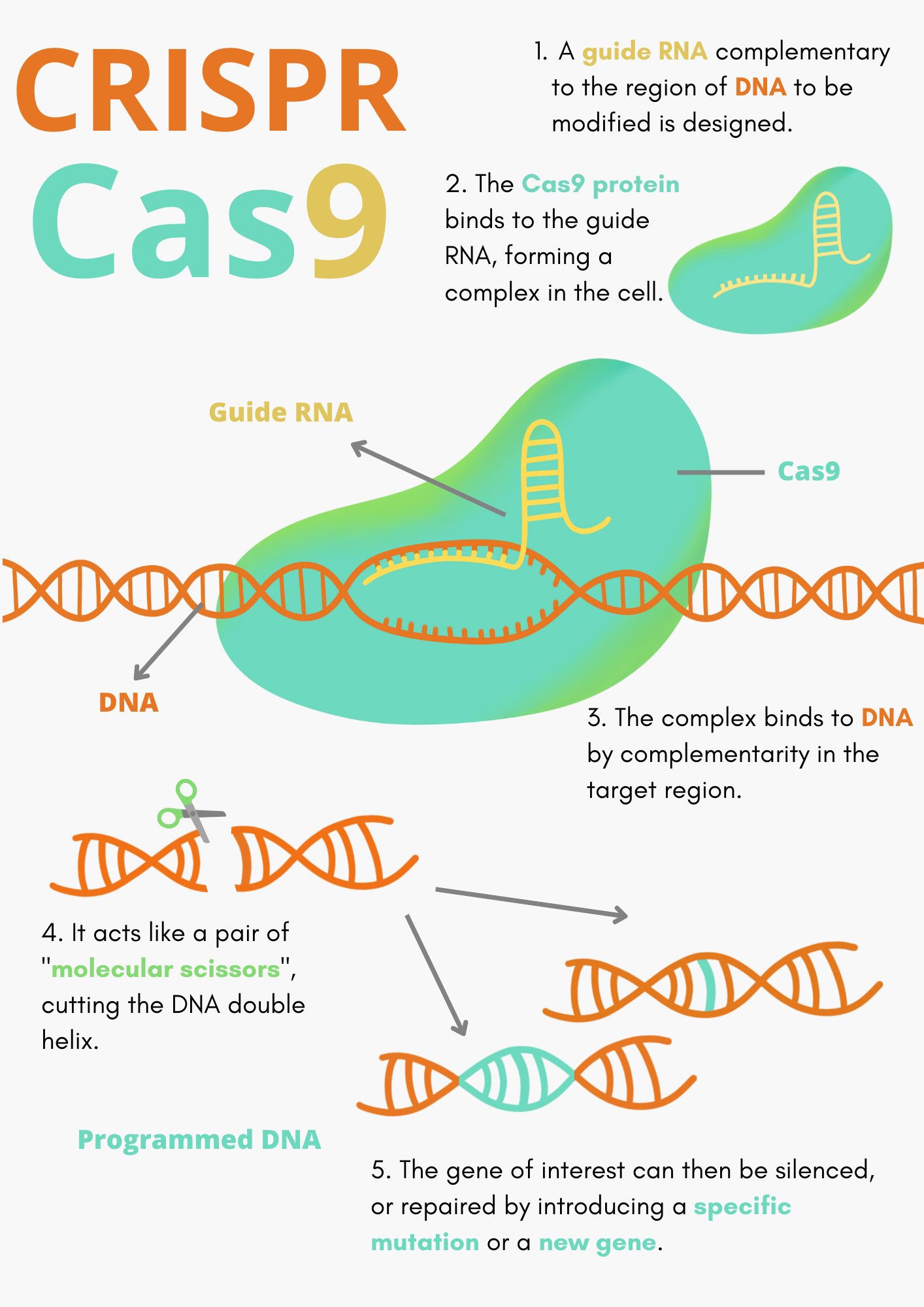
Of the 426 NGT plants, at various stages of development, identified in a 2021 report by the European Union’s Joint Research Centre (JRC), more than 70% were produced using CRISPR. “What can vary are the Cas9, the proteins that cut the genome,” Teresa Capell, professor of plant biotechnology at Agrotecnio, an agri-food research centre in Lleida, tells SMC Spain .
What types of NGT plants exist today?
In the aforementioned JRC report, 38 % of NGT plants were cereals, followed by 16 % of oilseed and fibre crops such as soybean, sunflower or cotton. As for the plants' characteristics, these are mostily crops with modified composition, pest tolerance or higher agricultural yield. The report also mentions a smaller number of NGT plants with tolerance to abiotic stress (caused, for example, by drought, high temperatures or salinity) or to herbicides; or better storage performance, amongst other characteristics.
A more recent study, published in August 2024, lists 8 products already on the market worldwide, and a further 11 that have been approved but are not yet on the market. The list includes, for example, a non-browning banana, approved in the Philippines, Japan and Brazil and sold by a British company, and a tomato with high levels of gamma-aminobutyric acid (GABA, an amino acid that could help lower blood pressure) sold by a Japanese company.
What are the differences between NGTs and other genetic modification techniques?
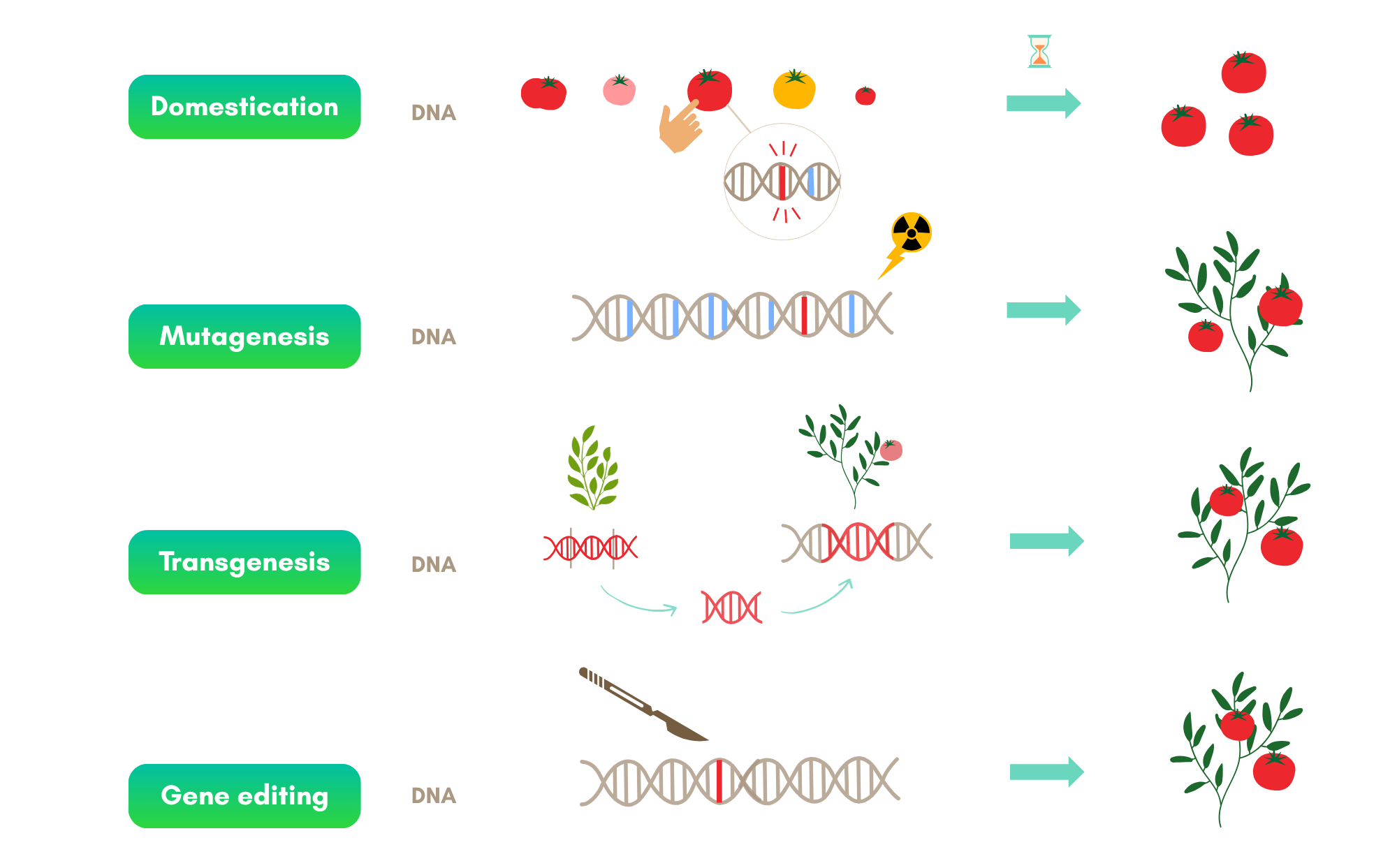
Transgenic organisms are obtained by introducing DNA from one organism into the genome of another. For example, Bt maize (MON 810) is produced by inserting a gene from the bacterium Bacillus thuringiensis to give the plant resistance to certain pests. In contrast, NGTs allow DNA to be modified without leaving foreign genetic material in the plant.
However, Capell points out that transgenesis techniques form part of the process required to introduce the CRISPR editing system (the guide RNA and the Cas9 protein) into plant cells. The difference from the transgenesis of traditional genetically modified organisms (GMOs) is that the resulting plants containing foreign DNA are discarded, keeping only the plants with the edited genome without the transgene, explains Capell.
NGTs also differ from other random mutagenesis techniques, for example using radiation (followed by selection of the mutated plants of interest), as they allow for precise, targeted mutations.
How will the European Union regulate these technologies?
The current GMO directive dates back to 2001; it requires each GMO, like the MON810 maize grown in Spain, to undergo a specific risk assessment in order to obtain marketing authorisation in the European Union. In a 2018 ruling, the Court of Justice of the European Union said that organisms obtained by mutagenesis —which were not called NGTs at the time— are GMOs and, therefore, should comply with the obligations of the 2001 Directive.
The new law differs from this ruling. It divides NGT plants into two categories:
-
NGT1s have fewer genetic modifications than the “20x20” threshold, “no more than twenty genetic modifications”, which may be “substitution or insertion of no mare than twenty nucleotides” or “deletion of any number of nucleotides”, amongst other changes defined in the Annex I of the legislative proposal. The law treats NGT1s as conventional plants and exempts them from the requirements of the 2001 directive.
-
NGT2s have more genetic modifications and are regulated like other GMOs under the 2001 Directive.
According to an estimate published in 2024 by researchers at the German Federal Agency for Nature Conservation, 94% of NGT plants in the EU would fall under the first category. “They would be regulated in the same way as conventional plants: there would have to be a register of varieties, they would have to demonstrate a number of things, but there would be no specific risk analysis as there is for GMOs,” explains Josep Casacuberta, a CSIC researcher in molecular biology at CRAG, and chair of the GMO Panel of the European Food Safety Authority (EFSA) since July 2024.
Katja Tielbörger, a researcher in plant ecology at the University of Tübingen (Germany), argues that the 20x20 threshold is “not backed up by any solid scientific evidence”, as the number of changes in the genome is not proportional to changes in the plants’ phenotype. (EFSA defended the figure in a scientific opinion published in 2024). “You can change a single base pair in the genome and get a completely different phenotype. Or you can change 1000 [nucleotides] in a region that is not coding for anything interesting,” she tells the SMC Spain.
What are the next legislative steps?
In December 2025, the three main institutions of the European Union (the European Commission, which drafted the legislative proposal; the European Parliament; and the Council of the EU) reached a provisional agreement on the regulation. This agreement, reached during a so-called ‘trilogue’, is usually the most important step in European legislative negotiations. However, both the Parliament and the Council must formally approve the text before it can become law.
On 21 April 2026, a legislative deliberation is scheduled for the Council —which brings together representatives from the 27 Member State governments— to adopt its position on the regulation. In Parliament, this item is on the agenda for the plenary session on 18 May. If a final agreement is reached this summer, the law could come into force in two years, according to Casacuberta.
What are the potential benefits of these technologies?
“Through genome editing, new plant varieties can be obtained efficiently, quickly and easily, whereas today they require cross-breeding and selection processes that take years,” wrote a group of scientists in April 2022 in an opinion piece. They were the authors of a Report by the Confederation of Scientific Societies of Spain, which urged the European Commission to regulate this field quickly to promote more sustainable agriculture in the face of climate change, amongst other challenges.
According to Casacuberta, NGTs can also be used to develop products of local interest, “to solve problems that have a smaller market niche”, as they are cheaper to apply than the transgenic techniques of the 2000s, says the biologist. In Spain, agriculture is bound to suffer the impact of climate change, for example, a wider spread of pests or drought, and a significant part of the response must come from new crop varieties, according to Casacuberta. For example, if we do not find varieties resistant to salinity, it is possible that in a few years’ time we will cease to grow rice in the Ebro Delta, he notes. “Would this be a food catastrophe? Well, no, but it would certainly have a significant cultural and economic impact, at least for one sector,” says the biologist.
Many plant characteristics can be modified and even combined, but, Capell insists, only if we have scientific knowledge of the genes involved. For example, Chinese research teams have identified rice genes that can be edited to protect the plant from a fungus called Magnaporthe oryzae, which thrives in humid environments with high temperatures, causing a disease known as rice blast. “We are conducting trials, and if all goes well, we could have blast-resistant bomba rice within five years,” says the researcher.
What are the risks of NGT plants to health or the environment?
The European Commission, citing EFSA's scientific opinions, says there are none. “The [EFSA] concluded that, as regards risks to human and animal health and to the environment, there are no specific hazards associated with directed mutagenesis or cisgenesis,” says the 2023 legislative proposal. According to another study published in 2026 by EFSA, compiling more recent scientific literature, “none of the studies identified in the literature search contained new hazards or risks that had not previously been taken into account in EFSA’s scientific opinions”.
However, other institutions are urging caution:
-
A report published in January 2024 by a working group at ANSES, the French health agency, states that “unexpected effects on the phenotype and agronomic characteristics of the modified plants are always possible, and that unexpected compositional changes in the plants or feed and food derived therefrom could also be observed, regardless of the modified trait”. A A 90-day toxicity study is “essential” to identify risks to human health of consuming NGT foods, the authors add, citing, for example, possible changes in the product’s allergenicity.
-
Researchers also warn of environmental risks posed by the legislative proposal, such as members of the NGT expert group of the Ecological Society of Germany, Austria and Switzerland (GfÖ). In a document published in December 2023, they write that, due to a "high likelihood of outcrossing, it may be expected that NGT1 modified plants will have undesirable ecological effects on wild populations, communities and ecosystems.”.
Tielbörger, lead author of the GfÖ paper, says she would have no problem eating fruit produced by NGT, but that she does fear the potential impacts of introducing such modified plants into the environment. For example, some scientific publications describe poplars edited using NGT to have a lower lignin content, an organic polymer that gives rigidity to the bark and wood. “The idea is that fewer chemicals are required to make paper from that wood [...]. But that also means the tree is becoming softer [...] and that is definitely a trait that is very, very bad for a natural poplar,” she explains.
“Diversification is the key for a sustainable agriculture” in the face of drought, pathogens and other challenges—as opposed to agriculture based on monocultures, whether NGTs or not—adds Tielbörger. “Claiming that instead NGTs are the silver bullet contradicts decades of sound scientific research,” she says.
How do consumers in Spain view these products?
“In Spain, there may be a relatively more favourable or less polarised environment [than in other European countries] for working with these technologies” at an institutional and scientific level. However, “at consumer level, studies show that the Spanish public remains cautious, with a certain degree of neophobia and a need for clear justification of benefits, in line with what has been observed in the EU in general”, summarises Petjon Ballco, a researcher in agri-food economics and behavioural economics at the Department of Agri-Food Economics of the Agri-Food Research and Technology Centre of Aragon (CITA), in a statement to the SMC Spain.
In an article published in 2025, Ballco and his colleagues studied the preferences of 521 people in Aragón when buying different (fictitious) tomatoes. “CRISPR-edited tomatoes face considerable resistance, with consumers requiring a discount to accept them,” the study states —unless the plants are grown with at least a two-thirds reduction in pesticide use—. In another article published this year, the same team details that the consumers surveyed value environmental benefits above all else, in particular, a reduction in pesticide use, followed by water savings and health benefits.