Study assesses benefits of prescribed forest fires for air pollution
Controlled burning of coniferous forests helps prevent larger wildfires and thus reduces emissions of polluting smoke, according to a study published in Science. The study uses satellite data to estimate the severity of wildfires in California between 2000 and 2021, combined with estimates of fine particulate matter emitted by the fires. By simulating the prescribed burning of more than 2,000 km² of forest per year, the authors estimate a 10% reduction in the cumulative emission of harmful particles in California up to a decade later.
260611 fuego víctor fg EN
Víctor Fernández-García
Lecturer in the Department of Engineering and Agricultural Sciences at the University of León
The study quantitatively estimates the benefits of low-intensity fires in terms of smoke emissions. Based on data from over 1,000 fires in California and simulations, the authors calculate that sustained use of low-intensity fires in coniferous forests could reduce the cumulative pollution from fine particulate matter (PM2.5) caused by fires by around 10% over a decade. The reasoning is that in low-intensity fires, much of the fuel (for example, logs or organic matter on the ground) does not burn. Furthermore, they reduce fuel continuity and prevent large accumulations that favour very severe fires, where everything or almost everything burns, resulting in the emission of large quantities of smoke. It is a robust study given the volume of data and the methodology used, although it is worth remembering that not all ecosystems respond in the same way.
For Spain, the underlying conclusion is highly relevant, as after decades of rural neglect and policies focused on extinguishing as many fires as possible, we have accumulated fuel and increased the likelihood of extreme fires, such as those experienced in the summer of 2025. California is not Spain, but it does offer a useful warning about yet another consequence of the systematic suppression of fire. Here, low-risk fire grazing, controlled burns or prescribed burns are underused techniques that generally result in low-severity fires. We knew that these burns serve to reduce the severity of future fires and prevent catastrophic events, and now, following this study, we can also say that they may be useful for protecting air quality in the medium term. The growing body of scientific evidence in favour of these techniques should have implications for the development and implementation of fire and landscape management policies.
260611 fuego víctor rdd EN
Víctor Resco de Dios
Lecturer of Forestry Engineering and Global Change, University of Lleida and researcher at Agrotecnio
Smoke from wildfires is a silent killer which, globally, is estimated to cause the premature death of 330,000 people. As a result of the fires in Canada in 2023, and the movement of air masses, it has been estimated that 22,000 people in Europe died prematurely. This is largely due to fine particulate matter (PM2.5), that is, tiny particles of soot, resins and tars that are so fine that the lungs are unable to filter them out and they enter the bloodstream. Those most affected are people with pre-existing conditions, such as asthmatics, or those most vulnerable due to their age, such as newborns or the elderly.
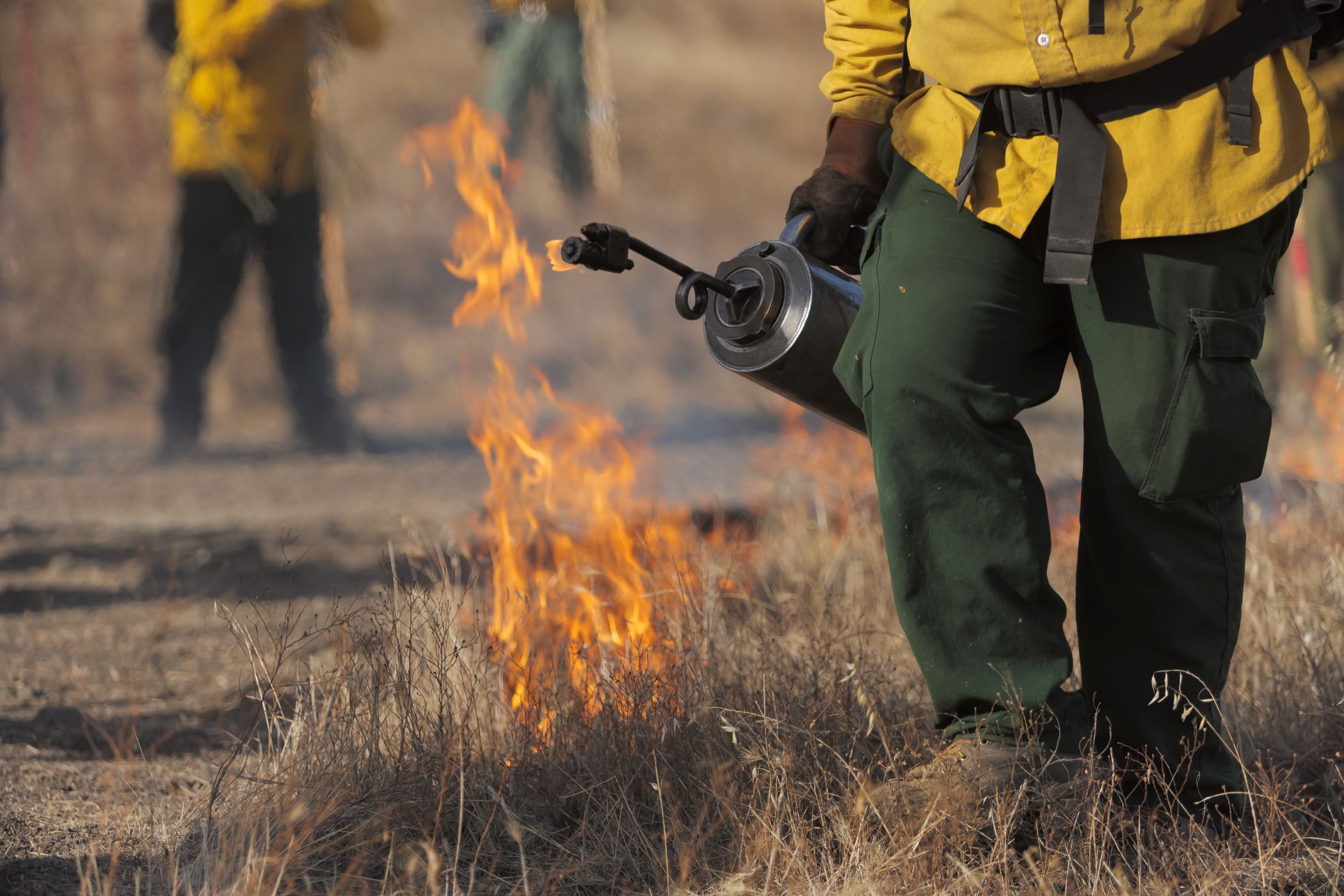
One of the most effective techniques for managing fuel and minimising the likelihood of mega-fires is controlled burning. We are talking about traditional burning, as practised by shepherds, but refined by science and transformed into an engineering project to maximise efficiency and minimise risks. It is a very effective way of reducing fuel load but, despite its effectiveness, these burns have been criticised because they also generate smoke. This study demonstrates how the smoke produced by prescribed burns is far less than that produced by wildfires. This is because, when a fire encounters a treated area, its intensity decreases, which provides an opportunity for firefighting teams and also results in less smoke being emitted. Prescribed burning is a very low-cost and highly effective technique. Therefore, the smoke emissions from prescribed burning mean that fires subsequently emit much less, so the overall balance is positive.
In fact, the study did not look at prescribed burns, but at low-intensity fires. This is relevant because there is currently a move towards managing, or ‘herding’, fires: when they occur under low-intensity conditions, we can safely allow the fire to burn, or direct it where we want, as this is a way of managing the fuel. In other words, we should shift the paradigm and, instead of extinguishing all fires as quickly as possible, we should manage some fires. In this way, we can manage the fuel and, given the low emissions from these fires, reduce pollution.
It is to be hoped that other fuel management techniques, such as grazing, forest management or agriculture, also offer these benefits in terms of air quality, as they are also effective in reducing fire intensity.
260611 fuego isidro ES
Isidro A. Pérez
Professor in the Department of Applied Physics and coordinator of the Atmospheric Pollution research group at the University of Valladolid
The main drawback of this article is that the title does not reflect most of its content, as this study focuses on the benefits of carrying out controlled burns in California to minimise the effects of large wildfires. This is a technique which, alongside mechanical thinning, helps to prevent severe fires. It is worth highlighting the scale of the fires in that state, both in terms of the area burned and the population affected.
The concentration of fine particulate matter is introduced as a secondary factor and is calculated based on the severity of the fire. At the end of the analysis, the study presents the simulated changes in fine particulate matter concentrations, where the highest values are associated with the largest fires—a result that seems to fall within the realm of the expected.
260611_quema_Eduardo Rojas
Eduardo Rojas Briales
Lecturer at the Polytechnic University of Valencia and former Deputy Director-General of the FAO
The methodology used is sound and rigorous, as is typical for air pollution analysis. Obviously, the topography of a specific location combined with current weather conditions can affect the results of the measurements, especially if we apply them to other areas, such as the Mediterranean.
The effects of air pollution caused by large wildfires, as well as by prescribed burns, had been addressed previously. However, the trade-offs between the risk of large wildfires and their impact on human health—in relation to emissions from prescribed burns—have been addressed only rarely—and certainly not on this scale—while also accounting for the potential reduction in burned area and, consequently, in gas emissions due to their preventive function.
As noted [above], climate, topography, and population density vary greatly from one area to another, making this type of research crucial for areas with ventilation problems during the seasons most suitable for prescribed burning, whereas in areas with sufficient ventilation it would be less relevant. It provides solid grounds for counterarguments in legal challenges against prescribed burning, which have frequently halted such practices in North America or Australia, when it can be demonstrated that the risk of much higher emissions due to the absence of prescribed burning is the greater evil to be avoided.
In Europe, the tradition of prescribed burning—whether carried out by rural communities, forestry services, or firefighting agencies—is considerably less widespread compared to the Western United States. Despite this, it is expanding, though perhaps not with the desired intensity. Here, the population’s resources are not the main impediment, but rather the availability of trained personnel, the limited windows of opportunity in many areas, and support from local stakeholders in areas where the practice has little tradition, following decades of fire suppression.
A prime example is the GRAF of Bombers de Catalunya, which has been expanding [prescribed burns] throughout the region, reaching its operational limit. Currently, they are considering delegating certain burns to professionals specifically trained in this field. Information and cooperation from local governments are also key, especially given the high fragmentation of land ownership, particularly in coastal areas where the urban-forest interface exacerbates the problem. In any case, an objective assessment with a solid scientific basis is essential to overcome the obstacles to preventive actions on forest lands and agricultural areas or urban-forest interface zones that are clearly abandoned, when it is demonstrated that the factors at play between a mega-fire and preventive actions—and especially prescribed burns—(cost, gas emissions, risks to people and property, etc.) and the effects of these fall within thresholds that lead to obvious decisions by those responsible for fire prevention.
Higuera-Mendieta and Burke
- Research article
- Peer reviewed
- Modelling