The results of the personalised melanoma vaccine will be presented at the european congress of medical oncology
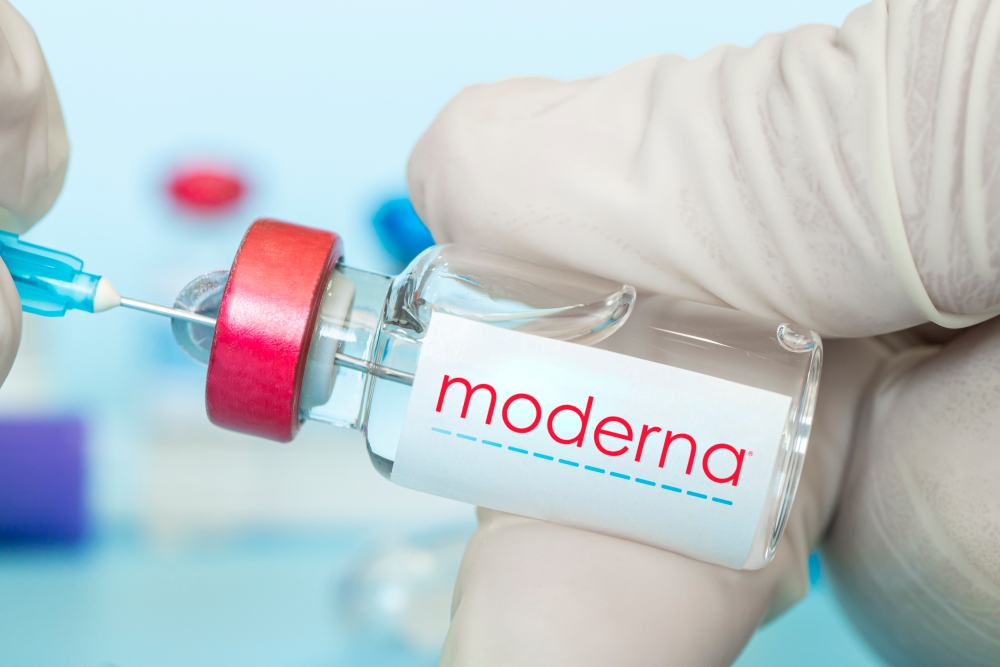
The administration of intismeran, a personalised therapeutic cancer vaccine developed from each patient’s tumour, together with pembrolizumab immunotherapy following surgery for high-risk melanoma, reduced the risk of recurrence or death by 42 per cent. This phase 3 clinical trial, funded by Moderna and Merck Sharp & Dohme, involved 1,137 patients at very high risk of recurrence who had undergone surgical removal of their melanoma. The companies released preliminary data in August in a press release, and the full results are due to be presented this Saturday at the European Society for Medical Oncology (ESMO) Congress being held in Madrid. Ahead of the announcement, the data were leaked yesterday and the share prices of both companies fell. The scientific paper is due to be published in The New England Journal of Medicine.
261023_Eva_vacuna melanoma
Eva Muñoz Couselo
The results of the INTerpath-001 study represent a major breakthrough in the treatment of melanoma and, in particular, in the development of personalised medicine. For the first time, a phase III trial has demonstrated that an individualised therapeutic vaccine, designed on the basis of the molecular characteristics of each patient’s tumour, can significantly improve the outcomes of conventional immunotherapy.
The benefit observed is not only statistically significant but also clinically relevant. The combination of intismeran autogene and pembrolizumab ensures that 82.2 per cent of patients remain relapse-free at two years, compared with 70 per cent of those treated with pembrolizumab alone. Furthermore, a significant reduction in the risk of developing distant metastases has also been observed. However, longer-term follow-up will be required to confirm the duration of this benefit and to assess its potential impact on overall survival.
These results should also be interpreted in the context of the transformation currently taking place in the treatment of melanoma. In recent years, neoadjuvant immunotherapy, administered prior to surgery, has shown extraordinarily promising results in patients with high-risk resectable disease. One of its main advantages is that it allows subsequent treatment to be tailored to the pathological response, thereby avoiding the need for certain patients to continue immunotherapy unnecessarily.
Therefore, although INTerpath-001 sets a new benchmark for the development of personalised adjuvant treatments, we still need to define how these strategies will be integrated into a landscape in which neoadjuvant therapy is playing an increasingly prominent role.
Finally, we must not overlook the challenge of sustainability. Individualised vaccines require complex and predictably costly manufacturing processes. Their incorporation into clinical practice must be accompanied by rigorous cost-effectiveness assessments, taking into account not only the price of the treatment but also its ability to prevent relapses and avoid subsequent treatments.
The real challenge for oncology in the future will not only be to develop increasingly effective treatments, but to identify which patients actually need each treatment, when they should receive it, and for how long. The combination of personalised medicine, neoadjuvant strategies and response-adaptive treatments could enable us to move towards a more effective, less toxic and also more sustainable form of oncology.
[On the share price fall following the leak of trial data] It is a real shame that these results have circulated prematurely on social media, generating numerous comments and interpretations prior to their official presentation at ESMO. I believe that, out of respect for the work of the researchers, the authors and the companies involved, the opportunity to present the full results, contextualise them appropriately and offer a rigorous scientific interpretation should have been preserved. That responsibility lies, first and foremost, with those who conducted the study and those entrusted with its scientific discussion during the congress. Discussion and debate are fundamental to scientific progress, but they should be based on complete and correctly presented data, not on leaked and potentially decontextualised information.
261023_Soengas_vacuna melanoma
Marisol Soengas
Head of the Melanoma Group at the Spanish National Cancer Research Centre (CNIO)
The scientific and medical community, along with a great many cancer patients, have been eagerly awaiting the results of a major international clinical trial involving Intismerán (the personalised mRNA vaccine designed to prevent relapses in melanoma and other tumours following surgery) since August. We have now learnt from data due to be presented at the European Society for Medical Oncology (ESMO) Congress that these expectations are supported by very promising findings. This is a phase 3 clinical trial involving 157 clinical centres across various countries and more than 1,300 patients – in itself a major challenge that deserves recognition. Interest was extremely high, as the developers (Moderna and Merck/MSD) announced that they had achieved two major milestones in modern oncology: moving towards a ‘tailor-made’ treatment for each patient, and enabling the patient’s own immune system to eliminate tumour cells that might have ‘escaped’ following the removal of the primary tumours. This was not a strategy to prevent melanomas, nor to treat advanced cases with metastases. The aim was to combine Intismerán with already approved immunotherapies (the antibody pembrolizumab) to reduce the occurrence of metastases and, in doing so, increase patients’ overall survival. The technology used for this personalisation is potentially so powerful that the interest was justified.
What does this phase 3 trial, known as INTerpath-001, appear to demonstrate? The most significant finding is that, after 24 months, 82.2 per cent of patients treated with the combination of Intismerán and pembrolizumab remained relapse-free, compared with 70.0 per cent on pembrolizumab alone, representing a 42 per cent reduction in the risk of relapse or death (hazard ratio 0.58). The risk of distant metastases or death was also reduced by 38 per cent (HR 0.62).
How has this been received? To find out the response from basic and clinical researchers, we will have to wait until tomorrow, Saturday, when Dr Georgina Long from the Melanoma Institute of Australia will present the specific data. The markets, however, have reacted with a fall in share prices. The effect on metastases was expected to be more significant because a previous phase 2 trial had indicated a 59 per cent reduction in the occurrence of distant metastases.
Another point requiring caution is the potential applicability of the technology. What Moderna and its collaborators have achieved is no small feat, but it is logistically complex. It is literally a bespoke vaccine. A tumour and blood sample are taken; these are sequenced to identify mutations that generate abnormal proteins, or neoantigens, which are absent from normal cells. Using algorithms (one of the major breakthroughs here), up to 34 neoantigens with the potential to be recognised by the immune system are selected, and a specific mRNA molecule encoding them is produced. Once administered, these neoantigens are produced and presented to the immune system, generating or amplifying T-lymphocytes capable of recognising tumour cells. Intismeran is combined with pembrolizumab, a PD-1 inhibitor. In this way, the vaccine enhances and directs the anti-tumour response, whilst pembrolizumab prevents the tumour from inactivating these T-lymphocytes.
It is, therefore, a particularly advanced form of personalised medicine. This is the major breakthrough, because conceptually it would make it possible to treat not only melanoma, but also other tumours in which the immune system can be reactivated. The challenge is to ensure that this personalisation can be scaled up to a large number of patients, and that the cost is affordable for healthcare systems.
Long et al.
- Non-peer-reviewed
- Communication